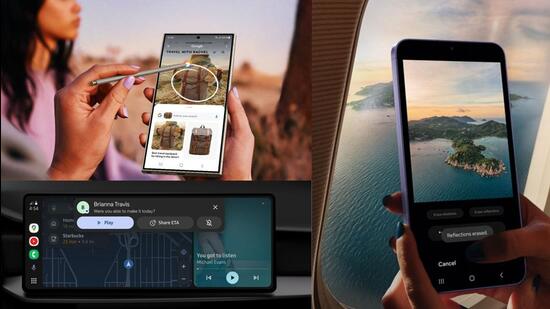
A smartphone is a powerful piece of technology that has revolutionized the way we communicate, work, and access information. With advanced capabilities such as voice recognition, virtual assistants, and predictive text, some may wonder if a smartphone can be considered as an Artificial Intelligence (AI). In this introduction, we will explore the features and functions of smartphones to determine if they can truly be classified as AI.
Smartphones have become an integral part of our lives, serving as a constant companion in our day-to-day activities. With their advanced features and capabilities, many people wonder if a smartphone can be considered an artificial intelligence (AI). In this article, we will explore the question: Is a smartphone an AI?
Understanding Artificial Intelligence
Before delving into the question, let’s first understand what artificial intelligence is. Simply put, AI refers to the ability of a machine or computer system to imitate intelligent human behavior. AI-powered devices possess the capability to learn, reason, and problem-solve, making them appear intelligent.
The Evolution of Smartphones
Smartphones have significantly evolved over the years, transforming from mere communication devices to powerful handheld computers. With advancements in processing power, memory, and the integration of various sensors, smartphones have become capable of performing tasks that previously required a dedicated computer.
Intelligent Personal Assistants
One aspect that showcases the AI-like capabilities of smartphones is the emergence of intelligent personal assistants. These virtual companions, such as Apple’s Siri, Google Assistant, and Amazon’s Alexa, utilize natural language processing and machine learning algorithms to understand and respond to user commands.
Intelligent personal assistants can perform various tasks, including making phone calls, sending text messages, setting reminders, searching the web, playing music, and even controlling smart home devices. Through continuous interaction and learning, these virtual assistants become more adept at understanding user preferences and providing personalized recommendations.
Image Recognition and Computer Vision
Another area where smartphones demonstrate AI-like characteristics is in image recognition and computer vision. With advancements in camera technology, smartphones can now identify and interpret objects, faces, and even scenes.
By leveraging machine learning algorithms, smartphones can recognize and categorize images, making it easier for users to search and organize their photo collections. Additionally, computer vision capabilities enable smartphones to scan barcodes, detect text in images, and even provide augmented reality experiences.
Smartphone Automation
Automation is a key aspect of AI, and smartphones have progressively become more automated, aiding users in their daily routines. Smartphones can automatically adjust settings based on the user’s location, time of day, and preferences.
For example, smartphones can switch to silent mode during meetings or adjust screen brightness based on ambient lighting conditions. Additionally, smartphones can learn from user behavior patterns and suggest actions and shortcuts to streamline tasks.
The Limitations of Smartphones as AI
While smartphones exhibit AI-like capabilities, it is important to recognize their limitations. Smartphones lack the processing power and extensive data storage of dedicated AI systems. They rely on cloud-based AI services for complex tasks that require substantial computational resources.
Smartphones also heavily depend on internet connectivity for real-time AI functionalities. Without a stable internet connection, certain AI features such as voice recognition and virtual assistants may not be fully functional.
While smartphones possess AI-like capabilities, they cannot fully be considered AI systems in themselves. They serve as a gateway to access AI-powered features and services, leveraging machine learning algorithms and cloud-based resources.
Nevertheless, smartphones have proven to be a revolutionary technological advancement, offering users powerful tools and intelligent functionalities. As technology continues to progress, we can expect smartphones to enhance their AI capabilities and continue to redefine our digital experiences.
So next time you wonder if your smartphone is an AI, remember that it may not be an AI in its entirety, but it certainly acts as a portal to the world of artificial intelligence.
Related posts:
 Why Elon Musk Opposes AI
 What’s the best AI app to use?
 Which job will AI not replace?
 Why does ChatGPT get math wrong?
 How to Ask Math Questions to ChatGPT
 Does ChatGPT Cost Money?
 How do I get ChatGPT?
 What should I use ChatGPT for?
 Is OpenAI Owned by Microsoft?
 What is the difference between ChatGPT and AI?
 Is ChatGPT good or bad?
 Who is the father of ChatGPT?
 Which is No 1 AI app?
 Can I Use AI in My Phone?