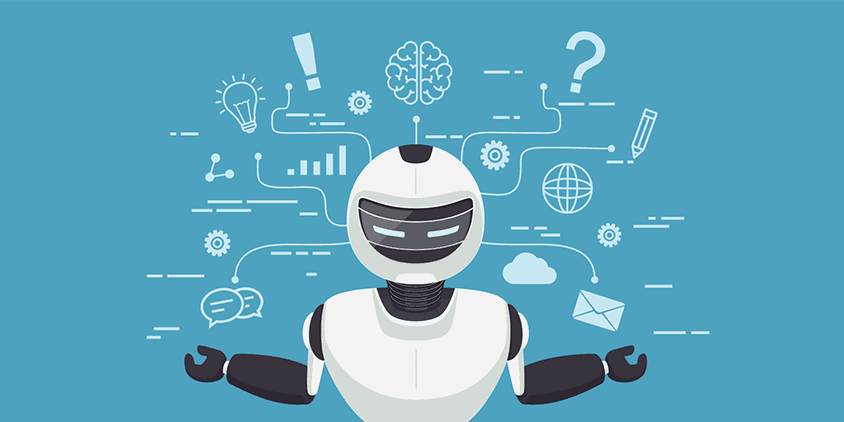
Artificial Intelligence (AI) has come a long way in enhancing various aspects of human life, from automation to machine learning. However, there are still certain limitations to what AI can achieve. Despite its advancements, AI cannot replicate human emotions, intuition, creativity, and empathy. These uniquely human qualities play a crucial role in decision-making, problem-solving, and interpersonal relationships, areas where AI falls short. Understanding the boundaries of AI is essential in harnessing its potential while recognizing and valuing the irreplaceable aspects of human intelligence.
Artificial Intelligence (AI) has made remarkable advancements in recent years, enabling machines to perform complex tasks that were once thought to be impossible. However, it is important to acknowledge that AI still has limitations. While AI continues to evolve and improve, there are certain things that it cannot do. In this article, we explore some of these limitations and shed light on what AI cannot do.
1. Emotional Intelligence
One area where AI falls short is emotional intelligence. Machines lack the ability to understand and express emotions in the same way humans do. While AI can analyze data and make logical decisions, it cannot comprehend human emotions such as empathy, compassion, or intuition. This limitation makes it challenging for AI to fully understand and respond appropriately to human needs and emotions.
2. Creativity and Innovation
While AI can assist in various creative tasks, such as generating music, art, or writing, it cannot truly possess creativity or come up with original ideas. AI relies on data and algorithms to make predictions and generate content, but it lacks the intuition and imagination that humans have. Human creativity often stems from personal experiences, emotions, and the ability to think outside the box, which AI has yet to replicate.
3. Common Sense Reasoning
Despite the impressive capabilities of AI, it struggles with common sense reasoning. While AI excels in specific domains and can process vast amounts of data, it often lacks the fundamental understanding that humans possess. Humans can make logical deductions and infer knowledge from limited information, whereas AI heavily relies on extensive training and access to vast datasets to draw conclusions.
4. Adaptability and Flexibility
AI has a difficult time adapting and being flexible in unfamiliar or rapidly changing environments. While AI can excel in narrow tasks and specific domains, it can struggle when faced with unexpected situations or tasks outside its trained scope. This limitation is due to AI’s reliance on pre-defined rules and patterns, which limits its ability to adapt and generalize beyond its initial training.
5. Ethics and Morality
AI lacks the moral compass and ethical judgment that humans possess. AI operates based on algorithms and data, which can lead to bias and potential ethical issues. The decisions made by AI systems are determined by their programming and training, and they often lack the ability to consider intricate ethical dilemmas or make subjective judgments based on a broader context.
6. Physical Movement and Empirical Understanding
We often take for granted the remarkable ability of humans to navigate the physical world and have a deep understanding of their surroundings. AI, however, struggles when it comes to physical movement and empirical understanding. While AI can process visual data, it lacks the physical presence and sensory perception necessary to fully comprehend the world like humans. This limitation is evident in tasks that require fine motor skills or manual dexterity.
7. Dynamic Learning and Self-Awareness
AI systems can learn from data and improve over time, but they lack the ability for dynamic learning and self-awareness. Humans have the capacity to learn continuously, adapt their knowledge, and reflect on their actions. AI, however, does not possess true self-awareness and cannot introspect or refine its learning process without human intervention.
While AI has demonstrated exceptional capabilities, it is crucial to recognize its limitations. Emotional intelligence, creativity, common sense reasoning, adaptability, ethics, physical movement, and self-awareness are areas where AI falls short. Understanding these limitations helps us appreciate the unique qualities and strengths that humans bring to the table. By leveraging AI as a tool rather than a replacement, we can harness its potential while recognizing and enhancing our own abilities.
Related posts:
 Why does ChatGPT get math wrong?
 How to Ask Math Questions to ChatGPT
 Does ChatGPT Cost Money?
 How do I get ChatGPT?
 What should I use ChatGPT for?
 Is OpenAI Owned by Microsoft?
 What is the difference between ChatGPT and AI?
 Is ChatGPT good or bad?
 Who is the father of ChatGPT?
 Which is No 1 AI app?
 Can I Use AI in My Phone?
 How do I turn off AI on my Samsung phone?
 Who First Invented Artificial Intelligence?
 What is Elon Musk’s opinion on AI?