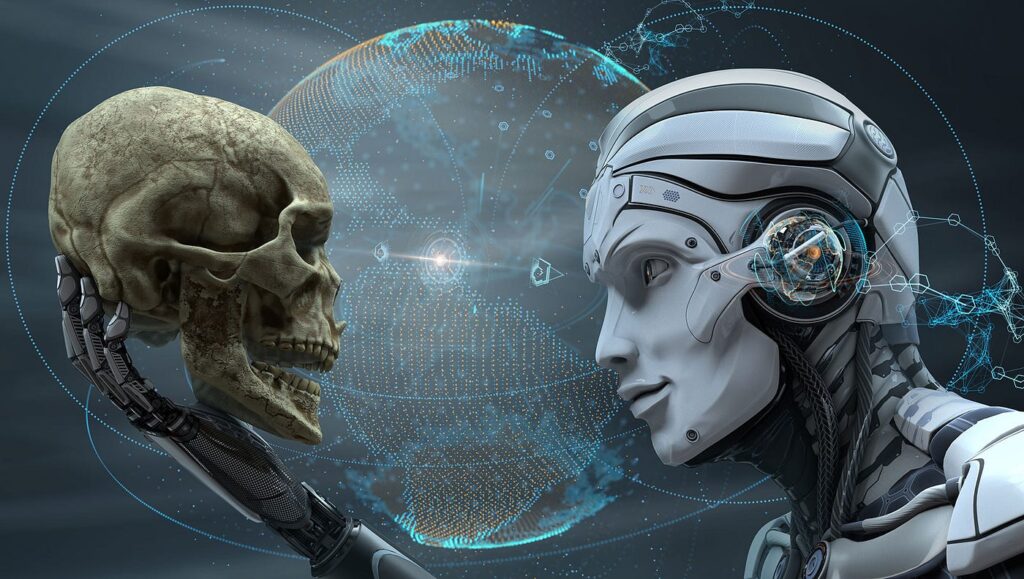
Artificial intelligence (AI), with its potential to vastly exceed human intelligence and capabilities, has sparked debates about its implications for humanity. While AI offers numerous benefits in various fields, there is a growing concern about its potential to become a threat to humanity. The idea that AI could one day surpass human intelligence and autonomy, leading to unforeseen consequences, raises important ethical and existential questions. This essay will explore the various perspectives on whether AI poses a threat to humanity and the potential implications for our future.
Artificial Intelligence (AI) has undoubtedly made significant advancements in numerous fields, revolutionizing the way we live and work. From healthcare to transportation, AI’s capabilities have expanded rapidly. However, as AI becomes more sophisticated, concerns about its potential to pose a threat to humanity have arisen. In this article, we will explore the possible risks associated with AI and the steps we can take to mitigate them.
The Potential Risks of AI
AI’s ability to learn and adapt can be both impressive and concerning. One of the biggest concerns is the potential for AI to surpass human intelligence, leading to a loss of control. This concept, often referred to as superintelligence, raises questions about whether AI’s goals would align with our own, possibly resulting in unintended consequences.
Another risk stems from the possibility of AI being used maliciously. As AI technology advances, it’s crucial to consider the potential for it to be weaponized, leading to autonomous weapons systems that could act independently, making decisions with potential global consequences. The lack of human judgment in these systems raises significant ethical concerns.
Mitigating the Risks
To ensure AI remains a beneficial tool and not a threat, several measures can be taken. First and foremost, AI development must prioritize safety and ethical considerations. Implementing strict regulations and guidelines can help prevent AI from being used for harmful purposes.
Additionally, fostering cooperation and collaboration between AI developers, researchers, and policymakers is crucial. By working together, we can establish standards and guidelines that ensure AI technologies are developed responsively.
Building transparent AI systems is another essential step. If AI algorithms remain proprietary and opaque, it becomes challenging to assess their decision-making processes and mitigate potential biases. Transparency allows for accountability and trust-building, enabling comprehensive risk management.
The Importance of Responsible AI
While concerns about AI’s potential threats are valid, it’s essential to acknowledge the positive impact it has already had on society. From healthcare diagnostics to optimizing energy consumption, AI has the potential to solve complex problems and improve the quality of human life.
However, we must adopt measures to ensure responsible AI development. This includes incorporating ethical considerations into AI algorithms, avoiding biases, and promoting inclusivity and diversity in AI research and development teams.
Additionally, ongoing research and education in AI ethics can help raise awareness, enabling society to stay vigilant and adapt to the challenges AI may present. By constantly assessing and addressing risks, we can ensure AI’s growth is aligned with our shared values and interests.
While concerns about AI as a threat to humanity persist, taking proactive steps can help mitigate the risks associated with its development. By prioritizing safety, fostering collaboration, and promoting transparency and responsible AI practices, we can ensure that AI remains a powerful tool for positive change while minimizing any potential harm. With a focused and responsible approach, we can build a future where AI enhances and benefits human society.
Related posts:
 What are 4 Types of Artificial Intelligence?
 What is AI used in today?
 Is ChatGPT an AI?
 Who created AI?
 Is Google Maps an AI?
 Who owns ChatGPT?
 How to Use Google AI: A Comprehensive Guide
 Is ChatGPT better than Siri?
 Can AI have their own thoughts?
 Can AI Take Over the World?
 What is the biggest problem in artificial intelligence?
 Is Alexa an AI?
Is Personal AI free?
Is Alexa an AI?
Is Personal AI free?
 Can I create an AI of myself?