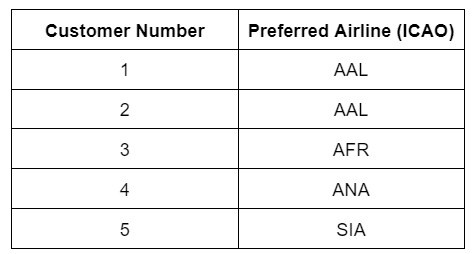
Handling categorical data in SQL involves techniques for working with data that is non-numeric or qualitative in nature. Categorical data can include information such as gender, city names, product categories, etc. In SQL, various methods can be used to manipulate and analyze categorical data, including grouping, counting, filtering, and encoding. By understanding and effectively handling categorical data, SQL users can gain valuable insights and make informed decisions based on the information stored in their databases.
When working with databases, one of the most critical aspects of data manipulation is handling categorical data. Categorical data refers to variables that contain label values rather than numerical values. Understanding how to handle and manage categorical data in SQL is essential for any data analyst or SQL developer. In this article, we will explore best practices, techniques, and methods to effectively work with categorical data in SQL.
What is Categorical Data?
Categorical data is any data that can be classified into distinct categories, such as:
- Gender (Male, Female)
- Color (Red, Blue, Green)
- Marital Status (Married, Single, Divorced)
These categories may be nominal (no inherent order) or ordinal (a specific order exists). For instance, a variable like Education Level can be ordered as High School, Bachelor’s, and Master’s.
Storing Categorical Data in SQL
There are various ways to store categorical data in SQL databases. The most common methods include:
1. Using VARCHAR or CHAR
For nominal categorical data, you can use VARCHAR or CHAR data types. For instance:
CREATE TABLE employees (employee_id INT, gender VARCHAR(10));
This creates a table where the gender of each employee is stored as a string.
2. Using ENUM Type
If your database supports it (like MySQL), using the ENUM data type is ideal for storing categorical variables:
CREATE TABLE colors (color_id INT, color_name ENUM('Red', 'Blue', 'Green'));
This method restricts the allowed values for the color_name column to a predefined set, enhancing data integrity.
3. Using Foreign Keys for Normalization
For better organization, you might want to normalize your data by creating a separate table for categorical values:
CREATE TABLE gender_types (id INT PRIMARY KEY, gender VARCHAR(10));

CREATE TABLE employees (employee_id INT, gender_id INT, FOREIGN KEY (gender_id) REFERENCES gender_types(id));
This approach allows you to maintain a clean database structure while avoiding redundancy.
Inserting Categorical Data
Inserting categorical data into your SQL tables can be done via the INSERT command. For instance:
INSERT INTO employees (employee_id, gender) VALUES (1, 'Female');
For enumerated types, you can insert data like this:
INSERT INTO colors (color_id, color_name) VALUES (1, 'Red');
Querying Categorical Data
Retrieving categorical data requires a solid understanding of SQL queries. Here’s how to do it effectively:
1. Basic SELECT Queries
You can use the SELECT statement to retrieve data based on certain criteria:
SELECT * FROM employees WHERE gender = 'Female';
This query fetches all employees who identify as Female.
2. GROUP BY and COUNT for Summary Statistics
To summarize categorical data, use the GROUP BY clause:
SELECT gender, COUNT(*) AS count FROM employees GROUP BY gender;
This provides a count of employees by gender, offering key insights into the distribution of categorical variables.
3. Using JOINs for Related Data
When working with multiple tables, JOIN statements are crucial. For example:
SELECT e.employee_id, g.gender

FROM employees e

JOIN gender_types g ON e.gender_id = g.id;
This retrieves employee IDs alongside their corresponding gender by joining the employees and gender_types tables.
Handling Missing or Null Values
When working with categorical data, missing or null values can occur. Handling these appropriately is important. You can use:
1. COALESCE
The COALESCE() function allows you to substitute null values:
SELECT employee_id, COALESCE(gender, 'Not Specified') AS gender FROM employees;
This query returns ‘Not Specified’ for any null gender entries.
2. Filtering Null Values
To filter out records with null values, use the IS NOT NULL clause:
SELECT * FROM employees WHERE gender IS NOT NULL;
Encoding Categorical Data for Machine Learning
In data science, encoding categorical variables is often necessary before feeding them into machine learning models. Common methods include:
1. One-Hot Encoding
While not done directly in SQL, you can prepare data for one-hot encoding within SQL:
SELECT employee_id,

CASE WHEN gender = 'Male' THEN 1 ELSE 0 END AS is_male,

CASE WHEN gender = 'Female' THEN 1 ELSE 0 END AS is_female

FROM employees;
2. Label Encoding
Alternatively, you can perform label encoding by assigning a unique integer to each category:
UPDATE employees SET gender_id = CASE gender

WHEN 'Male' THEN 1

WHEN 'Female' THEN 2

ELSE NULL END;
Best Practices for Handling Categorical Data in SQL
When handling categorical data in SQL, consider implementing the following best practices:
- Use appropriate data types for your categorical variables to enhance performance and maintain integrity.
- Normalize your data to avoid redundancy and maintain a clean database structure.
- Carefully handle missing values using strategies like substitution or filtering.
- Utilize indexes on categorical columns that are frequently queried to speed up performance.
- Document your data to ensure that data categories and their meanings are well understood by all users.
Handling categorical data in SQL is a vital skill for data analysts and database administrators. By following best practices and utilizing appropriate SQL commands and techniques, you can efficiently manage categorical data, ensure data integrity, and generate meaningful insights from your dataset. Mastering these concepts will empower you to manipulate and analyze categorical data effectively, leading to better decision-making and reporting.
Effectively handling categorical data in SQL involves understanding the data types available, selecting the appropriate methods for encoding and manipulating the data, and applying these techniques in a structured and efficient manner. By following best practices and utilizing the built-in functions and features of SQL, analysts and data professionals can work with categorical data seamlessly and derive valuable insights for decision-making processes.
Related posts:
 The SELECT Statement: How to Retrieve Data from a Table
 Using WHERE to Filter Data Effectively
 How to Use ORDER BY to Sort Query Results
 The DELETE Command: Removing Records from SQL Tables
 Understanding Primary Keys and Foreign Keys
 Common Data Types in SQL Explained
 What is Database Normalization and Why is it Important?
 Table Relationships: One-to-One, One-to-Many, Many-to-Many
 Differences Between INNER JOIN, LEFT JOIN, RIGHT JOIN, and FULL JOIN
 Grouping Data with GROUP BY
 Comparison Operators: =, <>, >, <, >=, <=
 Logical Operators: AND, OR, NOT
 Subqueries: When and How to Use Them
 Correlated vs. Non-Correlated Subqueries