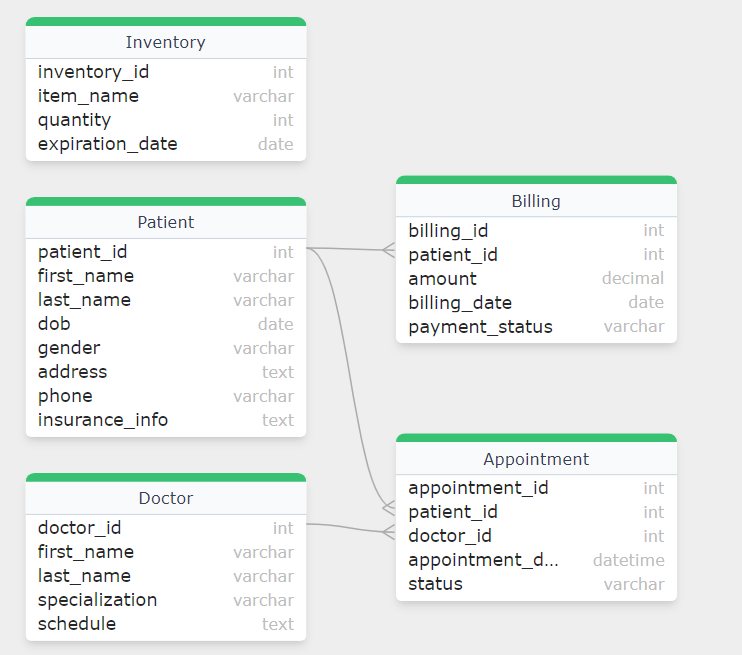
SQL (Structured Query Language) plays a crucial role in healthcare billing and invoicing by enabling efficient data management and retrieval within healthcare systems. In the context of healthcare billing and invoicing, SQL is utilized to interact with databases, allowing healthcare organizations to store and access patient information, insurance details, billing records, and invoicing data. By using SQL queries, healthcare professionals can quickly and accurately retrieve, update, and analyze relevant information, thereby streamlining the billing and invoicing processes, ensuring accurate record-keeping, and facilitating timely financial transactions.
The importance of SQL for healthcare billing and invoicing cannot be overstated. In an industry where accurate billing can directly impact revenue cycle management, having a solid understanding of SQL (Structured Query Language) is essential for healthcare professionals. This post will explore how SQL can optimize billing processes, reduce errors, and enhance overall financial performance in healthcare facilities.
Understanding SQL in the Healthcare Sector
SQL is a powerful programming language used for managing and manipulating databases. In healthcare, SQL is utilized to handle patient records, billing data, and financial transactions. By using SQL for invoicing, healthcare providers can streamline their billing processes, ensuring timely and accurate payments from patients and insurance companies.
Key Features of SQL for Healthcare Billing
When it comes to healthcare billing systems, several key features can be enhanced by the use of SQL:
- Data Retrieval: SQL allows users to quickly access and retrieve patient billing data, streamlining the invoicing process.
- Data Management: SQL helps manage large volumes of billing data effectively, ensuring that all transactions are accurately recorded.
- Error Reduction: With automated queries, SQL minimizes human error in data entry, enhancing the accuracy of billing statements.
- Reporting: SQL enables the generation of detailed financial reports, which aid in analyzing billing trends and identifying discrepancies.
SQL Queries Essential for Healthcare Billing
To leverage SQL effectively in healthcare billing, it’s crucial to understand some fundamental SQL queries. Here are a few examples:
1. Retrieving Patient Billing Information
SELECT patient_id, patient_name, bill_amount, due_date
FROM patient_bills
WHERE status = 'unpaid';
This query retrieves the necessary billing information for patients with unpaid bills. It helps billing departments prioritize follow-ups.
2. Updating Billing Records
UPDATE patient_bills
SET status = 'paid', payment_date = CURRENT_DATE
WHERE patient_id = 1001 AND bill_id = 501;
This command updates a specific patient’s billing record to reflect a payment. Updating records promptly is vital for accurate financial reporting.
3. Generating Billing Reports
SELECT bill_date, SUM(bill_amount) AS total_billed
FROM patient_bills
GROUP BY bill_date
ORDER BY bill_date DESC;
This aggregate function sums up billed amounts by date, providing insights into billing performance over time.
Implementing SQL in Billing Systems
Integrating SQL into your healthcare billing system involves several steps:
1. Database Design
The first step is to design a robust database schema that accommodates all relevant billing data, including:
- Patient information
- Billing transactions
- Payment history
- Insurance details
2. Data Migration
If your organization is transitioning from a legacy system, migrating existing billing records into the new SQL database is crucial. This may involve data cleansing processes to ensure accuracy.
3. Query Optimization
To improve performance, focus on optimizing your SQL queries. This includes using indexes on frequently queried fields and avoiding complex joins that may slow down query execution.
4. Implementing Security Measures
Due to the sensitive nature of healthcare data, implementing security measures for your SQL database is vital. This includes user authentication, encryption for sensitive data, and regular backups to prevent data loss.
The Role of SQL in Revenue Cycle Management
SQL plays a pivotal role in revenue cycle management (RCM) in healthcare organizations. By analyzing billing data, SQL helps identify trends, forecast revenues, and detect issues in the billing process.
Enhancing Patient Experience
Accurate and timely billing enhances the patient experience. Using SQL to automate invoicing means patients receive clear and concise bills, improving transparency and trust.
Monitoring Payment Trends
With SQL, healthcare organizations can monitor payment trends and patient demographics, allowing them to tailor their billing strategies effectively. For example, analyzing late payments by demographic can lead to targeted communications or payment plans.
The Future of SQL in Healthcare Billing
The future of SQL in healthcare billing is promising. With the rise of big data and machine learning, SQL databases can enable healthcare providers to gain deeper insights into their financial operations.
Incorporating Advanced Analytics
By integrating SQL with advanced analytics tools, healthcare organizations can leverage data for predictive modeling and financial forecasting, resulting in better strategic decisions.
Integrating with Other Technologies
As technology evolves, SQL databases can integrate with other tools such as CRM and ERP systems, offering comprehensive solutions for billing and invoicing.
Understanding and implementing SQL for healthcare billing and invoicing is essential for healthcare providers looking to improve their financial health. With the ability to quickly retrieve, manage, and analyze billing data, SQL significantly enhances the efficiency of billing processes.
SQL plays a vital role in healthcare billing and invoicing by managing and analyzing large amounts of data efficiently. It helps healthcare organizations streamline their billing processes, ensure accuracy in invoicing, and maintain compliance with regulations. By leveraging SQL, healthcare providers can improve financial performance and provide better patient care through effective billing and invoicing practices.
Related posts:
 Writing SQL Scripts for Data Migration
 Data Profiling in SQL: Finding Data Quality Issues
 Implementing Change Data Capture in SQL
 How to Archive Old Data with SQL
 Database Design for Content Management Systems (CMS)
 Scaling SQL Databases for Web Applications
 Creating Parameterized Reports in SQL
 SQL for Time-Series Reporting
 SQL for Compliance and Audit Reporting
 How to Build KPI Dashboards with SQL
 SQL for E-commerce: Common Database Queries
 Education Management Systems: SQL Use Cases
 SQL for Energy and Utility Management
 Cloud Data Warehousing: SQL for Big Data