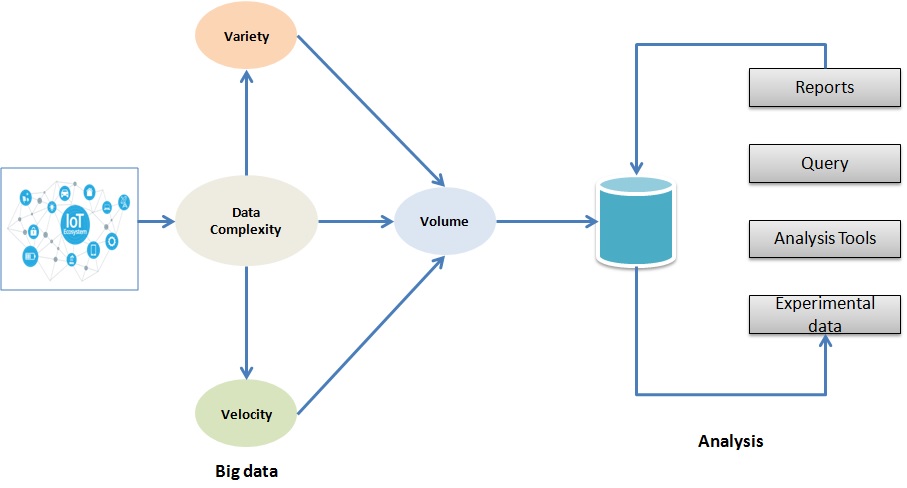
The Internet of Things (IoT) has brought about a paradigm shift in the way data is generated, collected, and analyzed. The sheer volume, variety, and velocity of data produced by IoT devices have posed significant challenges and opportunities for Big Data processing. This synergy between IoT and Big Data has revolutionized industries by enabling real-time decision-making, predictive analytics, and personalized customer experiences. In this article, we will explore the profound impact of IoT on Big Data processing and the implications for businesses and society at large.
The integration of the Internet of Things (IoT) and Big Data has emerged as a groundbreaking development, reshaping how businesses process, analyze, and extract value from massive data streams. The interplay between these two technologies is fundamentally transforming various industries by enhancing efficiencies, improving decision-making, and creating new revenue streams. Here, we delve deep into the impact of IoT on Big Data processing, exploring the challenges and opportunities this synergy presents.
Understanding IoT and Its Data Generation
IoT refers to the interconnectivity of physical devices embedded with sensors and software that communicate and exchange data. Today, IoT devices can be found everywhere – from smart home gadgets to industrial machinery. These devices collect vast amounts of data, often continuously, leading to a phenomenon known as data explosion.
In fact, according to estimates, there will be over 75 billion IoT devices in use by 2025. Each device can produce terabytes of data annually, resulting in a staggering increase in the volume, variety, and velocity of data generated. This fits perfectly with the Big Data paradigm, which emphasizes the processing and analysis of such large datasets to uncover insights.
The Role of Big Data in Managing IoT
With the explosion of data from IoT devices, the traditional methods of data processing often fall short. Big Data technologies such as Hadoop, Apache Spark, and NoSQL databases are essential for managing and analyzing this data. Here’s how Big Data frameworks effectively handle IoT-generated data:
1. Scalability
Big Data solutions are designed to scale horizontally, which means they can handle increasing data loads easily. As the number of IoT devices grows, Big Data technologies can seamlessly expand their storage and processing capabilities, ensuring performance remains robust despite larger data volumes.
2. Real-time Processing
IoT applications often require immediate responses. Technologies such as Apache Kafka and Apache Storm enable real-time data processing, allowing businesses to react swiftly to changing conditions, detect anomalies, or optimize operations in real-time.
3. Storage Solutions
The diversity of data formats generated by IoT devices – including structured, semi-structured, and unstructured data – necessitates versatile storage solutions. Big Data platforms offer various storage solutions like data lakes that can store diverse data types, making it easier for organizations to access and analyze the information as needed.
Enhancing Decision-Making with Insights
The integration of IoT with Big Data leads to more informed decision-making. Enhanced analytics derived from IoT data allow businesses to:
1. Predictive Analytics
By leveraging historical data from IoT sensors along with machine learning algorithms, organizations can forecast future trends and behaviors. This predictability can lead to significant operational efficiencies and cost savings. For instance, predictive maintenance in manufacturing uses IoT data to anticipate equipment failures before they occur, minimizing downtime.
2. Improved Customer Experience
With the constant flow of consumer data generated from smart devices, businesses can tailor their products and services more effectively to meet customer needs. By analyzing usage patterns, companies can identify trends and preferences, ultimately leading to an enhanced customer experience.
3. Enhanced Operational Efficiency
Real-time monitoring of resources through IoT devices enables organizations to optimize resource utilization and streamline operations. For example, smart logistics solutions use IoT data to optimize shipment routes and reduce delivery times, directly translating to cost savings and improved service quality.
Challenges of IoT and Big Data Integration
Though the integration of IoT and Big Data presents several advantages, it also raises notable challenges:
1. Data Privacy and Security
The massive volumes of data generated by IoT devices often contain sensitive information. Protecting this data from breaches is a significant concern. Organizations must implement robust cybersecurity measures alongside regulatory compliance to ensure data privacy and build consumer trust.
2. Data Quality and Management
Ensuring the quality of IoT data is critical, given that inaccurate data can lead to poor decision-making. Organizations need to invest in effective data management strategies, including validation and cleansing processes, to ensure the reliability of their data analytics.
3. Integration Complexity
Integrating diverse IoT devices and systems to a unified Big Data platform can be complex. Each device may use different communication protocols or data formats. Organizations must invest in middleware solutions and skilled personnel to manage these integrations successfuly.
Industry Applications of IoT and Big Data Synergy
The fusion of IoT and Big Data is making profound impacts across various industries:
1. Healthcare
In the healthcare sector, IoT devices like wearables can monitor patients’ vital signs. The data collected is processed using Big Data analytics, enabling healthcare professionals to provide personalized care and improve patient outcomes. Additionally, predictive analytics can assist in anticipating health issues before they escalate.
2. Agriculture
IoT sensors deployed in agriculture gather data on soil moisture, temperature, and crop health. Big Data processing helps farmers make informed decisions regarding irrigation and pest control, ultimately leading to increased yield and reduced resource consumption.
3. Smart Cities
Urban areas are increasingly deploying IoT technologies to collect data on traffic, energy usage, and environmental conditions. Big Data analytics processes this information to improve public services, reduce congestion, and enhance citizens’ quality of life.
The Future of IoT and Big Data Processing
As IoT continues to proliferate, the implications for Big Data processing will be profound. Businesses will need to adopt various strategies to harness this opportunity fully. Some trends to watch for include:
1. Edge Computing
The growth of IoT will likely accelerate the adoption of edge computing. This technology processes data closer to the source to improve response times and bandwidth use, supplementing traditional Big Data processing approaches that may depend heavily on centralized cloud resources.
2. AI and Machine Learning
Integrating artificial intelligence (AI) and machine learning technologies with IoT and Big Data will enable even more sophisticated analytics. Automated decision-making processes will become more prevalent, allowing organizations to optimize operations at an unprecedented pace.
3. Enhanced Interoperability
As IoT proliferates, the need for enhanced interoperability among devices and systems will grow. Future developments will focus on creating standardized protocols to enable seamless communication and integration, empowering organizations to harness the full potential of their IoT-generated data.
The impact of IoT on Big Data processing is vast and multi-dimensional, leading to innovative business models and strategies. As technologies continue to evolve, organizations must remain agile and proactive in harnessing these advancements for sustainable growth and competitive advantage.
The emergence of IoT has significantly transformed the landscape of big data processing by enabling the collection of vast amounts of real-time data from interconnected devices. This data influx presents both challenges and opportunities in data storage, processing, and analytics, making it crucial for organizations to adapt their strategies to effectively harness the potential of IoT in the realm of big data. As IoT continues to expand, the synergy between IoT and big data processing will play a vital role in driving innovation, enhancing decision-making, and creating new business opportunities across various industries.
Related posts:
 The Five Vs of Big Data: Volume, Velocity, Variety, Veracity, and Value
 Introduction to Distributed Computing in Big Data
 Understanding Data Pipelines in Big Data
 What is Apache Hadoop? A Complete Guide
 Understanding Apache Spark: Features and Use Cases
 Introduction to NoSQL Databases for Big Data
 Understanding HBase: How it Works in the Hadoop Ecosystem
 The Intersection of Big Data and Artificial Intelligence
 How Big Data Powers Machine Learning Models
 Natural Language Processing (NLP) with Big Data
 How Big Data is Used in Deep Learning Applications
 Sentiment Analysis with Big Data and AI
 Real-Time AI and Big Data: How It Works
 The Impact of Big Data on Financial Services and Banking