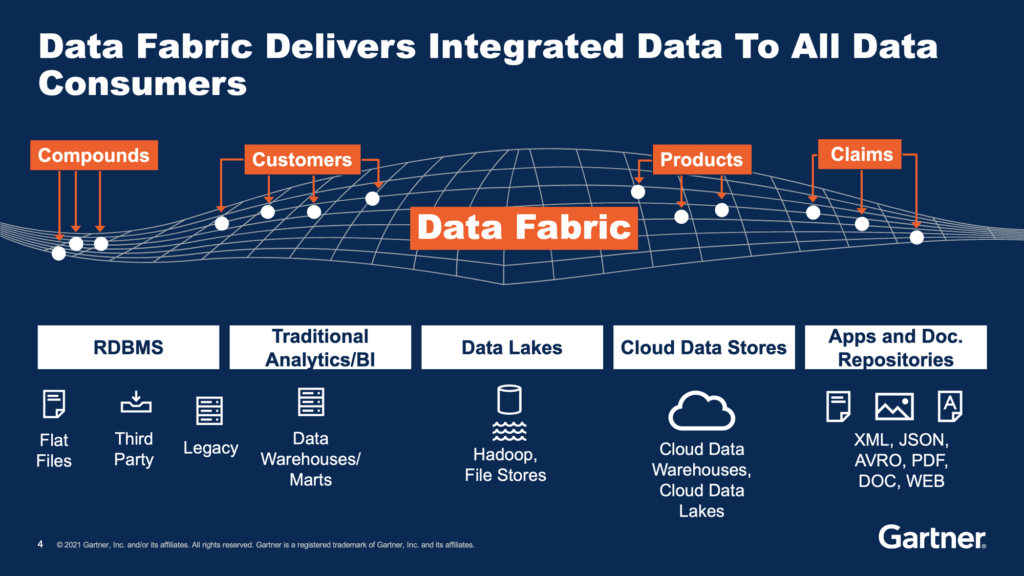
In today’s data-driven world, managing and leveraging vast amounts of data is crucial for enterprises to remain competitive. Data Fabric is a cutting-edge approach to enterprise data management that focuses on the seamless integration and utilization of big data. By weaving together different data sources, formats, and locations into a cohesive fabric, organizations can gain a unified and comprehensive view of their data landscape. This enables them to extract valuable insights, improve decision-making, and drive innovation. In this article, we will explore the benefits of using Data Fabric for enterprise data management in the realm of Big Data and how it can help organizations harness the power of their data assets effectively.
Understanding Data Fabric
Data fabric is a unified data management architecture designed to simplify and enhance the processes of data integration, management, and sharing across diverse environments. With the growing volume and complexity of big data, enterprises are increasingly turning to data fabric solutions to streamline their data management efforts. Data fabric allows organizations to manage structured, semi-structured, and unstructured data seamlessly, enabling better insights and improved decision-making.
Key Components of Data Fabric
A robust data fabric comprises several critical components and technologies, including:
- Data Integration: Consolidating data from various sources and formats into a unified view.
- Data Governance: Ensuring data quality, security, and compliance across the enterprise.
- Data Orchestration: Automating data flow and operationalizing data pipelines.
- Metadata Management: Managing data about data to enhance discoverability and usability.
- Data Analytics: Facilitating data exploration, visualization, and analysis to derive insights.
Benefits of Implementing Data Fabric for Enterprise Data Management
Implementing a data fabric solution allows enterprises to overcome challenges associated with traditional data management methods. The significant benefits include:
- Enhanced Data Accessibility: By breaking down data silos, data fabric enables users across the organization to access and utilize data seamlessly.
- Improved Data Quality: Automated processes for data validation and cleansing enhance the accuracy and reliability of data.
- Increased Agility: Enterprises can respond more rapidly to changing business needs by adapting their data strategies dynamically.
- Cost Efficiency: Organizations can reduce operational costs by optimizing data storage and management processes.
Strategies for Utilizing Data Fabric in Enterprise Data Management
1. Establish Clear Data Governance Policies
A successful data fabric implementation begins with solid data governance. Establish clear policies for data usage, quality standards, and compliance regulations. Ensure that stakeholders understand their roles and responsibilities in maintaining data integrity throughout the organization.
2. Leverage AI and Machine Learning
Incorporate artificial intelligence (AI) and machine learning (ML) technologies into your data fabric to automate and optimize data management tasks. AI can help in identifying data patterns, predicting trends, and enhancing decision-making capabilities, while ML algorithms can continuously learn and improve as new data becomes available.
3. Utilize Cloud-Based Data Storage
Cloud technology plays a pivotal role in the data fabric model. Using a cloud-based data storage environment allows businesses to store vast amounts of data without the need for extensive on-premises infrastructure. This flexibility supports scalability and facilitates easy access to data across geographical boundaries.
4. Implement Real-Time Data Processing
To stay competitive, organizations must have access to real-time data insights. Leverage the data fabric’s capabilities for real-time data processing to ensure that all aspects of your business operate based on the latest information. Technologies such as Apache Kafka or Apache Flink can help stream data in real time, supporting immediate decision-making.
5. Integrate Legacy Systems
Modernizing your enterprise’s data management often requires integrating legacy systems. A data fabric allows for the seamless connection of older systems and modern data sources, ensuring that legacy data remains valuable and accessible for contemporary analytics and reporting needs.
Best Practices for Data Fabric Implementation
1. Begin with a Clear Strategy
Before deploying a data fabric solution, outline a comprehensive strategy that aligns with your business goals. Define the specific use cases, expected outcomes, and key performance indicators (KPIs) to measure success. This roadmap will guide your implementation and ensure all initiatives are aligned with corporate objectives.
2. Invest in Quality Tools and Technologies
The effectiveness of your data fabric is largely dependent on the tools and technologies you choose. Select a combination of data integration tools, data quality solutions, analytics platforms, and governance frameworks that work well together. Ensure they are capable of handling the scale and complexity of your data landscape.
3. Foster a Data-Driven Culture
Encouraging a data-driven culture within your organization is crucial. Provide training and resources to help employees understand the importance of data in decision-making processes. Promote collaboration among teams to leverage data fabric’s capabilities across departments.
4. Monitor and Optimize Continuously
Regularly monitor the performance of your data fabric solution to identify areas for improvement. Utilize analytics to assess how effectively data is being utilized across your enterprise. Be prepared to iterate on your strategies to optimize processes based on changing business requirements and technological advancements.
Challenges in Implementing Data Fabric
Although data fabric offers numerous benefits, organizations may face challenges during implementation. Some common obstacles include:
- Complexity of Integration: Connecting disparate data sources, especially legacy systems, can complicate the implementation process.
- Data Security Concerns: With increased accessibility comes the challenge of ensuring data security and compliance.
- Skill Gaps: Organizations may struggle to find professionals with the requisite skills to implement and manage data fabric environments.
- Change Management: Shifting to a data fabric model requires a cultural change within the organization, which may face resistance from staff.
Measuring the Success of Data Fabric
To determine the effectiveness of your data fabric implementation, consider measuring success through various metrics:
- Data Accessibility: Assess how easily employees can access the data they need.
- Data Quality Metrics: Evaluate the accuracy, completeness, and reliability of the data being used.
- User Adoption Rates: Track the number of employees leveraging data resources and tools provided by the data fabric.
- Operational Efficiency: Measure improvements in business processes and decision-making times attributed to enhanced data access.
Conclusion
Adopting a data fabric approach to enterprise data management offers numerous advantages for organizations leveraging big data. By understanding how to implement and optimize a data fabric solution, businesses can unlock valuable insights, drive innovation, and enhance competitiveness in today’s data-driven landscape.
Adopting a data fabric approach for enterprise data management in the context of Big Data provides a comprehensive and integrated solution to effectively handle large volumes of varied data sources. By breaking down silos and facilitating seamless data access, processing, and analysis, data fabric empowers organizations to make informed decisions, drive innovation, and stay competitive in today’s data-driven landscape.
Related posts:
 The Five Vs of Big Data: Volume, Velocity, Variety, Veracity, and Value
 What is a Data Lake? Definition, Uses, and Benefits
 Introduction to Distributed Computing in Big Data
 Understanding Data Pipelines in Big Data
 Data Ingestion Techniques for Big Data Processing
 What is Apache Hadoop? A Complete Guide
 Understanding Apache Spark: Features and Use Cases
 What is Kafka? How it Powers Real-Time Big Data Applications
 Apache Flink vs. Apache Spark: Which One is Better?
 Introduction to NoSQL Databases for Big Data
 The Role of MongoDB in Big Data Analytics
 Understanding HBase: How it Works in the Hadoop Ecosystem
 How Elasticsearch is Used in Big Data Applications
 The Intersection of Big Data and Artificial Intelligence