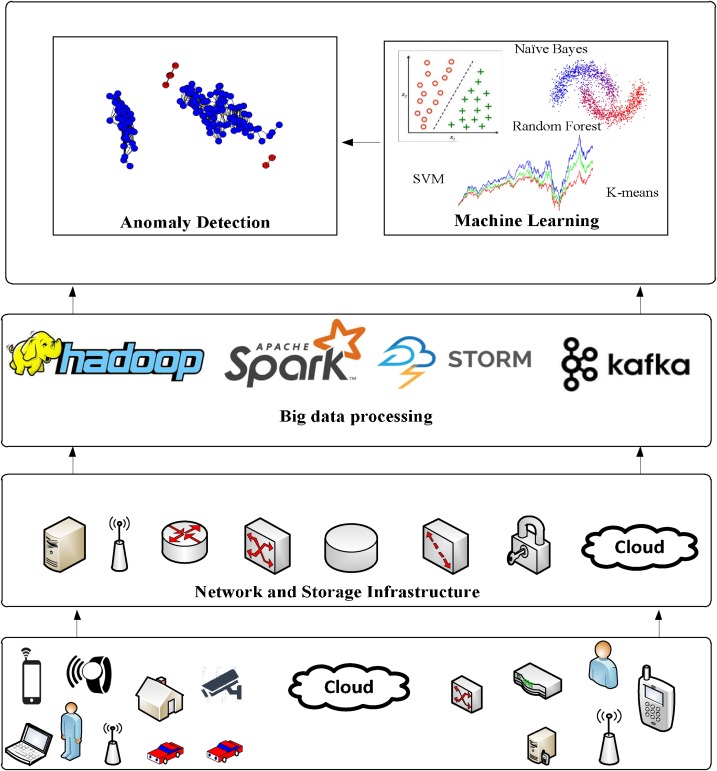
Anomaly detection is a critical task in leveraging the power of Big Data to detect unusual patterns, outliers, and potential fraud within vast datasets. As organizations continue to amass increasingly large volumes of data, the need to harness this information to detect anomalies becomes paramount. By utilizing advanced analytics and machine learning algorithms on Big Data platforms, businesses can proactively identify deviations from normal behavior and take swift corrective actions. In this article, we will explore how Big Data technologies can be leveraged to perform anomaly detection effectively, driving insights and improving decision-making processes.
In today’s data-driven world, anomaly detection has emerged as a critical aspect of Big Data analytics. It involves identifying rare items, events, or observations which raise suspicions by differing significantly from the majority of the data. Performing effective anomaly detection can lead to insights that help organizations prevent fraud, enhance security, and improve operational efficiency. Below, we will explore the methodologies and tools required for anomaly detection in the realm of Big Data.
Understanding Anomaly Detection
Anomaly detection can be classified into several types:
- Point Anomalies: An individual data point that is significantly different from the rest.
- Contextual Anomalies: Data points that are considered anomalies within a specific context.
- Collective Anomalies: A collection of data points that may not be anomalous individually but are unusual when considered together.
The identification of anomalous data is crucial because it can indicate potential issues in systems, fraud in financial transactions, or irregularities in network security.
Common Techniques for Anomaly Detection
Various techniques are used for anomaly detection, many of which are powered by Big Data technologies. The most commonly employed methods include:
1. Statistical Methods
Statistical techniques rely on the assumption that the data follows a particular distribution. By calculating the mean and standard deviation, you can determine thresholds to identify outliers. Common approaches include:
- Z-score Analysis: A method that employs the Z-score to identify anomalies based on how far a point deviates from the mean.
- Grubbs’ Test: Used for detecting outliers in univariate datasets.
2. Machine Learning Techniques
Machine learning techniques have gained popularity due to their ability to learn from data without being explicitly programmed:
- Supervised Learning: Involves training a model on a labeled dataset where abnormalities are already known. Algorithms such as Random Forest or Support Vector Machines (SVM) can be employed.
- Unsupervised Learning: Unlabeled data is used, making it suitable for identifying anomalies in mixed data types. Popular algorithms include K-Means Clustering and Isolation Forest.
3. Deep Learning Approaches
Deep learning models, especially Recurrent Neural Networks (RNNs) and Autoencoders, have shown remarkable results in detecting anomalies in time-series data. These models can capture intricate patterns and dependencies in complex datasets.
Data Preprocessing for Anomaly Detection
Preparing your data is a critical step for effective anomaly detection. Here are key steps in the data preprocessing phase:
1. Data Cleaning
Cleaning your data involves removing duplicates, handling missing values, and filtering out noise. Inaccurate data can significantly impact model performance, leading to false positives or negatives in anomaly detection.
2. Feature Engineering
Creating relevant features is vital for improving the model’s ability to capture anomalies. This may include:
- Normalizing Data: Ensuring values lie within a similar range.
- Dimensionality Reduction: Techniques such as Principal Component Analysis (PCA) can help reduce the feature space while preserving the relevant structures.
3. Data Transformation
Transforming the data into a suitable format, such as using logarithmic scaling or Box-Cox transformations, can help stabilize variance and make the data easier to model.
Big Data Tools and Technologies for Anomaly Detection
Several tools and technologies can facilitate anomaly detection in Big Data:
1. Apache Spark
Apache Spark provides a powerful framework for large-scale data processing. Its MLlib library encompasses machine learning algorithms, including those for anomaly detection. Spark’s RDDs (Resilient Distributed Datasets) allow for the manipulation of large datasets efficiently.
2. Hadoop Ecosystem
The Hadoop ecosystem includes tools such as Hive, Pig, and HBase that can be utilized to process and query large datasets, making it easier to perform initial exploratory analysis before applying anomaly detection algorithms.
3. TensorFlow and Keras
TensorFlow and Keras are popular deep learning frameworks that can be used for building more sophisticated anomaly detection models, especially for unstructured data.
4. ELK Stack
The ELK Stack (Elasticsearch, Logstash, Kibana) can be effectively used for real-time log analysis and monitoring. Elasticsearch supports querying and indexing logs, allowing for rapid detection of anomalies in log data.
Evaluating Anomaly Detection Models
Once you have developed your anomaly detection model, you need to evaluate its performance. Key metrics include:
- Precision: The ratio of true positives to the sum of true and false positives.
- Recall: The ratio of true positives to the sum of true positives and false negatives.
- F1 Score: A harmonic mean of precision and recall, providing a balance between the two.
- AUC-ROC Curve: Measures the trade-off between sensitivity and specificity at various classification thresholds.
Real-world Applications of Anomaly Detection in Big Data
Anomaly detection has a wide range of applications across various industries:
1. Fraud Detection in Finance
Financial institutions utilize anomaly detection to detect fraudulent activities, such as unusual spending patterns on credit cards or anomalous withdrawals from accounts.
2. Network Security
In cybersecurity, monitoring network traffic for unusual patterns can help in identifying potential intrusions or malicious activities.
3. Manufacturing and IoT
In manufacturing, anomaly detection can be applied in predictive maintenance. Detecting deviations in machine performance can prevent costly downtimes.
4. Health Monitoring
In healthcare, monitoring patient vitals in real-time can help detect anomalies that might indicate medical emergencies.
Challenges in Anomaly Detection in Big Data
Despite its utility, several challenges persist in anomaly detection:
- High Volume of Data: The sheer amount of data can overwhelm traditional processing systems, making real-time anomaly detection difficult.
- Data Variety: Different types of data require different methods for effective anomaly detection.
- Dynamic Nature of Data: Anomaly detection systems need to adapt to changes in the underlying data patterns over time.
Overcoming these challenges requires continual refinement of algorithms, the adoption of new technologies, and the incorporation of feedback loops for model improvement.
Conclusion
By understanding the methodologies, tools, and best practices for anomaly detection in Big Data, organizations can tap into significant insights that enhance decision-making processes, mitigate risks, and improve overall efficiency. Embracing anomaly detection is no longer an option but a necessity for those aiming to stay competitive.
Leveraging Big Data for anomaly detection offers the ability to identify irregular patterns and outliers at scale, enabling organizations to enhance decision-making, improve security measures, and optimize operational efficiency. By utilizing advanced analytics techniques and machine learning algorithms on large datasets, businesses can proactively detect and address anomalies to mitigate risks and drive business success. Embracing Big Data for anomaly detection holds significant potential for organizations seeking to stay ahead in the rapidly evolving landscape of data-driven insights and intelligence.
Related posts:
 What is Big Data? A Beginner’s Guide
 The Five Vs of Big Data: Volume, Velocity, Variety, Veracity, and Value
 Structured vs. Unstructured Data: Key Differences and Examples
 What is a Data Lake? Definition, Uses, and Benefits
 Introduction to Distributed Computing in Big Data
 Understanding Data Pipelines in Big Data
 The Evolution of Big Data Technologies: Past, Present, and Future
 Data Ingestion Techniques for Big Data Processing
 What is Apache Hadoop? A Complete Guide
 Understanding Apache Spark: Features and Use Cases
 What is Kafka? How it Powers Real-Time Big Data Applications
 Apache Flink vs. Apache Spark: Which One is Better?
 Introduction to NoSQL Databases for Big Data
 The Role of MongoDB in Big Data Analytics