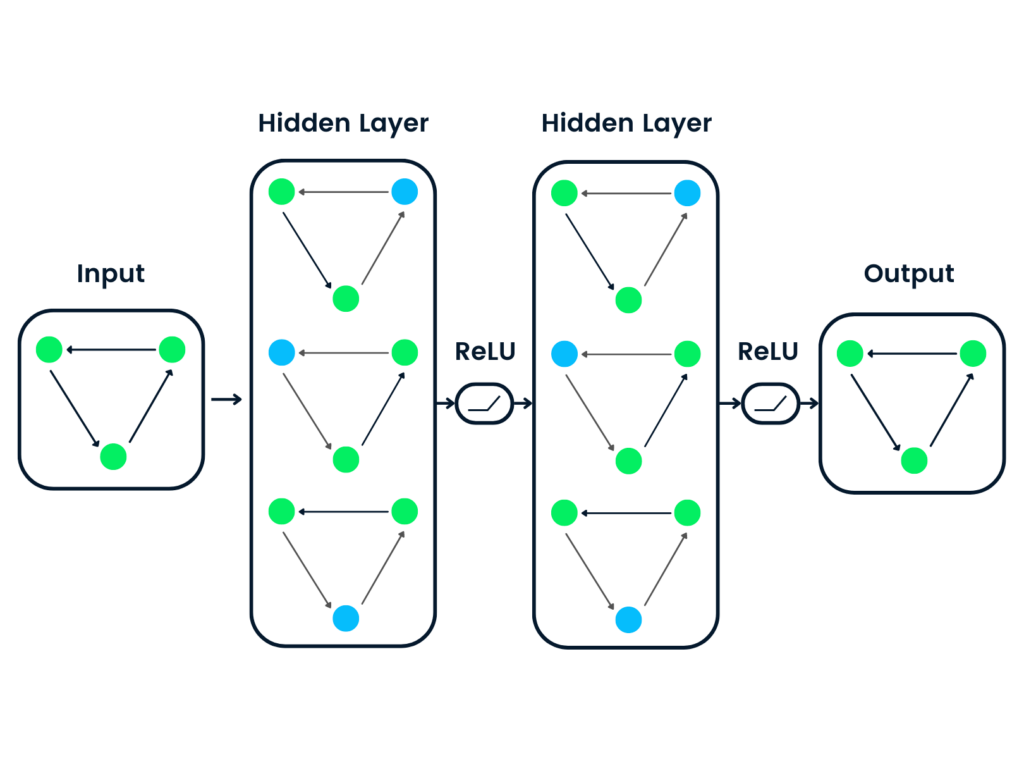
Graph Neural Networks (GNNs) have emerged as a powerful tool for analyzing and extracting insights from Big Data sets that can be represented as graphs or networks. By leveraging the inherent structure and relationships within data, GNNs can uncover valuable patterns and hidden connections that traditional machine learning algorithms may overlook. In this introduction, we will explore how GNNs can be effectively utilized in the context of Big Data, highlighting their capabilities in enhancing data analysis, classification, recommendation systems, and anomaly detection. Let’s delve into how GNNs can revolutionize the way we handle and extract meaningful information from massive datasets in the era of Big Data.
Understanding Graph Neural Networks (GNNs)
Graph Neural Networks (GNNs) are a powerful class of neural networks specifically designed to work with graph-structured data. As the complexity of data increases in the era of Big Data, conventional models often struggle to capture intricate relationships in large datasets. GNNs offer a solution by utilizing the connections and relationships between data points, making them particularly effective for tasks related to networks, social media, fraud detection, and more.
The Importance of GNNs in Big Data
In the world of Big Data, the ability to analyze interrelated data points is crucial. Traditional machine learning techniques may not excel in this domain because they treat data samples independently. In contrast, GNNs leverage the structural information inherent in graph data, thereby enhancing the predictive capabilities of models analyzing complex datasets.
With GNNs, organizations can extract meaningful insights from vast amounts of data, which is increasingly becoming necessary across sectors such as finance, healthcare, and social media analytics.
Key Components of GNNs
Before diving into practical applications, it’s vital to understand the core components of GNNs:
- Nodes: Represent entities in the dataset.
- Edges: Represent the relationships between nodes.
- Node Features: Characteristics of each node, which can vary across different datasets.
- Message Passing: The process through which information is exchanged between connected nodes to update their features.
- Pooling Layers: Aggregate features at different levels, often used for node classification and graph-level classification tasks.
How to Implement GNNs with Big Data
Utilizing GNNs for Big Data applications encompasses several steps, from data preparation to model evaluation. Below is a detailed guide.
Step 1: Data Preparation
Data preparation is a crucial step in employing GNNs. Follow these guidelines:
- Data Collection: Gather data suitable for graph representation. This can include social networks, transportation data, or even text data that can be linked through context.
- Graph Construction: Convert your dataset into a graph format. Utilize libraries like NetworkX or Neo4j to create nodes and edges based on your data relationships.
- Feature Engineering: Enhance your graph by adding features to nodes and edges. This might involve deriving metrics like centrality or degree for each node.
- Data Normalization: Normalize the features to ensure uniformity across your dataset, improving GNN training stability.
Step 2: Choosing a GNN Framework
Numerous frameworks exist to facilitate the implementation of GNNs. Here are some popular choices:
- PyTorch Geometric: A library that extends PyTorch with a set of utilities to work with graph data.
- DGL (Deep Graph Library): A flexible library for easy implementation of GNNs catering to various architectures.
- Spektral: A Python library geared towards building GNNs in TensorFlow/Keras.
Ensure that the framework you choose is compatible with the size of your dataset and supports distributed computing, as Big Data often requires significant computational resources.
Step 3: Model Architecture Design
The flexibility of GNNs allows for various architectures based on your specific needs:
- GCN (Graph Convolutional Network): A widely-used GNN architecture that uses convolutional operations to aggregate features from neighbors.
- GAT (Graph Attention Network): An architecture that applies attention mechanisms to focus on significant neighbors, enhancing the model’s interpretability.
- GraphSAGE: This architecture samples neighbors in a scalable manner, enabling effective learning without the necessity of accessing the full graph.
- Graph Isomorphism Network (GIN): Designed to distinguish between different graph structures, proving beneficial in scenarios requiring precise structural differentiation.
Step 4: Training the GNN Model
Once you have designed your model, training it effectively is crucial. Here are some strategies:
- Loss Functions: Depending on the task (node classification, graph classification), select an appropriate loss function such as cross-entropy or mean squared error.
- Optimization Algorithms: Use optimizers like Adam or SGD for efficient training. Regularly adjust the learning rate to prevent overfitting.
- Batch Training: Employ mini-batch training to handle larger datasets. Use techniques such as neighbor sampling to create manageable batches.
Step 5: Model Evaluation
Evaluating the performance of your GNN model is essential to understand its effectiveness:
- Metrics: Common metrics used for evaluation include accuracy, F1 score, precision, and recall.
- Cross-Validation: Train and validate your model using k-fold cross-validation to ensure its generalizability.
- Visualization: Utilize tools like TensorBoard or custom visualization libraries to inspect how well the model learns from the graph.
Real-World Applications of GNNs in Big Data
Employing GNNs in real-world applications can illustrate their potential:
- Social Network Analysis: GNNs can identify communities within social networks, detect anomalies, and predict user behavior based on connections.
- Recommendation Systems: GNNs can enhance personalized recommendations by analyzing user-item interaction graphs, thus improving user engagement.
- Financial Fraud Detection: By modeling transactions as a graph, GNNs can effectively identify suspicious activities based on historical transaction patterns.
- Bioinformatics: GNNs are used to model protein-protein interaction networks, helping in drug discovery and understanding disease mechanisms.
Overcoming Challenges of GNNs in Big Data
While GNNs offer significant advantages, there are challenges to address:
- Scalability: As graph size increases, traditional GNN architectures may struggle. Techniques like sampling, pooling, or maintaining subgraphs can mitigate this.
- Data Imbalance: Imbalanced data in graphs can lead to biased results. Utilize techniques such as oversampling, synthetic data generation, or adjusting class weights in the loss function to tackle this issue.
- Interpretability: GNN models can often be more challenging to interpret than traditional models. Employ visualization techniques and model explainability tools to improve transparency.
The Future of GNNs in Big Data
Looking ahead, the future of GNNs in the context of Big Data is promising. As technology advances, GNNs will integrate more seamlessly with modern Big Data tools like Apache Spark and Hadoop, which will enhance their scalability and accessibility. Moreover, advancements in self-supervised learning and transfer learning are expected to further boost the performance of GNNs on high-dimensional, sparse graph data.
Graph Neural Networks (GNNs) offer a powerful and versatile tool for analyzing and deriving insights from Big Data represented in graph structures. By leveraging the unique capabilities of GNNs, organizations can effectively extract valuable information, make accurate predictions, and optimize decision-making processes in the realm of Big Data analytics. Embracing GNNs as part of the Big Data toolkit can unlock new opportunities for innovation and drive significant advancements in data-driven applications across various industries.
Related posts:
 What is Big Data? A Beginner’s Guide
 The Five Vs of Big Data: Volume, Velocity, Variety, Veracity, and Value
 Structured vs. Unstructured Data: Key Differences and Examples
 What is a Data Lake? Definition, Uses, and Benefits
 Introduction to Distributed Computing in Big Data
 Understanding Data Pipelines in Big Data
 The Evolution of Big Data Technologies: Past, Present, and Future
 Data Ingestion Techniques for Big Data Processing
 What is Apache Hadoop? A Complete Guide
 Understanding Apache Spark: Features and Use Cases
 What is Kafka? How it Powers Real-Time Big Data Applications
 Apache Flink vs. Apache Spark: Which One is Better?
 Introduction to NoSQL Databases for Big Data
 The Role of MongoDB in Big Data Analytics