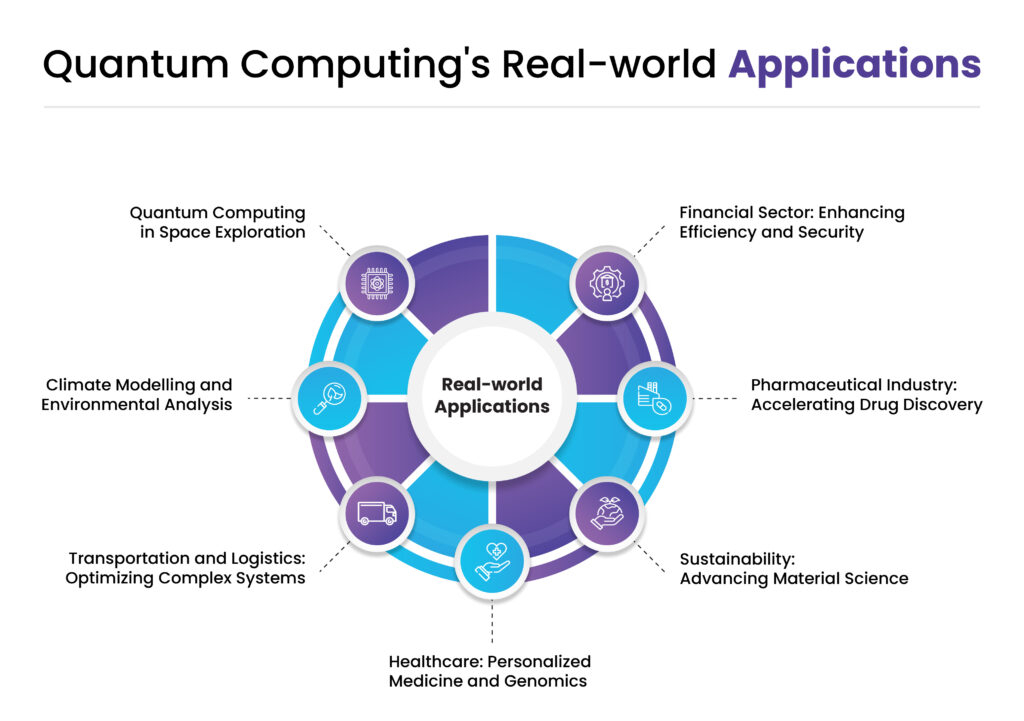
As the volume of data generated and processed continues to grow exponentially, the need for robust encryption methods to secure this vast amount of information is paramount. Quantum computing has emerged as a disruptive technology that has the potential to revolutionize the field of encryption. In the context of big data, the impact of quantum computing on encryption raises significant concerns and challenges. This article explores the intersection of quantum computing and big data encryption, delving into the implications for data security and privacy in an increasingly data-driven world.
The advent of quantum computing is revolutionizing numerous fields, including the realm of big data. One of the critical areas experiencing profound changes is data encryption, a cornerstone of data security. As we explore how quantum computing affects big data encryption, it’s essential to understand both quantum technology itself and the implications for securing vast data landscapes.
Understanding Quantum Computing
Quantum computing utilizes the principles of quantum mechanics to process information. Unlike classical computers that rely on bits (0s and 1s), quantum computers use qubits that can represent and store information in multiple states simultaneously. This property, known as superposition, allows quantum computers to solve complex problems at unprecedented speeds.
Quantum entanglement and quantum tunneling are two additional phenomena that play a crucial role in enhancing computational capabilities. This technological advancement holds the potential to revolutionize industries that rely heavily on large datasets, including finance, healthcare, and cybersecurity.
The Role of Encryption in Big Data
With the exponential growth of big data, protecting sensitive information has become paramount. Data encryption is the process of transforming readable data into an encoded format that can only be reverted to a readable format by someone who has the right decryption key. In the context of big data, encryption secures sensitive information such as personal identifiers, financial transactions, and intellectual property against unauthorized access and breaches.
As organizations collect and store massive volumes of data, they increasingly depend on advanced encryption techniques to protect their assets. Common encryption standards, such as AES (Advanced Encryption Standard) and RSA (Rivest-Shamir-Adleman), are widely used. However, the rise of quantum computing poses significant threats to these encryption methodologies.
The Threat Posed by Quantum Computers
Quantum computers have the potential to break many of the traditional encryption algorithms in use today. Here’s why:
1. Attacking Asymmetric Encryption
Asymmetric encryption, such as RSA, relies on the difficulty of factoring large prime numbers. Classical computers struggle with this task, making RSA an effective encryption method. However, quantum computers can utilize Shor’s algorithm, which efficiently factors these large numbers, effectively rendering RSA and similar encryption techniques vulnerable.
2. Breaking Symmetric Algorithms
Symmetric encryption methods like AES are generally more resilient against quantum attacks. Yet, quantum systems could theoretically reduce the complexity of breaking these algorithms. For instance, Grover’s algorithm allows a quantum computer to perform a brute-force search in O(√N) time rather than the O(N) time required by classical computers. This means that a 256-bit AES key’s security level would effectively drop to that of a 128-bit key against quantum adversaries, raising concerns about sufficient key lengths.
Implications for Big Data Encryption
As quantum computing evolves, it is vital for organizations dealing with big data to reassess their encryption strategies. Here are several implications:
1. Transition to Quantum-Resistant Algorithms
To safeguard against quantum threats, there is an urgent need to transition to quantum-resistant cryptographic algorithms. These algorithms are specifically designed to be secure against the capabilities of quantum computers, ensuring that sensitive data remains protected even in a post-quantum era. Some examples of quantum-resistant algorithms include:
- Post-Quantum Cryptography (PQC): A developing field focused on creating algorithms that withstand quantum attacks.
- Lattice-Based Cryptography: These algorithms rely on the hardness of lattice problems, which are believed to be secure against quantum attacks.
- Hash-Based Cryptography: Techniques such as Hash-Based Signatures provide a promising approach for creating signatures that remain robust in the quantum age.
2. Data Security Practices Must Evolve
Organizations must recognize that conventional data security practices may no longer suffice in the age of quantum computing. A proactive approach must include:
- Regular Security Audits: Frequent assessments of encryption methods and their resilience against quantum threats.
- Enhanced Key Management: Implementing key management solutions that accommodate larger key sizes and quantum-resistant algorithms.
- Training and Awareness: Educating employees and stakeholders about the potential risks associated with quantum computing and data security.
3. Regulatory Compliance and Data Protection Laws
As quantum technology advances, compliance with data protection laws will remain a challenge. Regulators might establish new standards emphasizing quantum-resistant algorithms, leading organizations to adapt quickly to remain compliant. It’s imperative for companies executing big data strategies to stay informed about regulatory shifts and adopt practices that satisfy emerging legal requirements.
Collaboration Between Industry and Academia
The race to develop secure quantum-resistant encryption methods is a collaborative effort that necessitates the participation of tech companies, researchers, and policymakers. Collaboration with academic institutions can accelerate the discovery of effective solutions. Initiatives such as the NIST Post-Quantum Cryptography Standardization project aim to identify and standardize quantum-resistant algorithms, offering a framework for organizations to adopt.
The Future of Big Data Encryption in a Quantum World
Looking ahead, the future of big data encryption will likely be shaped by the following key trends:
1. Increased Investment in Quantum Research
Corporations and governments will likely ramp up investment in quantum computing research and development, with the aim of developing robust solutions to tackle encryption challenges. This investment will facilitate breakthroughs in quantum-resistant algorithms and establish a new security paradigm.
2. Greater Public Awareness of Quantum Risks
The potential risks posed by quantum computing will lead to increased public awareness. As organizations engage in more conversations about data security in a quantum world, consumers will become more informed about the importance of strong encryption practices and their implications for personal data security.
3. Evolution of Cryptographic Practices
The landscape of cryptographic practices will need to evolve continuously. As technology develops, organizations will have to adapt by integrating multifactor authentication, quantum key distribution, and other advancements that enhance encryption mechanisms in big data environments.
Conclusion
The transformative power of quantum computing holds both opportunities and challenges for big data encryption. Understanding the implications of this emerging technology is crucial for individuals and organizations invested in data security. By embracing quantum-resistant methodologies and evolving security practices, businesses can position themselves to thrive in a future where quantum computing disrupts traditional encryption paradigms.
The advent of quantum computing presents both challenges and opportunities for big data encryption. As quantum computers become more powerful, traditional encryption methods may become vulnerable, necessitating the development of quantum-resistant algorithms. However, quantum computing also offers the potential to enhance data security through advanced encryption techniques. As big data continues to grow in complexity and volume, the intersection of quantum computing and encryption will play a crucial role in protecting sensitive information and ensuring data integrity in the digital age.
Related posts:
 The Future of Digital Twins in Large-Scale Big Data Simulations
 The Impact of Federated Analytics on Big Data Privacy
 The Role of Causal AI in Understanding Big Data Relationships
 How to Perform Large-Scale Time Series Forecasting with Big Data
 The Role of AutoML in Scaling Big Data Model Deployment
 How to Optimize Storage Formats for Big Data Performance
 The Importance of Event Sourcing in Big Data Architecture
 How to Perform Real-Time Outlier Detection in Big Data Pipelines
 The Future of AI-Powered Data Wrangling for Big Data Scientists
 The Role of Synthetic Tabular Data Generation in Big Data Training Sets
 The Future of Hypergraph-Based Machine Learning in Big Data Applications
 The Impact of Transfer Learning on Large-Scale AI Models
 How to Use Apache SeaTunnel for ETL in Big Data Pipelines
 The Role of AI in Automated Feature Selection for Big Data Models