Knowledge graphs are becoming increasingly crucial in the realm of Big Data, offering a structured way to organize and map complex relationships between data points. With the ever-growing volume and variety of data being generated, knowledge graphs provide a powerful tool for extracting valuable insights and enabling smarter decision-making. As we continue to harness the potential of Big Data, the evolution and utilization of knowledge graphs are poised to play a pivotal role in unlocking the full potential of data analytics and driving innovation in various industries. This article explores the future of knowledge graphs in Big Data, examining their impact, challenges, and opportunities in the rapidly evolving landscape of data-driven technologies.
Knowledge graphs are rapidly evolving, becoming an essential component in the realm of Big Data. As organizations continue to generate and process vast quantities of data, the ability to create connections between disparate data sources is imperative. This article delves into the future of knowledge graphs specifically in the context of Big Data, exploring their significance, applications, and the technological advancements that are shaping their development.
Understanding Knowledge Graphs
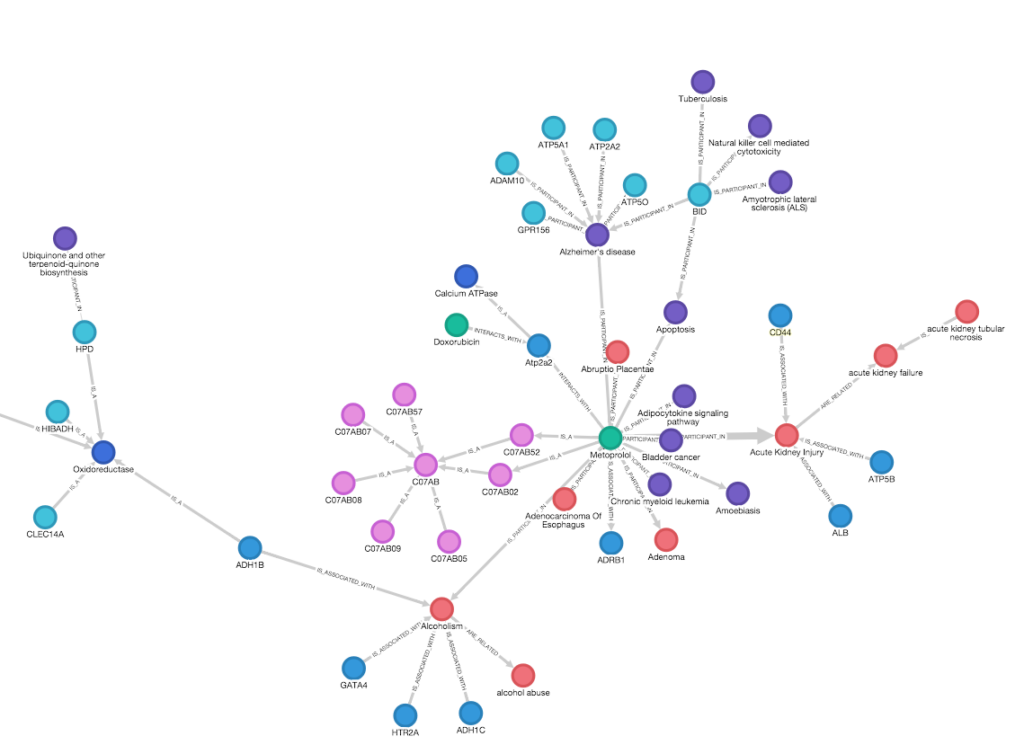
A knowledge graph is a structured representation of data that emphasizes the relationships and connections between entities. These entities can represent anything from people and places to concepts and events. Knowledge graphs utilize nodes (representing entities) and edges (representing the relationships) to create a visual representation of information that is easily navigable.
With the deluge of data generated every second, there is an increasing need for effective data organization and retrieval. Knowledge graphs provide a robust framework to manage unstructured and semi-structured data prevalent in today’s Big Data landscape. They allow for more intuitive querying, better insights, and enhanced data compatibility across various sources.
The Role of Knowledge Graphs in Big Data Analytics
As organizations are flooded with Big Data, extracting meaningful insights becomes a significant challenge. Knowledge graphs play a pivotal role in facilitating big data analytics in several ways:
1. Enhanced Data Integration
Organizations often struggle to integrate data from various sources. Knowledge graphs enable seamless data integration by providing a unified view of these disparate data points. This not only improves data accessibility but also ensures that insights drawn from various sources are coherent and contextually relevant.
2. Improved Search Capabilities
Traditional search algorithms often return results in a linear manner, which can be restrictive. Knowledge graphs enhance search capabilities by allowing semantic search, which understands the context of the query. As a result, users can obtain precise answers rather than a list of documents, enhancing the overall data discovery experience.
3. Contextual Understanding
Knowledge graphs facilitate contextual information retrieval by understanding the relationships between data points. In the era of Big Data, where information can be overwhelming, knowledge graphs provide a way to filter and process data based on its context, leading to more accurate insights.
Emerging Technologies in Knowledge Graphs
The future of knowledge graphs is being shaped by various technological advancements. Here are some key trends:
1. Artificial Intelligence and Machine Learning
Artificial Intelligence (AI) and Machine Learning (ML) are becoming increasingly intertwined with knowledge graphs. These technologies can enhance the ability of knowledge graphs to extract relationships and insights from unstructured data. For example, natural language processing (NLP) allows knowledge graphs to understand and process human language, making it easier to extract entities and their relationships from large text data sets. The integration of AI will also improve the automated population of knowledge graphs, whereby new data can continually update the graph without manual intervention.
2. Graph Database Technology
The need for enhanced data storage solutions has led to the rise of graph databases, which are designed to handle the complexities of graph structures. Graph databases like Neo4j and Amazon Neptune offer scalable storage and retrieval capabilities, making them an ideal choice for organizations leveraging knowledge graphs in the Big Data sphere. This advancement allows for more efficient data management, thereby accelerating the speed of data retrieval and analysis.
3. Advanced Semantic Web Technologies
The future of knowledge graphs is also intertwined with the Semantic Web. Technologies such as RDF (Resource Description Framework) and OWL (Web Ontology Language) enable better sharing and reusability of data across different domains. As these technologies evolve, they will enhance the capability of knowledge graphs to provide rich, interconnected datasets that improve decision-making processes.
Industry Applications of Knowledge Graphs in Big Data
Knowledge graphs are proving to be invaluable across various industries through their application in Big Data analytics. Here are some prominent examples:
1. Healthcare
In the healthcare sector, knowledge graphs are utilized for patient care, drug discovery, and operational efficiency. They connect various data sources such as electronic health records (EHR), clinical trials, and pharmacological data. By establishing relationships within this data, healthcare organizations can identify trends, predict patient outcomes, and personalize treatment plans more effectively.
2. Finance
Financial institutions leverage knowledge graphs to detect fraud and assess risk. By understanding the connections between different entities (such as users, transactions, and accounts), these organizations can build models that flag suspicious activities, ensuring better compliance and resource allocation.
3. E-commerce
Knowledge graphs enhance the customer experience in e-commerce by providing personalized product recommendations. By analyzing user behavior and preferences in conjunction with product information, organizations can use knowledge graphs to improve conversion rates and customer satisfaction.
Challenges and Considerations
While the potential of knowledge graphs in Big Data is immense, there are also challenges that organizations need to consider:
1. Data Quality
The effectiveness of a knowledge graph heavily relies on the quality of the underlying data. Incomplete, inaccurate, or outdated information can lead to erroneous insights. Organizations must invest in data cleansing and validation processes to ensure that their knowledge graphs are built on a solid foundation.
2. Scalability
As the volume of Big Data continues to grow, scalability becomes a significant concern. Knowledge graphs should not only be able to manage current data but also scale effectively as new data is integrated. This requires robust architecture and advanced technologies that can accommodate rapid growth.
3. Expert Skills
Building and managing knowledge graphs requires specialized expertise in data modeling, graph theory, and analytics. There is often a skills gap that organizations must bridge, which can hinder their ability to reap the full benefits of knowledge graphs.
The Future Outlook for Knowledge Graphs in Big Data
Looking ahead, the future of knowledge graphs in Big Data appears bright, with continued investment and innovation expected. As organizations recognize the value of interconnectivity in their data, knowledge graphs will serve as critical enablers in their data strategies.
Furthermore, as more organizations adopt cloud technologies, the scalability and flexibility of knowledge graphs will improve. This will encourage more businesses to integrate and leverage knowledge graphs for enhanced analytics and insights.
Moreover, with the rise of open data initiatives, collaboration among organizations will lead to richer knowledge graphs. As parties share their data in a structured manner, they will create more comprehensive knowledge graphs that encompass a broader scope of information, driving better insights and decision-making.
Knowledge graphs are poised to revolutionize the way organizations manage, analyze, and utilize Big Data. Their capacity to integrate diverse data sources, provide contextual insights, and enhance data discoverability will make them indispensable tools in the evolving landscape of Big Data analytics.
Knowledge graphs are poised to revolutionize the field of Big Data by enabling structured and interconnected data representation. The integration of knowledge graphs in Big Data holds the promise of enhanced data discovery, deeper insights, and improved decision-making. As we move forward in the era of Big Data, knowledge graphs will play a vital role in unlocking the full potential of data analytics and driving innovation in various industries.
Related posts:
 What is Big Data? A Beginner’s Guide
 The Five Vs of Big Data: Volume, Velocity, Variety, Veracity, and Value
 Structured vs. Unstructured Data: Key Differences and Examples
 The Role of Data Warehousing in Big Data
 What is a Data Lake? Definition, Uses, and Benefits
 Introduction to Distributed Computing in Big Data
 Big Data vs. Traditional Data: What’s the Difference?
 Understanding Data Pipelines in Big Data
 The Evolution of Big Data Technologies: Past, Present, and Future
 Data Ingestion Techniques for Big Data Processing
 What is Apache Hadoop? A Complete Guide
 Understanding Apache Spark: Features and Use Cases
 What is Kafka? How it Powers Real-Time Big Data Applications
 Apache Flink vs. Apache Spark: Which One is Better?