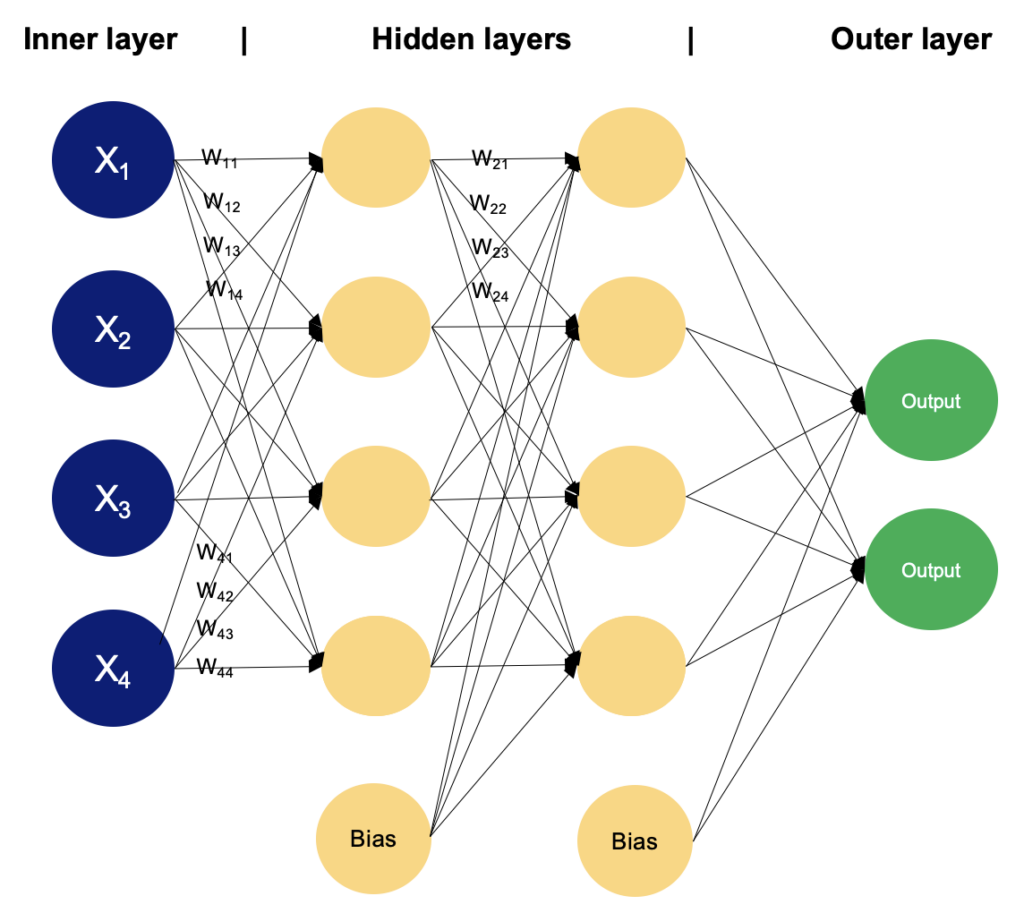
In the realm of Big Data applications, building a Multi-Layer Perceptron (MLP) serves as a powerful tool for tackling complex problems through deep learning techniques. MLPs are neural networks with multiple layers that can effectively handle massive datasets and extract valuable insights from them. In this article, we will delve into the intricacies of constructing an MLP tailored for Big Data applications, exploring key considerations, best practices, and practical tips for maximizing its performance in a data-rich environment. By understanding how to effectively harness MLPs in the realm of Big Data, organizations can unlock the full potential of their data assets and drive impactful decisions and innovations.
Understanding Multi-Layer Perceptrons (MLPs)
A Multi-Layer Perceptron (MLP) is a class of feedforward artificial neural network. It consists of multiple layers of nodes, each layer fully connected to the next one. MLPs are known for their ability to learn complex patterns due to their deep learning capabilities. In Big Data applications, MLPs can be utilized for tasks such as classification, regression, and more.
Before diving into the building process, let’s outline the essential components of an MLP:
- Input Layer: The first layer that receives input features.
- Hidden Layers: Layers that process the inputs through multiple neurons.
- Output Layer: The layer that produces the final prediction or output.
Setting Up the Environment
To build an MLP for Big Data applications, proper setup of the environment is crucial. Follow these steps:
- Choose a Programming Language: Python is highly recommended due to its rich ecosystem of libraries for machine learning.
- Install Required Libraries: Use libraries such as TensorFlow or Keras for building and training MLPs. You can install them using pip:
pip install tensorflow keras
In addition, consider using Apache Spark for distributed data processing, especially for handling large datasets.
Data Preparation
Data is the backbone of any machine learning model. For your MLP to perform effectively on Big Data, the following steps should be taken:
1. Data Collection
Gather relevant datasets. Ensure your data is large enough to be classified as Big Data, which typically means it is in the range of terabytes or petabytes.
2. Data Cleaning
Remove any duplicates, handle missing values, and correct inconsistencies to maintain data quality.
3. Feature Engineering
Transform raw data into meaningful features that can enhance model performance. Techniques like normalization and one-hot encoding are highly recommended.
4. Data Splitting
Split your dataset into training, validation, and test sets. A common ratio is 70% for training, 15% for validation, and 15% for testing.
Building the MLP Model
With the data ready, the next step is to build your MLP model. Here’s a simple implementation using Keras:
from keras.models import Sequential
from keras.layers import Dense
import numpy as np

# Example data
X_train = np.random.rand(1000, 20)  # 1000 samples, 20 features
y_train = np.random.randint(2, size=(1000, 1))  # Binary classification

# Define the model
model = Sequential()
model.add(Dense(64, input_dim=20, activation='relu'))  # Input layer
model.add(Dense(32, activation='relu'))  # Hidden layer
model.add(Dense(1, activation='sigmoid'))  # Output layer

# Compile the model
model.compile(loss='binary_crossentropy', optimizer='adam', metrics=['accuracy'])
Training the MLP Model
After defining the model, the next step is to train it using your prepared data:
# Train the model
model.fit(X_train, y_train, epochs=50, batch_size=10, validation_split=0.2)
In the code above, we train the model for 50 epochs with a batch size of 10. The validation_split parameter further allows monitoring the model performance on unseen data during training.
Hyperparameter Tuning
Hyperparameter tuning is vital for improving your MLP performance. Consider adjusting:
- Learning Rate: Modify the learning rate for the optimizer. A lower learning rate may yield better performance but requires more epochs.
- Batch Size: Experiment with different batch sizes to optimize training times and convergence.
- Number of Layers and Neurons: Vary the architecture to find a suitable depth and width for your MLP.
You can use libraries like Optuna or Hyperopt to automate hyperparameter tuning efficiently.
Evaluating Model Performance
Once your model is trained, it is crucial to evaluate its performance:
# Evaluation
loss, accuracy = model.evaluate(X_test, y_test)
print(f'Loss: {loss}, Accuracy: {accuracy}')
Metrics such as accuracy, precision, recall, and F1-score provide a complete picture of your model’s performance. For imbalanced datasets, these metrics are critical for understanding the model’s strengths and weaknesses.
Scaling the MLP for Big Data
With an effective MLP model, the next focus is scaling it to handle Big Data. Consider the following strategies:
1. Distributed Training
Utilize frameworks like TensorFlow Distributed or Apache Spark MLlib to leverage distributed computing resources. This enables faster training on large datasets.
2. Data Parallelism
Split data across different nodes and train separate models. Afterward, aggregate results to build a single cohesive model. This is especially useful in cloud-based environments.
3. Model Optimizations
Implement techniques like pruning and quantization to optimize model size while maintaining accuracy, facilitating deployment in production at scale.
Deploying the MLP Model
After developing and scaling your MLP, the final step is deployment:
1. Choosing the Right Platform
Decide where to deploy your model. Options include cloud platforms like AWS, Google Cloud Platform, or Azure, or on-premises solutions depending on your organization’s needs.
2. Creating an API
Wrap your model in an API using frameworks like Flask or FastAPI. This allows for easy interaction with the model through HTTP requests.
from flask import Flask, request, jsonify

app = Flask(__name__)

@app.route('/predict', methods=['POST'])
def predict():
    data = request.json['data']
    prediction = model.predict(np.array(data))
    return jsonify(prediction.tolist())
3. Monitor and Update
Once deployed, continuously monitor the model’s performance. Use feedback loops to gather new data, retrain the model periodically, and adapt to changes in underlying patterns.
Conclusion
By following these detailed steps, you can effectively build and deploy a Multi-Layer Perceptron for Big Data applications. Embrace the power of MLPs, and unlock new insights from your data!
Building a Multi-Layer Perceptron (MLP) for Big Data applications requires careful consideration of data preprocessing, model architecture design, and hyperparameter tuning to effectively handle large and complex datasets. Implementing an MLP in the context of Big Data can provide powerful predictive capabilities and insights when properly optimized and trained. By leveraging the scalability and computational capabilities of Big Data platforms, MLPs can unlock valuable patterns and relationships in vast amounts of data to drive informed decision-making and improve business outcomes.
Related posts:
 The Five Vs of Big Data: Volume, Velocity, Variety, Veracity, and Value
 Introduction to Distributed Computing in Big Data
 Understanding Data Pipelines in Big Data
 What is Apache Hadoop? A Complete Guide
 Understanding Apache Spark: Features and Use Cases
 Introduction to NoSQL Databases for Big Data
 Understanding HBase: How it Works in the Hadoop Ecosystem
 The Intersection of Big Data and Artificial Intelligence
 Natural Language Processing (NLP) with Big Data
 How Big Data is Used in Deep Learning Applications
 Sentiment Analysis with Big Data and AI
 Real-Time AI and Big Data: How It Works
 The Impact of Big Data on Financial Services and Banking
 Big Data in Smart Cities: Applications and Challenges