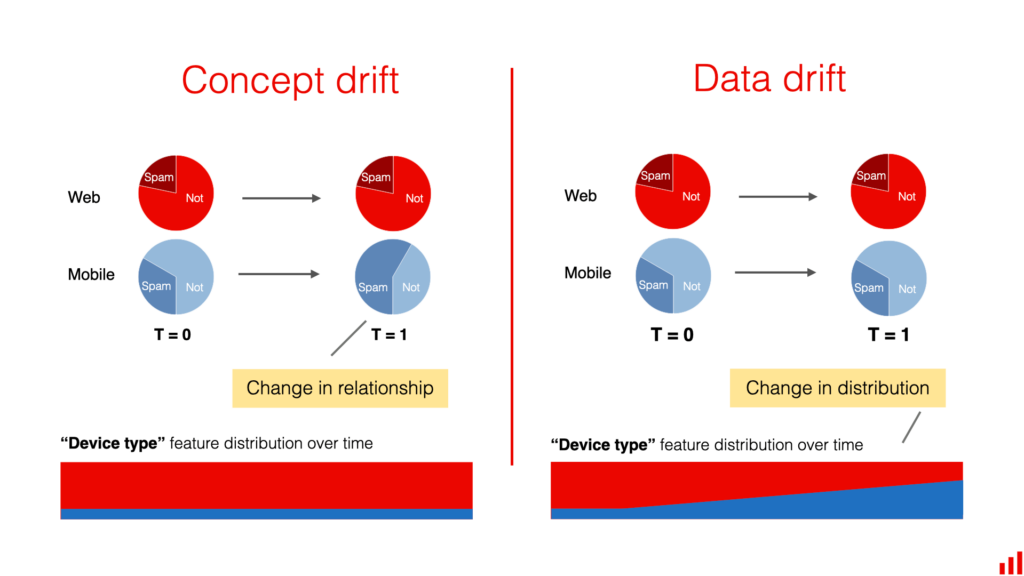
In the realm of Big Data machine learning models, the phenomenon of concept drift plays a crucial role in influencing the stability and accuracy of predictive algorithms. Concept drift refers to the change in the underlying data distribution over time, leading to shifts in patterns and relationships that the models were trained on. Understanding and effectively adapting to concept drift is essential in ensuring the continued relevance and reliability of Big Data machine learning models. This article delves into the significance of concept drift in the Big Data context, exploring its impact on model performance and the strategies employed to mitigate its effects.
In the rapidly evolving realm of Big Data, the ability of machine learning models to adapt to changing data conditions is crucial for maintaining accuracy and relevance. One of the key phenomena that influence the performance of these models is concept drift. Concept drift refers to the changing relationship between the input data and the output predictions over time. This article explores the implications of concept drift in machine learning, particularly in the context of big data applications, by discussing its types, causes, detection methods, and strategies for mitigation.
Understanding Concept Drift
Concept drift can be categorized into two primary types:
- Virtual Concept Drift: This occurs when the underlying distribution of the input data changes, but the relationship between input and output remains stable. For instance, if the demographic profile of users interacting with an e-commerce platform changes but their purchase behavior remains consistent, this would signify virtual concept drift.
- Real Concept Drift: This type indicates a shift in the relationship between input features and output labels. An example is the changing consumer preferences that alter the product recommendations provided by a machine learning model.
Concept drift poses significant challenges for organizations relying on predictive analytics. Failure to recognize and adapt to concept drift could lead to inaccurate predictions, ultimately resulting in poor business choices and lost revenue.
Causes of Concept Drift
Understanding the causes of concept drift is vital for developing effective strategies to manage it. Common causes include:
- Changing Market Conditions: As industries evolve, factors such as emerging competitors, technological advancements, and shifts in customer preferences can lead to changes in data patterns.
- Seasonality: Many businesses experience seasonal trends that can temporarily alter the relationship between variables, creating a form of concept drift that models must adapt to.
- Data Collection Methods: Changes in how data is collected (e.g., new data sources, modifications in instrumentation) can lead to different distributions that affect model performance.
- External Factors: Economic downturns, natural disasters, or societal changes can significantly influence behavior and preferences, leading to concept drift in relevant data.
Detecting Concept Drift
Detecting concept drift is an essential part of maintaining the efficacy of machine learning models in big data environments. There are several techniques to identify when concept drift is occurring:
- Statistical Tests: Statistical methods such as the Kolmogorov-Smirnov test or Chi-squared test can be applied to evaluate whether two data distributions are statistically different, indicating potential concept drift.
- Monitoring Performance Metrics: Regularly tracking model performance metrics, such as accuracy, precision, and recall over time, can signal when models begin to degrade, prompting further investigation into possible concept drift.
- Windowing Approaches: Utilizing a sliding window of recent data can help maintain a current view of data distributions. If old data begins to dominate in performance evaluation, it can signal drift.
- Ensemble Methods: Leveraging models trained on different time intervals can help gauge shifts in performance. Observing discrepancies between these models may indicate concept drift.
Impacts of Concept Drift on Big Data Machine Learning Models
The impact of concept drift on machine learning models in big data contexts can be profound:
- Decreased Model Accuracy: As the relevance of the model’s output diminishes over time due to changes in underlying data, organizations can experience significant drops in decision-making quality.
- Increased Operational Costs: Maintaining outdated models can incur additional costs in terms of data storage, processing, and resources. Reacting to drift often requires additional investment in model retraining and recalibration.
- Loss of Competitive Advantage: In fast-paced markets, failing to respond to concept drift can result in a company falling behind its competitors who agilely adapt their models to current conditions.
Strategies for Managing Concept Drift
To ensure that machine learning models in big data environments remain robust and accurate, organizations can implement several strategies:
1. Continuous Learning
Employing a continuous learning approach allows models to adaptively learn from incoming data streams. This can include:
- Incremental Learning: Regularly updating model parameters with new data can help capture shifts in relationships in real time.
- Online Learning: Involves training models continuously as new data becomes available, reducing the lag time between data collection and model adjustment.
2. Regular Retraining
Establishing a schedule for regular retraining of machine learning models can help counteract the effects of concept drift.
- This process can be set to a fixed interval or triggered based on performance metrics indicating potential drift.
- Using a validation set to monitor model predictions continuously ensures that adjustments are grounded in empirical evidence.
3. Adaptive Algorithms
Implementing adaptive algorithms, which can automatically adjust their parameters based on input data characteristics, is another method of handling concept drift effectively:
- Algorithms such as Adaptive Boosting (AdaBoost) can dynamically adjust focus on parts of the data that indicate shifting concepts.
- Ensemble methods that combine several models trained on varying distributions can adapt to drift more smoothly.
4. Feedback Loops
Creating feedback mechanisms where predictions and their outcomes are analyzed continuously helps in identifying shifts in data patterns:
- Incorporating user feedback into model training allows for real-time adjustments to reflect changes in behavior and preferences.
- Using reinforcement learning techniques can create an environment where the model learns from its mistakes through repeated interactions with data.
5. Data Versioning
Employing systematic versions of datasets can be a prudent way to manage the history of data distributions:
- Keeping track of how datasets evolve over time allows data scientists to revisit older models and understand how the nature of data has shifted.
- This also enables faster identification of when to deploy new models versus updating existing ones.
Case Studies of Concept Drift Management
Real-world applications serve as excellent examples of the importance of managing concept drift in big data environments:
1. E-commerce Recommendations
In the e-commerce sector, platforms such as Amazon employ sophisticated algorithms to recommend products. By continuously monitoring user interactions and preferences, they can quickly adapt to trends and shifts in consumer behavior, ensuring that recommendations remain relevant and engaging.
2. Financial Fraud Detection
Financial institutions face concept drift due to changing fraudulent behaviors. By implementing machine learning models that dynamically adjust to different transaction patterns, banks can effectively mitigate risks and reduce false-positive rates in fraud detection systems.
3. Healthcare Predictive Analytics
Healthcare providers utilize predictive models to assess patient outcomes based on dynamic variables such as treatment responses. By continuously retraining these models with fresh patient data and outcomes, healthcare institutions can achieve better prognostic accuracy, improving patient care and resource allocation.
The Future of Concept Drift in Big Data
The importance of effectively managing concept drift will only increase as big data continues to proliferate across industries. Organizations are beginning to invest in advanced machine learning frameworks capable of tackling drift more adeptly, ensuring models remain relevant in an ever-changing landscape.
Continued research into more robust detection methods and algorithms that inherently mitigate drift will be critical for fostering reliable big data applications. In particular, embracing AI-driven solutions will empower businesses to respond dynamically, staying ahead of market changes and ultimately driving growth.
Understanding and adapting to concept drift is crucial in maintaining the performance and relevance of Big Data machine learning models. By continuously monitoring and updating models to account for changing data patterns, organizations can enhance the accuracy and effectiveness of their predictive analytics, leading to more informed decision-making and actionable insights in the dynamic landscape of Big Data.
Related posts:
 The Five Vs of Big Data: Volume, Velocity, Variety, Veracity, and Value
 Understanding Data Pipelines in Big Data
 What is Apache Hadoop? A Complete Guide
 Understanding Apache Spark: Features and Use Cases
 Introduction to NoSQL Databases for Big Data
 Understanding HBase: How it Works in the Hadoop Ecosystem
 Natural Language Processing (NLP) with Big Data
 How Big Data is Used in Deep Learning Applications
 Sentiment Analysis with Big Data and AI
 Real-Time AI and Big Data: How It Works
 The Impact of Big Data on Financial Services and Banking
 Big Data in Smart Cities: Applications and Challenges
 Big Data and Retail: How It’s Changing the Shopping Experience
 Big Data in Agriculture: Precision Farming and Analytics