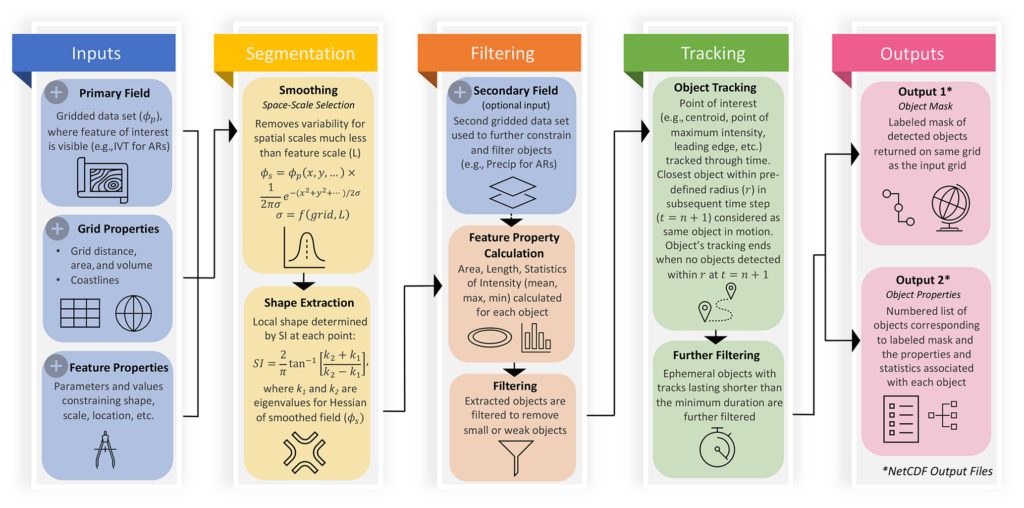
To effectively leverage the power of big data in developing high-performing models, optimizing feature extraction is essential. Feature extraction plays a crucial role in the overall success of large-scale big data models by selecting and transforming raw data into meaningful and predictive features. This process is particularly critical when dealing with vast volumes of data, as it can impact the model’s accuracy, efficiency, and scalability. In this article, we will explore strategies and best practices for optimizing feature extraction in the context of big data, to enable the development of more effective and efficient models.
Understanding Feature Extraction in Big Data
Feature extraction is a critical step in the process of building big data models. It involves identifying and selecting the most relevant variables from large volumes of data. The goal is to reduce the complexity of the data while maintaining or enhancing its predictive power. This process becomes increasingly essential as the volume of data grows, requiring efficient methods to extract meaningful features that can drive insight and decision-making.
Challenges in Feature Extraction with Big Data
Handling vast amounts of data comes with a set of challenges, including:
- Data Variety: Data can come in various formats like structured, unstructured, semi-structured, etc., complicating the extraction process.
- Data Velocity: The speed at which data is generated can outpace traditional processing methods.
- Data Volume: The sheer scale of data means that traditional algorithms may be inadequate for effective feature extraction.
Strategies for Optimizing Feature Extraction
1. Implement Distributed Computing Techniques
Utilizing distributed computing frameworks such as Apache Spark or Hadoop can significantly enhance feature extraction processes. These platforms allow for parallel processing of data, which can drastically reduce the time taken for extraction tasks. By deploying these technologies, you can efficiently handle massive datasets, enabling your models to extract features directly from distributed data sources without moving them into a central location.
2. Utilize Dimensionality Reduction
Techniques like Principal Component Analysis (PCA) or t-distributed Stochastic Neighbor Embedding (t-SNE) can help in reducing the dimensionality of your feature space. By summarizing and compressing data while retaining essential information, these techniques can simplify the model learning process and improve overall performance.
3. Feature Engineering Automation
Automating the feature engineering process with tools like Featuretools or Kazana can save significant time and ensure consistency. These tools facilitate the automatic generation of features from datasets, allowing users to focus on model design rather than manual data manipulation. By employing automated systems, data scientists can rapidly iterate over feature sets to determine which configurations yield the best results.
4. Incorporate Domain Knowledge
Leveraging domain expertise can considerably enhance feature extraction. Understanding the domain can guide the selection of meaningful variables and relationships. This approach leads to the discovery of unique features that may not be evident through standard data analysis techniques. Look for relevant metrics, benchmarks, and insights that industry experts provide to optimize feature sets effectively.
5. Use of Clustering Algorithms
Clustering algorithms such as K-means or DBSCAN can be employed to uncover hidden patterns in data. By segmenting the data into distinct groups, you can identify significant features that differentiate one cluster from another. This understanding can be used to engineer new features representing cluster memberships or distances between clusters, which can be incredibly valuable for model performance.
6. Feature Selection Techniques
Implementing robust feature selection methods like Recursive Feature Elimination (RFE), LASSO, or Random Forest can effectively eliminate irrelevant or redundant features. This ensures that only the most impactful features are used in model training, enhancing the model’s accuracy and reducing overfitting risks.
Best Practices for Effective Feature Extraction
1. Prioritize Real-Time Processing
In big data environments, implementing real-time processing capabilities can enhance decision-making processes. Utilizing stream processing frameworks like Apache Flink or Spark Streaming ensures that data is processed and features are extracted on-the-fly, allowing for immediate insights.
2. Monitor and Assess Feature Importance
Continuously monitor and evaluate feature importance as models evolve. By applying techniques like SHAP (SHapley Additive exPlanations) or LIME (Local Interpretable Model-agnostic Explanations), data scientists can gain insights into how features affect predictions, informing necessary adjustments in the feature extraction phase.
3. Use Data Sampling Techniques
If the dataset is excessively large, consider using data sampling techniques to create manageable subsets for feature extraction processes. Methods such as stratified sampling can ensure that the sample is representative of the overall data, facilitating effective model training without the need for processing the entire dataset.
Tools and Technologies for Feature Extraction
1. Apache Spark MLlib
Spark MLlib provides a comprehensive set of machine learning algorithms that can be utilized for feature selection, extraction, and processing. Its distributed architecture allows for efficient processing of large-scale datasets, making it an excellent choice for big data projects.
2. TensorFlow and Keras
For deep learning applications, frameworks like TensorFlow and Keras offer tools for feature extraction from unstructured data, such as images and text. With pre-trained models and transfer learning, these technologies can significantly reduce the time required for feature extraction and model training.
3. RapidMiner
RapidMiner is a data science platform that simplifies the process of feature extraction through its user-friendly interface and various built-in functionalities. It supports data mining, text mining, and machine learning, making it a versatile choice for processing big data.
Evaluating the Effectiveness of Your Feature Extraction Techniques
To ensure that your feature extraction methods are yielding beneficial results, employ metrics like accuracy, precision, recall, and F1 score to evaluate model performance. Additionally, performing cross-validation can provide insights into how well your model generalizes to unseen data.
Conclusion
In the vast landscape of big data, optimizing feature extraction is paramount for the successful deployment of scalable models. By implementing the aforementioned strategies and best practices, you can effectively enhance your feature extraction processes, leading to improved model performance and valuable insights.
Optimizing feature extraction for large-scale Big Data models is essential to improve model performance and efficiency in handling massive amounts of data. By utilizing advanced techniques such as dimensionality reduction, feature selection, and feature engineering, organizations can enhance the quality of their models and make more accurate predictions, ultimately unlocking the full potential of their Big Data.
Related posts:
 The Five Vs of Big Data: Volume, Velocity, Variety, Veracity, and Value
 Introduction to Distributed Computing in Big Data
 Understanding Data Pipelines in Big Data
 What is Apache Hadoop? A Complete Guide
 Understanding Apache Spark: Features and Use Cases
 Introduction to NoSQL Databases for Big Data
 Understanding HBase: How it Works in the Hadoop Ecosystem
 The Intersection of Big Data and Artificial Intelligence
 Natural Language Processing (NLP) with Big Data
 How Big Data is Used in Deep Learning Applications
 Sentiment Analysis with Big Data and AI
 Real-Time AI and Big Data: How It Works
 The Impact of Big Data on Financial Services and Banking
 Big Data in Smart Cities: Applications and Challenges