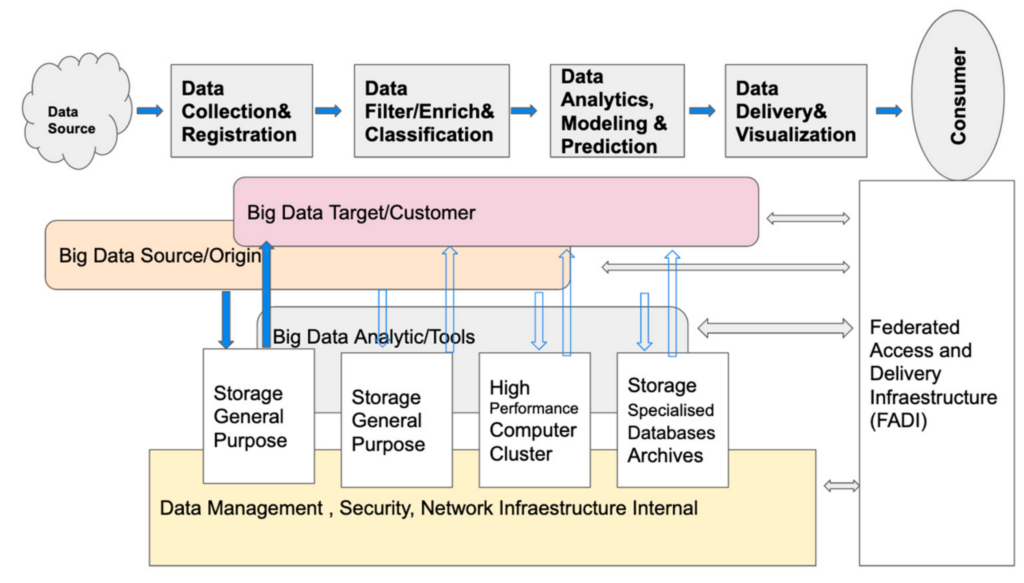
In today’s era of Big Data, the sheer volume and complexity of data generated present unique challenges for businesses and organizations. Traditional data processing methods are often insufficient to handle the scale and variety of data generated daily. In this context, self-learning algorithms have emerged as a powerful tool in adapting to and extracting valuable insights from Big Data. These algorithms can automatically learn and improve from data without being explicitly programmed, enabling them to adapt to changing data patterns and make accurate predictions. In this article, we will explore the role of self-learning algorithms in navigating Big Data changes, highlighting their importance in enabling companies to extract meaningful information and drive informed decision-making in the era of Big Data.
Understanding Self-Learning Algorithms
Self-learning algorithms, commonly referred to as machine learning algorithms, are designed to improve their performance as they are exposed to more data over time. These algorithms analyze past data patterns and adjust their outputs based on new inputs without needing human intervention. In the context of big data, these algorithms are increasingly essential for accurately interpreting vast amounts of data generated every second.
The Big Data Landscape
The evolution of big data has led to an explosion of data from various sources, including social media, IoT devices, and online transactions. This immense volume, coupled with its velocity and variety, poses significant challenges for businesses trying to extract actionable insights. Self-learning algorithms facilitate this process by automating data processing and analysis, enabling organizations to respond swiftly to changes and trends.
Key Benefits of Self-Learning Algorithms in Big Data
1. Enhanced Data Processing Speed
One of the most notable advantages of self-learning algorithms is their ability to process data at high speeds. Traditional data analysis methods can be time-consuming and may lag behind the pace of big data generation. Self-learning algorithms utilize distributed computing and parallel processing techniques to handle data quickly and efficiently. This ensures that organizations can access real-time insights and make timely decisions.
2. Improved Accuracy and Insights
Self-learning algorithms continuously refine their models based on new data. As a result, they often achieve higher accuracy in predictions than static models. For businesses dealing with big data, this means more reliable insights — crucial when making data-driven decisions that impact operations, marketing strategies, and customer engagement.
3. Adaptability to Changing Data Environments
One of the most significant challenges in big data is the dynamic nature of the data ecosystem. Data sources and types evolve, and self-learning algorithms can adapt to these changes seamlessly. Unlike traditional algorithms that require manual recalibration with every data shift, self-learning algorithms are designed to learn from ongoing data inputs, ensuring that they remain relevant and effective.
Applications of Self-Learning Algorithms in Big Data
1. Predictive Analytics
Businesses use self-learning algorithms for predictive analytics to forecast trends and behaviors based on historical data. By employing techniques like regression analysis, businesses can predict customer preferences, inventory demands, and market shifts more accurately. This informs strategic planning and resource allocation, which is vital in a big data environment.
2. Natural Language Processing (NLP)
In the age of big data, organizations generate vast quantities of unstructured data, particularly in the form of text. Self-learning algorithms are key to enhancing natural language processing (NLP), enabling businesses to analyze customer feedback, emails, and social media interactions to gauge public sentiment and improve service offerings. NLP models continue to learn from new submissions, ensuring they remain up-to-date with changing language patterns.
3. Fraud Detection and Prevention
Self-learning algorithms are essential in financial sectors for detecting fraudulent activities. These algorithms analyze transaction patterns and can identify anomalies indicating potential fraud in real time. By adapting to subtle changes in behavior over time, self-learning algorithms reduce false positives, allowing organizations to focus on genuine threats.
Challenges and Considerations
1. Data Quality
The effectiveness of self-learning algorithms in the context of big data hinges on the quality of data fed into them. Poor-quality data can lead to incorrect learnings and misguided insights. Organizations must prioritize data hygiene, ensuring that the datasets used for training algorithms are clean, relevant, and comprehensive.
2. Interpretability
Many self-learning algorithms operate as black boxes, making it challenging for users to understand how decisions are made. This lack of transparency poses risks, particularly in sensitive applications such as healthcare and finance. Companies must invest in interpretability techniques to ensure stakeholders can trust and comprehend the outcomes generated by these algorithms.
3. Ethical Considerations
As self-learning algorithms become more prevalent in big data applications, ethical considerations must be a priority. There are concerns related to bias in algorithms, largely stemming from historical data. If not properly monitored, these biases can result in discriminatory practices. Organizations should implement frameworks for ethical AI usage to minimize biases and align with best practices.
Future Trends of Self-Learning Algorithms in Big Data
1. Enhanced Collaboration
Future advancements in self-learning algorithms will likely encompass greater collaboration between humans and machines. Rather than fully automated systems, hybrid models where human intuition combines with the computational power of self-learning algorithms will offer enhanced outcomes. This synergy is particularly relevant in sectors such as healthcare, where human expertise is critical.
2. Integration with Edge Computing
The rise of edge computing will impact how self-learning algorithms are implemented in big data environments. By processing data closer to its source, edge computing reduces latency and bandwidth constraints. As self-learning algorithms integrate with edge computing, organizations can achieve quicker decision-making processes, particularly in industries like manufacturing and autonomous vehicles.
3. Responsible AI Development
As self-learning algorithms continue to advance, a shift towards responsible AI development will emerge. This includes greater focus on transparency, fairness, and accountability within algorithms. Businesses will adopt guidelines and compliance measures to ensure their algorithms contribute positively to the big data landscape without compromising ethical standards.
Conclusion: The Future of Big Data and Self-Learning Algorithms
The intersection of self-learning algorithms and big data is poised for significant transformation. As these algorithms enhance their capabilities, they will not only redefine how companies handle and analyze data but also promote a more insightful, efficient, and ethical approach to data-driven decision-making. Keeping pace with the advancements and challenges posed by self-learning algorithms will ultimately determine the long-term success of organizations in the age of big data.
The utilization of self-learning algorithms plays a crucial role in effectively adapting to the constantly evolving landscape of Big Data. These algorithms have the ability to autonomously analyze and adjust to changes, leading to more efficient and accurate decision-making processes. By leveraging self-learning algorithms, organizations can stay ahead in harnessing the power of Big Data and drive innovation in various industries.
Related posts:
 The Five Vs of Big Data: Volume, Velocity, Variety, Veracity, and Value
 Introduction to Distributed Computing in Big Data
 Understanding Data Pipelines in Big Data
 What is Apache Hadoop? A Complete Guide
 Understanding Apache Spark: Features and Use Cases
 Introduction to NoSQL Databases for Big Data
 Understanding HBase: How it Works in the Hadoop Ecosystem
 The Intersection of Big Data and Artificial Intelligence
 Natural Language Processing (NLP) with Big Data
 How Big Data is Used in Deep Learning Applications
 Sentiment Analysis with Big Data and AI
 Real-Time AI and Big Data: How It Works
 The Impact of Big Data on Financial Services and Banking
 Big Data in Smart Cities: Applications and Challenges