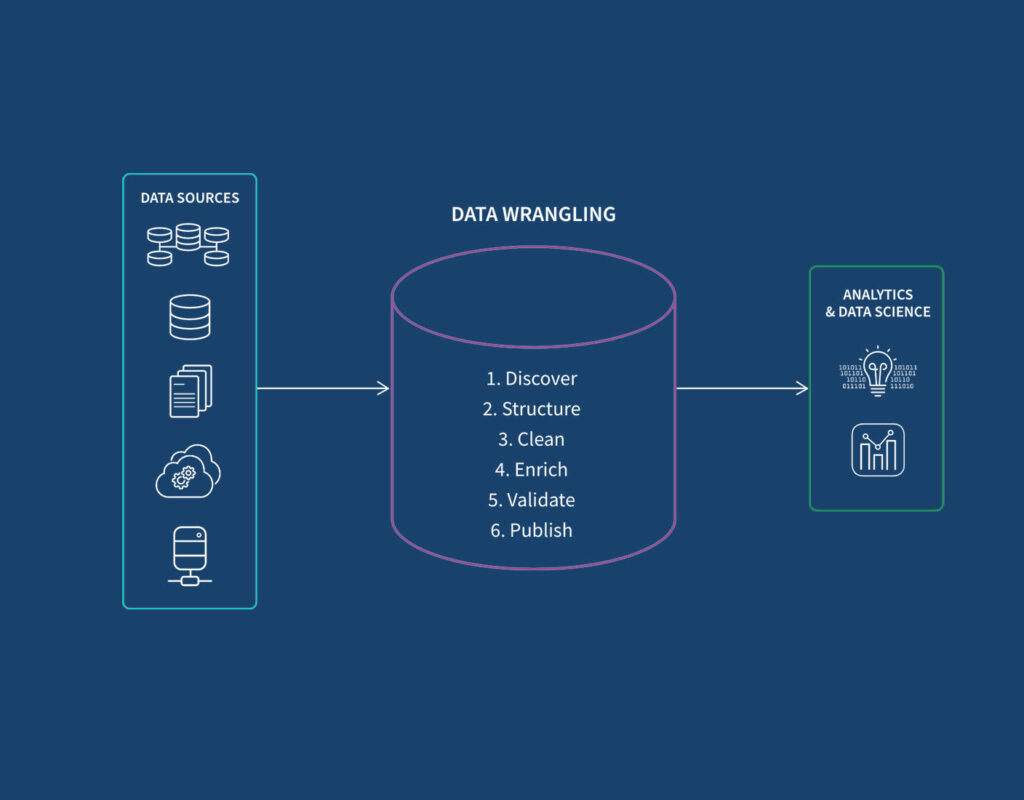
In the realm of Big Data, the convergence of Artificial Intelligence (AI) and data wrangling is revolutionizing the way data is processed and transformed within Automated Extract, Transform, Load (ETL) pipelines. AI-powered data wrangling techniques enable organizations to efficiently clean, structure, and harmonize vast volumes of disparate data sources to drive valuable insights and decision-making. This innovative approach not only accelerates data preparation processes but also enhances the scalability and accuracy of ETL pipelines, paving the way for new levels of automation and intelligence in handling Big Data. This article explores the transformative potential of AI-powered data wrangling in shaping the future of automated ETL pipelines within the context of Big Data analytics.
In the rapidly advancing landscape of Big Data, the reliance on automated ETL (Extract, Transform, Load) pipelines has become increasingly essential for organizations aiming to derive insights from large volumes of unstructured and structured data. With the integration of artificial intelligence (AI) into data wrangling processes, the future of ETL is heading toward a more streamlined, efficient, and intelligent ecosystem.
The Significance of Data Wrangling in ETL Pipelines
Data wrangling, or data munging, refers to the process of cleaning, restructuring, and enriching raw data into a desired format for analysis. It is a critical step in ETL pipelines and encompasses several activities such as:
- Data cleansing to remove inaccuracies and inconsistencies
- Data transformation to ensure compatibility with analytical tools
- Data enrichment to provide additional context
In the realm of Big Data, where data is both voluminous and varied, effective data wrangling becomes vital for making reliable business decisions.
Current Challenges in Traditional ETL Processes
While traditional ETL processes have served organizations well, they often face significant challenges:
- Manual Efforts: Many organizations still rely on manual processes in data wrangling, leading to time inefficiencies and human errors.
- Scalability Issues: As data volumes grow, traditional ETL tools struggle to keep pace, resulting in delays and bottlenecks.
- Complexity of Data Sources: Integrating data from multiple sources—including databases, cloud storage, and real-time streams—adds layers of complexity.
- Limited Flexibility: Traditional ETL tools often lack the flexibility to adapt to new data types or changes in source systems.
The Role of AI in Data Wrangling
Artificial Intelligence is transforming the data wrangling landscape. By leveraging techniques like machine learning and natural language processing, AI can automate repetitive tasks, adapt to changes, and provide deeper insights. Here are some specific ways AI is poised to enhance data wrangling for automated ETL pipelines:
1. Automated Data Cleansing
AI algorithms can significantly reduce the time spent on data cleansing. By utilizing machine learning models that learn from historical data patterns, organizations can automatically detect anomalies and inconsistencies, thus enhancing data quality. These systems can:
- *Identify missing values and suggest appropriate imputation methods*
- *Flag duplicate records based on learned patterns*
- *Automatically resolve data entry errors through historical context*
2. Intelligent Data Transformation
With AI-driven data transformation, organizations can achieve better compliance and analytics. AI can propose transformation operations based on the context of the data, thereby simplifying tasks like:
- *Mapping data fields accurately across various schemas*
- *Automatically converting data types based on usage patterns*
- *Suggesting formulas for aggregating data intelligently*
3. Enhanced Data Integration
Integrating data from multiple sources is often fraught with challenges. AI aids in data integration by:
- *Identifying relationships between disparate datasets*
- *Facilitating real-time data streaming and batch processing*
- *Utilizing NLP to process unstructured textual data smoothly*
AI and Machine Learning Techniques for Data Wrangling
Several AI and machine learning techniques can revolutionize data wrangling within ETL pipelines:
1. Natural Language Processing (NLP)
NLP can help systems understand and manipulate unstructured text data, a common aspect in the Big Data paradigm. By converting text data into structured formats, organizations can leverage this information for further analytics.
2. Predictive Analytics
Machine learning models can identify trends and make predictions about data behavior, which aids in proactive decision-making and targeted cleansing. Predictive models can even recommend future transformations based on historical behavior.
3. Reinforcement Learning
Reinforcement learning algorithms learn how to optimize data workflows over time. By interacting with data environments, these systems can refine their processes, learning from errors to build highly efficient ETL workflows.
Benefits of AI-powered ETL Pipelines
The integration of AI into ETL pipelines entails numerous advantages:
- Increased Efficiency: Automating routine tasks allows teams to focus on higher-level analytical work, enhancing productivity.
- Enhanced Accuracy: AI minimizes human errors in data wrangling, leading to more reliable datasets.
- Real-time Processing: AI facilitates faster data handling, enabling organizations to respond swiftly to business needs.
- Cost Reduction: Reduced manual interventions result in lower operational costs in the long run.
The Future Landscape: Automation and AI Collaboration
As we look toward the future, the combination of AI and automation will transform the ETL landscape significantly. The vital aspects to consider include:
1. Self-Service Data Wrangling
AI will empower non-technical users to conduct their data wrangling tasks through intuitive tools. This democratization of data will enable quicker insights across business units.
2. Predictive ETL Processes
With advancements in predictive algorithms, ETL systems will be able to not only automate current tasks but also foresee future data needs. Predictive analytics will facilitate preemptive data transformations and workflows.
3. Continuous Learning Systems
Emerging ETL tools will feature AI systems that continuously learn and adapt to changes within the data landscape. This will allow businesses to stay agile and maintain the integrity of their datasets.
Challenges Ahead for AI-Driven ETL
Despite the promising future of AI-powered data wrangling, several challenges remain:
- Data Privacy and Security: Ensuring the privacy of sensitive data while automating ETL processes will require robust security frameworks.
- Integration with Existing Systems: Organizations may encounter difficulties in integrating AI solutions with their current ETL tools.
- Dependence on Quality Data: The effectiveness of AI models is highly reliant on the quality of data they are trained on. Poor quality training data will lead to inadequate insights.
Conclusion
As organizations continue to harness the power of Big Data, integrating AI into data wrangling processes will be a game-changer for automated ETL pipelines. With the promise of efficiency, accuracy, and smarter decision-making, the future of data management looks promising. Businesses that invest in AI-powered data wrangling now will be well-positioned to reap the rewards in the evolving landscape of data science.
The future of AI-powered data wrangling for automated ETL pipelines in the realm of Big Data holds immense promise in significantly enhancing efficiency, accuracy, and scalability of data processing tasks. As machine learning algorithms continue to evolve and improve, organizations stand to benefit from streamlined data integration processes, allowing them to unleash the full potential of their data assets for actionable insights and informed decision-making.Embracing AI-driven automation for data wrangling is not merely a trend, but a crucial strategic imperative for staying competitive in the era of Big Data.
Related posts:
 The Five Vs of Big Data: Volume, Velocity, Variety, Veracity, and Value
 What is a Data Lake? Definition, Uses, and Benefits
 Introduction to Distributed Computing in Big Data
 Understanding Data Pipelines in Big Data
 Data Ingestion Techniques for Big Data Processing
 What is Apache Hadoop? A Complete Guide
 Understanding Apache Spark: Features and Use Cases
 Introduction to NoSQL Databases for Big Data
 The Role of MongoDB in Big Data Analytics
 Understanding HBase: How it Works in the Hadoop Ecosystem
 How Elasticsearch is Used in Big Data Applications
 The Intersection of Big Data and Artificial Intelligence
 How Big Data Powers Machine Learning Models
 Natural Language Processing (NLP) with Big Data