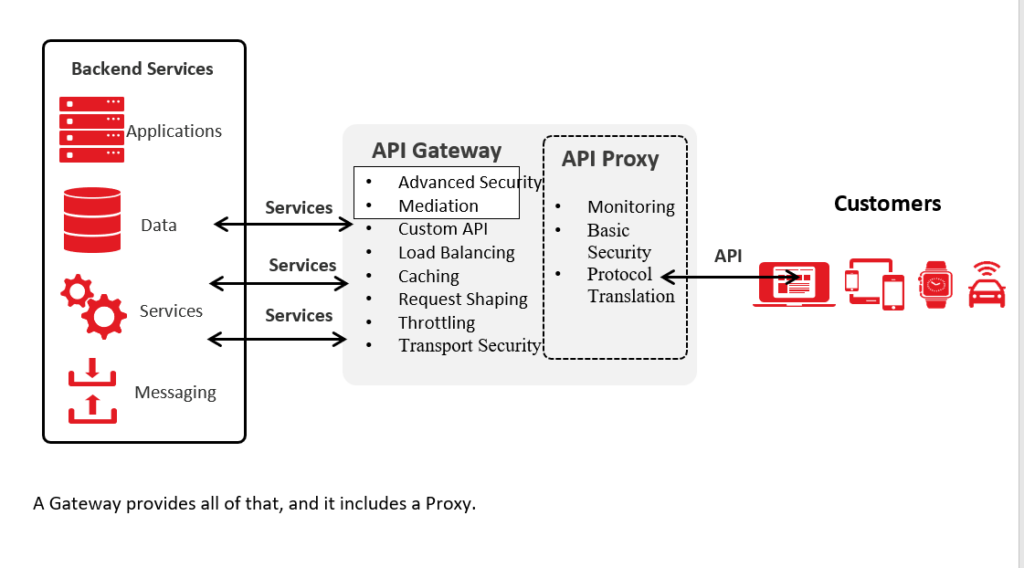
API Proxy and API Gateway are both essential components in the world of APIs and web services, but they serve distinct purposes. An API Proxy acts as an intermediary between the client and the actual API, providing functionalities such as security, traffic management, and protocol translation. On the other hand, an API Gateway is a more comprehensive solution that not only handles the routing of API requests but also manages authentication, authorization, monitoring, and analytics. While an API Proxy focuses on specific tasks related to API communication, an API Gateway offers a complete set of tools to manage and secure API traffic effectively. Understanding the differences between these two components is crucial for designing robust and secure API architectures.
In the ever-evolving landscape of APIs & web services, understanding the functionalities and differences between an API Proxy and an API Gateway is crucial for developers, architects, and businesses. Both serve as intermediaries between clients and servers, but they have distinct roles and features that can significantly impact application architecture. Let’s dive deep into the nuances of these two vital components.
What is an API Proxy?
An API Proxy serves as a simple intermediary that requests services from an API on behalf of a client. It acts as a facade that allows clients to communicate with the server without any direct access. By exposing certain endpoint functionalities while hiding others, API proxies enhance security and control.
Key features of an API Proxy include:
- Basic Security Features: An API proxy can offer basic security features like IP whitelisting and request validation. It can also help in protecting the backend from direct overexposure by filtering clients.
- Load Balancing: It can distribute incoming requests among a pool of servers, helping prevent any single server from becoming a bottleneck.
- Request Routing: API proxies allow for intelligent routing of requests to different backend services based on chains of logic or conditions that are defined in the proxy.
- Transformation Capabilities: While basic in nature, many proxies enable simple transformations such as header modification, but they lack advanced transformation features.
Understanding API Gateway
An API Gateway serves as a robust entry point for managing and routing API requests. It is essentially a comprehensive solution that provides various functions beyond what an API proxy offers. It acts as a full-fledged intermediary that encompasses multiple capabilities, effectively managing the interactions between clients and various microservices.
Key features of an API Gateway include:
- Comprehensive Security: API gateways employ complex security measures, including OAuth, JWT validation, API rate limiting, and more. These features ensure a higher level of access control and security than a basic proxy.
- Advanced Traffic Management: They offer fine-grained traffic control capabilities, allowing developers to manage request throttling, load balancing, and automatic failover.
- Protocol Translation: API gateways can support multiple protocols (like HTTP, WebSockets, etc.) and perform protocol translation, reaching out to backend services regardless of their communication protocol.
- Analytics and Monitoring: Integrated analytics features help track performance metrics, identify bottlenecks, and monitor user activity, providing insights that can be vital for maintaining optimal service.
- Service Discovery: API gateways often facilitate dynamic service discovery, allowing them to automatically locate backend services rather than relying on static configuration.
- API Versioning: They support versioning of APIs, allowing different clients to access different versions of the service seamlessly.
Comparative Analysis: API Proxy vs. API Gateway
While both components serve as intermediaries, their functionalities, use cases, and importance vary significantly. Below, we explore several aspects where API Proxies and API Gateways differ:
1. Functionality
The primary difference lies in their functionality. An API proxy focuses on the basic forwarding of requests and responses, whereas an API gateway integrates comprehensive features such as rate limiting, caching, request/response transformation, and extensive security controls.
2. Security
Security features of an API proxy are minimal, mainly offering IP whitelisting and request logging. In contrast, an API gateway provides advanced features including user authentication, detailed access control, and integration with security mechanisms like OAuth and API keys.
3. Complexity
API proxies are generally less complex and easier to set up, which can be ideal for simpler applications. On the other hand, an API gateway may require a more elaborate setup and configuration process due to its extensive feature set, but this complexity enables management of larger application architectures.
4. Use Cases
The respective use cases for API proxies and gateways diverge significantly. API proxies are suited for basic integration needs, such as routing client requests to a specific service without exposing backend details. API gateways, however, are integral in microservices environments, managing traffic between disparate services while ensuring high availability and performance.
5. Performance Implications
In terms of performance, API proxies can offer lower latency since there’s less overhead involved in their operations. Conversely, the extensive features of an API gateway can introduce some latency due to processing overhead, but this trade-off is often justified in complex architectures where various checks and routing logic are needed.
When to Use an API Proxy
Using an API Proxy can be advantageous in the following scenarios:
- When you need a lightweight integration solution to route requests to backend services.
- For use cases not requiring extensive security or management features.
- When performance and simplicity are priorities over sophisticated capabilities.
When to Use an API Gateway
Opting for an API Gateway becomes essential in situations such as:
- When managing a microservices architecture with multiple services needing robust orchestration and management.
- To implement complex security requirements and authentication mechanisms across multiple services.
- When you need to gather analytics on API usage and performance.
- To introduce features such as caching, throttling, and data transformation.
Conclusion
Understanding the difference between the API Proxy and the API Gateway is paramount for anyone involved in API management and development. The decision between using an API proxy or an API gateway should be guided by the complexity of your architecture, security needs, performance expectations, and specific use cases. By making informed choices, businesses can harness the full potential of APIs to drive innovation and efficiency.
API proxy and API gateway both serve as intermediaries between clients and servers in the context of APIs & Web Services. However, while API proxy focuses on routing requests and providing security at the API level, API gateway offers a more comprehensive solution by providing additional features such as rate limiting, caching, authentication, and monitoring at the API ecosystem level. Organizations should carefully consider their specific requirements and goals when choosing between API proxy and API gateway for managing their API traffic effectively.
Related posts:
 What Are APIs and How Do They Work?
 How to Secure Your API with JWT
 Building a Microservices Architecture with APIs
What Are API Keys and How to Use Them Securely?
Building a Microservices Architecture with APIs
What Are API Keys and How to Use Them Securely?
 A Beginner’s Guide to API Monetization
 Using Google Maps API for Location-Based Applications
 How to Handle API Authentication in Mobile Apps
The Importance of API Caching and How to Implement It
How to Handle API Authentication in Mobile Apps
The Importance of API Caching and How to Implement It
 Building a Weather App Using OpenWeather API
 How to Use AI-Powered APIs for Your Applications
 API Gateway vs Load Balancer: Understanding the Differences
How to Set Up API Rate Limiting in Nginx
API Gateway vs Load Balancer: Understanding the Differences
How to Set Up API Rate Limiting in Nginx
 How to Optimize API Response Time for Better Performance
Best API Security Practices to Prevent Attacks
How to Optimize API Response Time for Better Performance
Best API Security Practices to Prevent Attacks