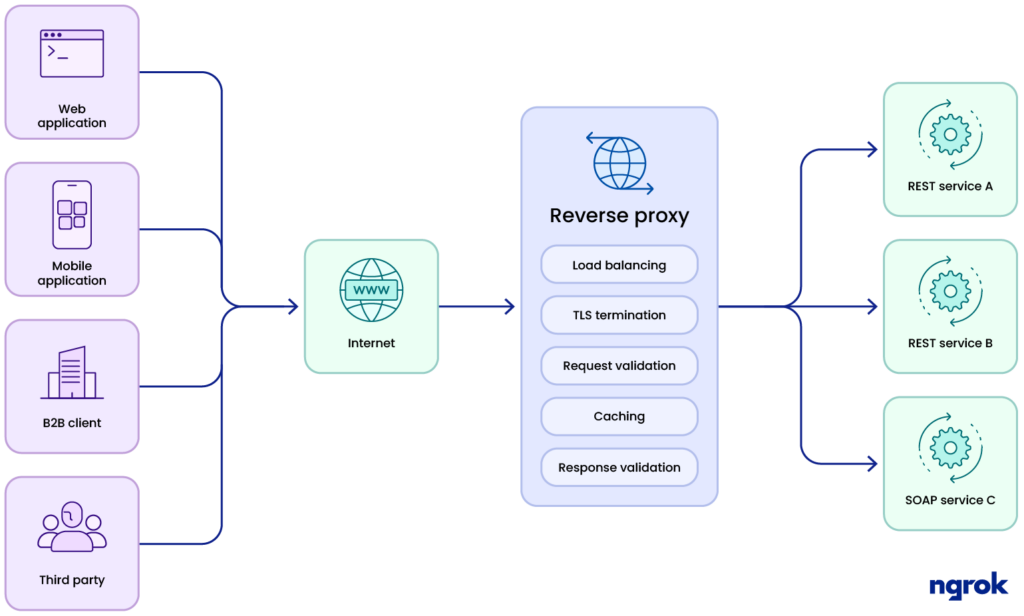
Reverse proxies play a critical role in enhancing the security of APIs and web services by acting as an intermediary server between clients and backend servers. Understanding the role of reverse proxies is essential in ensuring the confidentiality, integrity, and availability of sensitive data transmitted through APIs. This article will delve into the significance of reverse proxies in API security, highlighting key features and benefits that contribute to a robust security posture for organizations leveraging APIs and web services.
In today’s digital landscape, APIs (Application Programming Interfaces) and web services play a crucial role in enabling communication between different software applications. However, as the adoption of APIs grows, so does the demand for robust security measures. One of the most effective tools in securing APIs is the reverse proxy. This article delves into the function of reverse proxies in enhancing API security, shedding light on their importance in web services architecture.
What is a Reverse Proxy?
A reverse proxy is a server that sits in front of web servers and forwards client requests to those servers. Unlike a traditional proxy, which acts on behalf of clients, a reverse proxy acts on behalf of the server. This mechanism not only balances loads and increases performance but also significantly contributes to security measures.
How Reverse Proxies Improve API Security
Understanding the specific roles that reverse proxies play in API security can help organizations fortify their applications against threats. Here are several essential functions they perform:
1. Traffic Management and Load Balancing
Reverse proxies distribute incoming traffic across multiple backend servers, ensuring that no single server becomes overwhelmed. This load balancing capability enhances performance and reduces the risk of downtime. By managing traffic effectively, reverse proxies also help mitigate Distributed Denial of Service (DDoS) attacks, where multiple compromised systems flood a target with requests.
2. SSL Termination
Secure Sockets Layer (SSL) is critical for encrypting data exchanged between clients and servers. Reverse proxies can handle SSL termination, meaning they decrypt incoming requests and encrypt outgoing responses. This action centralizes the SSL management process, which simplifies certificate handling and can improve performance by offloading SSL computations from backend servers.
3. Web Application Firewall (WAF) Functionality
Many reverse proxies come equipped with WAF capabilities that can filter, monitor, and block HTTP traffic to and from a web application. By analyzing incoming API requests, they can detect and prevent various kinds of malicious attacks, including SQL Injection, Cross-Site Scripting (XSS), and Remote File Inclusion (RFI). Deploying a WAF as a reverse proxy guards against these threats at an early stage, improving overall security posture.
Additional Security Features of Reverse Proxies
Beyond the main functionalities mentioned above, reverse proxies offer several additional security features that enhance API protection.
4. Authentication and Authorization
Reverse proxies can enforce authentication mechanisms, such as OAuth or JWT (JSON Web Tokens), before allowing requests to pass through to backend servers. By centralizing authentication, they ensure only legitimate users can access sensitive APIs, protecting against unauthorized access.
5. IP Whitelisting and Blacklisting
Another vital aspect of security involves managing access control. Reverse proxies can implement IP whitelisting and blacklisting, which restricts or grants access to certain IP addresses. This provides an additional layer of security, allowing only trusted clients to interact with the API while blocking potentially harmful traffic.
6. Rate Limiting and Throttling
To combat abuse and maintain performance, reverse proxies can enforce rate limiting and throttling policies. This means they can limit the number of requests a user can make in a specified timeframe, effectively defending against brute-force attacks and preventing system overloads caused by excessive requests.
Challenges and Considerations in Implementing Reverse Proxies
While reverse proxies offer numerous security advantages, implementing them is not without challenges. Organizations must consider the following points:
1. Complexity of Configuration
Setting up a reverse proxy involves configuration that needs thorough testing to prevent misconfigurations. Improper settings can introduce vulnerabilities or performance bottlenecks. As such, it is crucial to understand the underlying systems before deployment.
2. Single Point of Failure
Using a reverse proxy introduces a single point of failure in the architecture. If the reverse proxy goes down, all API access might be impacted. To manage this risk, organizations often implement redundancy by deploying multiple reverse proxies in a failover setup.
3. Performance Overhead
While reverse proxies can enhance performance, they can also introduce latency due to the additional processing steps involved in receiving, modifying, and forwarding requests. Careful optimization and resource allocation are essential to mitigate these potential slowdowns.
Best Practices for Using Reverse Proxies in API Security
To maximize the security benefits of reverse proxies, organizations should adhere to several best practices:
1. Regular Updates and Patches
Keep the reverse proxy software updated with the latest security patches to protect against known vulnerabilities. Regular updates should be part of the maintenance routine for all components in the API infrastructure.
2. Logging and Monitoring
Implement robust logging and monitoring solutions for the reverse proxy. Tracking incoming and outgoing traffic helps detect suspicious activity and incidents early, enabling swift response actions.
3. Conduct Regular Security Audits
Performing security audits and penetration testing will help identify vulnerabilities in the reverse proxy configuration and interactions with backend services. This proactive approach ensures continuous improvement in security measures.
4. User Education and Awareness
Ensure that developers and system administrators understand the role of reverse proxies and best security practices. Educating teams about potential risks associated with APIs and how reverse proxies mitigate those risks is critical for maintaining a strong security posture.
Conclusion
In summary, reverse proxies serve as a vital component in enhancing API security within web services architecture. By effectively managing traffic, implementing security controls, and providing a shield against various threats, they significantly contribute to the overall security strategy of organizations. Understanding their role and best practices is essential for IT professionals aiming to safeguard their applications in an increasingly interconnected world.
Reverse proxies play a crucial role in enhancing API security by acting as an additional layer of defense against potential threats and providing functionalities such as load balancing and caching. Understanding the role of reverse proxies in API security is essential for organizations to effectively protect their APIs from unauthorized access and malicious attacks, ensuring the integrity and reliability of their web services.
Related posts:
 What Are APIs and How Do They Work?
 How to Secure Your API with JWT
 Building a Microservices Architecture with APIs
What Are API Keys and How to Use Them Securely?
Building a Microservices Architecture with APIs
What Are API Keys and How to Use Them Securely?
 A Beginner’s Guide to API Monetization
 Using Google Maps API for Location-Based Applications
 How to Handle API Authentication in Mobile Apps
The Importance of API Caching and How to Implement It
How to Handle API Authentication in Mobile Apps
The Importance of API Caching and How to Implement It
 Building a Weather App Using OpenWeather API
 How to Use AI-Powered APIs for Your Applications
 API Gateway vs Load Balancer: Understanding the Differences
How to Set Up API Rate Limiting in Nginx
API Gateway vs Load Balancer: Understanding the Differences
How to Set Up API Rate Limiting in Nginx
 How to Optimize API Response Time for Better Performance
Best API Security Practices to Prevent Attacks
How to Optimize API Response Time for Better Performance
Best API Security Practices to Prevent Attacks