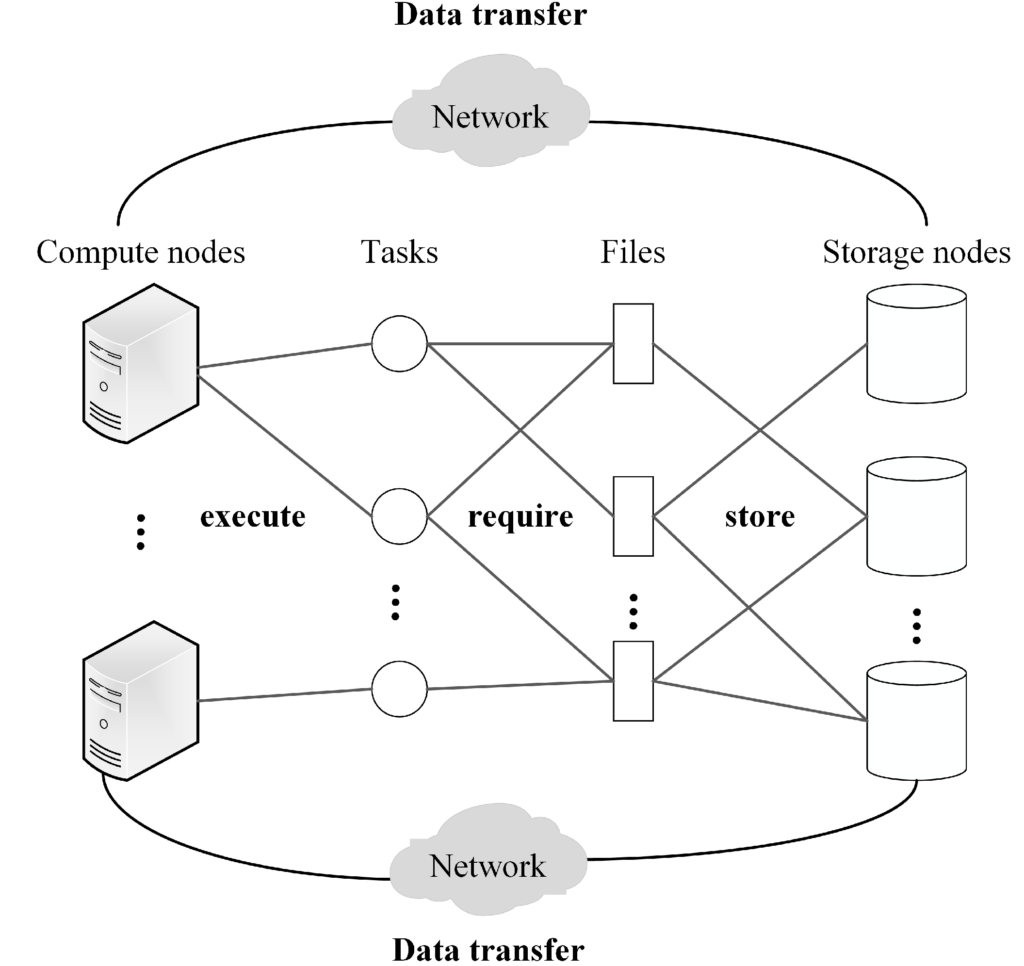
In the ever-evolving landscape of Big Data applications, the future holds promising opportunities with the rise of hypergraph-based machine learning. Hypergraphs offer a powerful framework to model complex relationships and dependencies present in massive datasets. By allowing for multi-way relationships between data points, hypergraph-based machine learning algorithms can uncover intricate patterns and insights that traditional methods may overlook. This paradigm shift towards leveraging hypergraphs in Big Data applications holds immense potential to enhance the effectiveness and efficiency of data analysis, prediction, and decision-making processes, ensuring that organizations can extract maximum value from their vast pools of data.
The advent of big data has transformed various industries by enabling them to harness vast amounts of information. As data continues to grow in complexity and volume, traditional machine learning models face challenges in representing and learning from such intricate structures. This is where hypergraph-based machine learning emerges as a revolutionary approach, poised to reshape the landscape of big data applications.
Understanding Hypergraphs
A hypergraph extends the concept of a graph by allowing edges to connect any number of vertices, not just two. This means that a hyperedge can link multiple nodes simultaneously, enabling a more nuanced representation of relationships among data elements. In the context of big data, hypergraphs are particularly useful for modeling complex systems where relationships are multi-faceted.
Advantages of Hypergraph-Based Models
One of the standout advantages of hypergraph-based models in machine learning is their ability to capture high-order relationships within data. Traditional graphs can only represent pairwise relationships, which limits their effectiveness in complex datasets. Hypergraphs empower models to:
- Represent multi-relational data: This capability is crucial in scenarios like social networks or biological systems, where multiple types of relationships exist simultaneously.
- Enhance feature extraction: By leveraging the rich structure of hypergraphs, it becomes possible to identify and extract relevant features that traditional models might overlook.
- Improve model interpretability: Hypergraphs allow for a more intuitive representation of data, making it easier for researchers and practitioners to understand model predictions.
Applications of Hypergraph-Based Machine Learning in Big Data
As hypergraph-based machine learning continues to evolve, its applications in big data are burgeoning across various sectors:
1. Social Network Analysis
In social networks, users are connected not only by friendships but also through likes, shares, comments, and other interactions. Hypergraphs enable the modeling of these complex interconnections effectively. By analyzing such data with hypergraph-based approaches, businesses can uncover patterns in user behavior, improve recommendation systems, and enhance targeted marketing strategies.
2. Biological Data Analysis
In biology, hypergraphs can represent complex relationships among proteins, genes, and metabolites. With the volume of genomic data exploding, traditional machine learning techniques struggle to keep up. Hypergraph-based analysis can identify interactions that are crucial for understanding biological processes, leading to advancements in personalized medicine and drug discovery.
3. Transportation and Logistics
The logistics and supply chain sector generates copious amounts of data from various sources, including routes, deliveries, and vehicle performance. Hypergraphs can enable optimized route planning by representing all stakeholders and their multi-dimensional interactions, ultimately leading to reduced operational costs and improved delivery times.
Challenges in Hypergraph-Based Machine Learning
Despite the advantages, hypergraph-based learning is not without its challenges:
- Computational Complexity: The complexity of hypergraph structures can lead to significant computational overhead, particularly as the size of the dataset increases. Efficient algorithms are needed to handle large hypergraphs effectively.
- Lack of Standardization: The field of hypergraph-based machine learning is still developing, which means there may be inconsistencies in model implementation and evaluation metrics.
- Data Quality Issues: Poor quality data can severely impact the performance of hypergraph models. Therefore, ensuring data quality is essential.
Future Directions in Hypergraph-Based Machine Learning
The future of hypergraph-based machine learning in big data applications appears bright, with various emerging trends shaping its trajectory:
1. Integration with Deep Learning
The combination of deep learning and hypergraph learning could lead to powerful models that capture both spatial and relational data. This hybrid approach can enhance the versatility of machine learning systems, making them applicable in diverse fields such as computer vision, natural language processing, and more.
2. Development of Efficient Algorithms
As the necessity for processing large-scale hypergraphs increases, the demand for more efficient algorithms will rise. Research aimed at optimizing hypergraph processing and reducing computational burdens will be critical to mainstream adoption.
3. Increased Focus on Explainability
With the rising importance of explainable AI, there will be a greater emphasis on designing hypergraph models that not only perform well but also offer clear insights into their decision-making processes. Tools that visualize hypergraph structures and elucidate model predictions will be in high demand.
4. Advancements in Real-Time Analytics
The surge in IoT (Internet of Things) devices has led to an overwhelming stream of real-time data. Hypergraph-based models can potentially analyze and process this data in real-time, allowing organizations to make swift, informed decisions based on the relationships identified in their hypergraph structures.
Case Studies and Real-World Implementations
Several companies and research institutions are already leveraging hypergraph-based machine learning to drive significant results, showcasing its potential:
1. Healthcare Analytics
Research teams have employed hypergraph models to analyze patient records, discovering hidden patterns linking symptoms, treatments, and outcomes. This approach could lead to improved treatment plans tailored to individual patient profiles, enhancing the overall effectiveness of healthcare delivery.
2. Financial Fraud Detection
In finance, hypergraphs can help model complex financial transactions to detect potentially fraudulent activities. By analyzing multi-relational data encompassing transactions, accounts, and user behaviors, financial institutions can formulate more robust fraud detection systems that significantly reduce false positives.
3. Marketing Strategy Optimization
Hypergraph models have been utilized in the marketing domain to analyze customer interactions across multiple channels. By identifying groups of customers with similar behaviors and preferences, organizations can develop targeted marketing strategies that yield higher engagement and conversion rates.
Conclusion
As hypergraph-based machine learning technology continues to advance, it promises to unlock new levels of insight and efficiency across various domains of big data applications. By providing a sophisticated framework for understanding complex relationships, hypergraphs have the potential to drive the next wave of innovation in data analysis. Their adaptability, coupled with ongoing research and development, will undoubtedly position hypergraph-based approaches as a cornerstone of future machine learning initiatives.
Hypergraph-based machine learning has emerged as a promising approach in leveraging the power of Big Data for more accurate and efficient analyses. Its ability to capture complex relationships and dependencies among data points makes it particularly well-suited for solving intricate problems in various domains. As we move forward in the era of Big Data, the integration of hypergraph-based techniques is expected to play a crucial role in advancing the capabilities of machine learning applications, leading to deeper insights and improved decision-making processes.
Related posts:
 How to Build an Open-Source Data Stack for Scalable Big Data Analytics
 How to Leverage Swarm Intelligence for Big Data Optimization
 The Future of Digital Twins in Large-Scale Big Data Simulations
 The Role of Causal AI in Understanding Big Data Relationships
 How to Perform Large-Scale Time Series Forecasting with Big Data
 The Role of AutoML in Scaling Big Data Model Deployment
 How to Perform Real-Time Outlier Detection in Big Data Pipelines
 The Future of AI-Powered Data Wrangling for Big Data Scientists
 The Role of Synthetic Tabular Data Generation in Big Data Training Sets
 The Impact of Transfer Learning on Large-Scale AI Models
 How to Use Apache SeaTunnel for ETL in Big Data Pipelines
 The Role of AI in Automated Feature Selection for Big Data Models
 The Future of Scalable AI-Driven Big Data Pipelines
 How to Perform Online Data Augmentation for Real-Time AI Applications