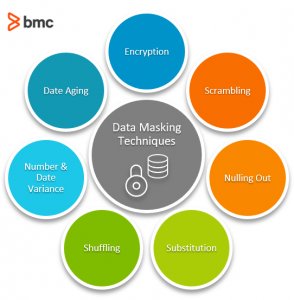
In the realm of Big Data security, data masking techniques play a vital role in safeguarding sensitive information from unauthorized access or misuse. As the volume and variety of data continue to surge, protecting data privacy has become a paramount concern for organizations handling massive datasets. Data masking involves the transformation of sensitive data into a non-sensitive form, allowing businesses to maintain the usability of their data for analytics and operations while mitigating the risk of potential data breaches. This article explores the significance of data masking techniques in the Big Data landscape and delves into the various strategies and best practices employed to ensure the confidentiality and integrity of data in the era of massive data proliferation.
Data security is of paramount importance in the world of big data. As organizations increasingly rely on vast amounts of sensitive information, the need to protect this data from unauthorized access has never been greater. One effective method for ensuring data security is data masking, which involves modifying data to protect sensitive information while still maintaining its utility for analysis and processing. This article will explore various data masking techniques specifically tailored for ensuring big data security.
What is Data Masking?
Data masking is a process that involves creating a version of data that cannot be easily identified or reverse-engineered. This process helps organizations protect sensitive information, such as personally identifiable information (PII), financial data, and proprietary business information, while still allowing the data to be utilized for development, testing, and analytics. By using data masking techniques in big data environments, organizations can minimize the risk of data breaches and ensure compliance with regulations like GDPR and HIPAA.
Key Data Masking Techniques
1. Substitution
Substitution is a straightforward data masking technique that involves replacing sensitive data values with fictitious but realistic-looking values. For instance, a person’s name, address, or phone number can be replaced with similar data that maintains the format and structure of the original data. This allows analysts to work with realistic datasets without exposing actual sensitive information.
2. Shuffling
Shuffling is another effective technique where the values of a specific data column are mixed up. For example, a list of customer IDs can be shuffled so that the relationship between a customer identifier and their corresponding personal data remains intact, but the data itself is randomized. Shuffling is particularly useful when working with datasets that require a maintained relationship between fields.
3. Masking Characters
Masking characters involves altering sensitive data such that only a portion of it remains visible. For instance, a credit card number can be masked to display only the last four digits while obfuscating the rest. This technique is particularly useful for applications where complete data visibility is not required, allowing organizations to show data without revealing critical elements.
4. Data Encryption
Data encryption converts sensitive data into an encoded format that can only be read by authorized users with the correct decryption keys. While this is not a data masking technique in the traditional sense, it is often combined with data masking to provide an added layer of security. Encrypted data can be effectively masked to further ensure that it cannot be accessed or deciphered by unauthorized personnel.
5. Nulling or Deletion
Nulling or deletion involves removing sensitive data entirely or replacing it with null values. This technique is particularly effective when working with non-production environments where sensitive data is not required. By nulling sensitive fields, organizations can reduce the risk of exposing sensitive information while still utilizing datasets for development and testing purposes.
6. Data Tokenization
Data tokenization replaces sensitive data elements with non-sensitive equivalents, known as tokens, which retain the essential information about the data without compromising its security. These tokens can then be mapped back to the original data only through a secure token vault. Tokenization is particularly useful in situations such as processing payment information, where the original data should never be exposed.
Implementing Data Masking in Big Data Environments
When implementing data masking techniques in big data environments, it is essential to consider the following best practices:
1. Understand Your Data
Before you can effectively mask data, it is crucial to have a thorough understanding of what data is sensitive and requires protection. This often involves conducting data discovery and classification to identify the various data types within your organization.
2. Define Data Masking Policies
Establish clear policies regarding which data should be masked and which techniques should be employed for different types of data. Consider regulatory requirements and internal security protocols when defining these policies.
3. Integrate with Existing Workflows
Effective data masking tools should easily integrate with existing workflows and big data processing environments such as Hadoop or Spark. The integration should allow seamless masking without disrupting data pipelines.
4. Test and Validate
It is crucial to test and validate the masking techniques to ensure that they do not compromise the quality or utility of the data. Regular testing helps confirm that the masking effectively secures sensitive data without hampering data analysis capabilities.
5. Monitoring and Auditing
Implement continuous monitoring and auditing of data masking processes to ensure compliance with policies and regulations. This proactive approach helps mitigate risks related to data breaches and ensures that any vulnerabilities are detected and addressed promptly.
Benefits of Data Masking in Big Data Security
Implementing data masking techniques carries numerous benefits for organizations handling big data:
1. Enhanced Data Privacy
By masking sensitive data, organizations can significantly enhance data privacy and protect against unauthorized access. This is particularly crucial in industries such as healthcare and finance that deal with highly sensitive data.
2. Risk Mitigation
Data masking helps mitigate the risk of data breaches by ensuring that even if unauthorized parties gain access to data, they cannot utilize it for malicious purposes. This proactive measure can save organizations from costly data breaches.
3. Compliance with Regulatory Requirements
Many regulations, such as GDPR and HIPAA, require organizations to protect sensitive data. By adopting data masking techniques, organizations can demonstrate adherence to these regulations and avoid potential fines.
4. Secure Testing and Development
Developing and testing applications with real data can pose significant security risks. Data masking allows organizations to utilize realistic datasets without exposing sensitive information, thus ensuring safer testing and development environments.
5. Improved Data Sharing
Organizations often share data with third parties for various purposes. By masking sensitive data, organizations can enable safe data sharing without compromising client confidentiality or data integrity.
Challenges in Data Masking for Big Data
Despite its advantages, there are several challenges that organizations may face when implementing data masking techniques in big data environments:
1. Complexity of Big Data
The immense volume, variety, and velocity of big data can make data masking complex. Organizations must ensure that masking techniques scale effectively and do not introduce performance bottlenecks.
2. Data Quality
Maintaining data quality during the masking process can be challenging, especially if care is not taken. Poor quality or inconsistent masked data can lead to unreliable analysis and insights.
3. Evolving Data Needs
As organizations grow and evolve, so do their data masking needs. Organizations must remain agile and adjust their masking strategies to address changing requirements and regulations.
4. Integration with Legacy Systems
Many organizations have legacy systems that may not easily accommodate modern data masking techniques. Ensuring compatibility between old and new systems can be a significant hurdle.
Conclusion
In an age where data breaches are increasingly common, the implementation of effective data masking techniques is crucial for protecting sensitive information in big data environments. By choosing the right masking strategies and integrating them into data governance practices, organizations can enhance their big data security posture and ensure compliance with regulations.
Data masking techniques play a crucial role in safeguarding sensitive information within Big Data environments. By employing various masking strategies such as tokenization, encryption, and pseudonymization, organizations can mitigate the risk of unauthorized access and maintain data privacy while maximizing the value of their Big Data assets. It is imperative for businesses to incorporate robust data masking practices as part of their overall security strategy to ensure the integrity and confidentiality of their data in the age of Big Data.
Related posts:
 The Five Vs of Big Data: Volume, Velocity, Variety, Veracity, and Value
 Understanding Data Pipelines in Big Data
 What is Apache Hadoop? A Complete Guide
 Understanding Apache Spark: Features and Use Cases
 Introduction to NoSQL Databases for Big Data
 Understanding HBase: How it Works in the Hadoop Ecosystem
 Natural Language Processing (NLP) with Big Data
 How Big Data is Used in Deep Learning Applications
 Sentiment Analysis with Big Data and AI
 Real-Time AI and Big Data: How It Works
 The Impact of Big Data on Financial Services and Banking
 Big Data in Smart Cities: Applications and Challenges
 Big Data and Retail: How It’s Changing the Shopping Experience
 Big Data in Agriculture: Precision Farming and Analytics