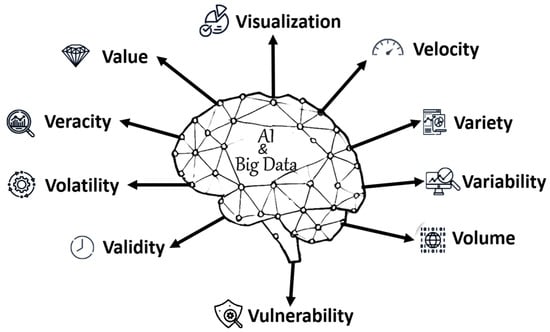
In the realm of Big Data, the efficient and accurate retrieval of information is paramount to the success of any organization. As data volumes continue to escalate at an exponential rate, the role of AI-driven query parsing in Big Data search engines has emerged as a crucial component in enabling businesses to extract valuable insights from their vast datasets. By leveraging advanced artificial intelligence algorithms, these search engines can intelligently interpret and process user queries, significantly enhancing search result relevance, accuracy, and speed. This article delves into the intricate interplay between AI-driven query parsing and Big Data search engines, shedding light on the transformative impact this technology has on data discovery and decision-making in the era of Big Data.
Understanding Query Parsing in Big Data
Query parsing is the process of analyzing and interpreting user queries submitted to search engines. In the context of Big Data, where vast amounts of information are stored and managed, effective query parsing becomes paramount. This process helps translate user requests into a format that the search engine can understand, enabling accurate data retrieval from massive datasets.
The Need for AI in Query Parsing
Traditional query parsing methods often struggle with user intention and context, especially when dealing with natural language inputs. Artificial Intelligence (AI) has emerged as a solution to this issue, enabling more sophisticated parsing techniques that enhance the search experience. AI-driven query parsing allows for improved understanding of queries, which results in higher accuracy in data retrieval.
Benefits of AI-Driven Query Parsing
- Enhanced Understanding of User Intent: AI algorithms can analyze patterns in user queries to discern intent, thereby refining the search results.
- Context Awareness: AI systems can leverage context from previous queries or user data to deliver more relevant results.
- Natural Language Processing (NLP): With NLP, AI can parse complex queries, including slang and colloquialisms, making it easier for users to find what they need.
- Personalization: AI can adapt to individual users’ search preferences and behaviors, optimizing results based on previous interactions.
- Error Handling: AI can tolerate and correct for misspellings or ambiguous phrasing, significantly improving the user experience.
Key Technologies Behind AI-Driven Query Parsing
Several technologies power AI-driven query parsing, making it an integral component of successful Big Data search engines:
1. Machine Learning
Machine learning algorithms learn from data and improve over time. In query parsing, they enable systems to predict user intent and adjust search parameters based on historical data. For instance, if a user frequently searches for “best travel destinations,” the system learns to prioritize travel-related data in future queries.
2. Natural Language Processing (NLP)
NLP is a branch of AI that focuses on the interaction between computers and human language. By utilizing NLP, AI-driven search engines can effectively interpret and parse user queries, allowing for a more natural interaction process. This technology enables search engines to understand phrases its users might not have explicitly defined in their queries.
3. Semantic Search
Semantic search enhances traditional keyword-based search methods by focusing on the meaning of words and their relationships. AI-driven query parsing leverages semantic understanding to improve the retrieval of related content, boosting both relevance and accuracy in search results.
4. Deep Learning
Deep learning models, particularly neural networks, can analyze complex data patterns and structures. In query parsing, deep learning can be employed to understand nuances in language, far beyond simple keyword matching. This leads to more refined and contextually relevant search outcomes.
Applications of AI-Driven Query Parsing in Big Data Search Engines
The integration of AI-driven query parsing has numerous applications within Big Data search engines:
1. Enterprise Search
In enterprise environments, vast amounts of documents, databases, and files are generated daily. AI-driven query parsing facilitates effective searching across these repositories, helping employees retrieve needed information swiftly and efficiently.
2. Social Media Analytics
Social media is a rich source of unstructured data. With AI-driven query parsing, businesses can analyze sentiments and trends from user-generated content, adjusting marketing strategies and customer engagement accordingly.
3. E-commerce Search Engines
In e-commerce platforms, AI-driven query parsing enhances the user experience by providing personalized product recommendations and improving search accuracy. When a user types a query like “best wireless headphones,” the engines can understand context and user preferences to show relevant products.
4. Healthcare Information Retrieval
AI-driven query parsing in healthcare enables the extraction and analysis of critical data from extensive medical records and research databases. It can help healthcare professionals find patient information or relevant studies based on nuanced queries, thereby improving care outcomes.
Challenges in Implementing AI-Driven Query Parsing
While AI-driven query parsing offers numerous benefits, some challenges must be addressed:
1. Data Privacy Concerns
As query parsing often involves analyzing personal data to improve search relevance, data privacy becomes a significant concern. Compliance with regulations like GDPR is essential to ensure that user privacy is not compromised.
2. Complexity of Natural Language
The intricacies of human language can pose challenges for AI systems. Accents, idioms, and varying linguistic styles may cause misunderstandings, leading to inaccurate search results. Continuous training and refinement of AI models are necessary to minimize these issues.
3. Resource Intensive
Implementing AI-driven parsing techniques requires substantial computational resources and expertise in AI and machine learning technologies. Smaller organizations may struggle to allocate the necessary resources for effective implementation.
4. Continuous Evolution
Search engines must adapt to evolving language patterns and user behaviors, which means that AI algorithms need continuous training and updates. Maintaining the efficiency of these systems can be resource-intensive and demands ongoing commitment.
The Future of AI-Driven Query Parsing in Big Data
The future of AI-driven query parsing in Big Data search engines is promising. With advancements in machine learning and natural language processing, we can expect even more accurate and relevant search results. Additionally, emerging technologies such as quantum computing may further enhance the performance of AI systems, making them capable of handling increasingly complex queries and massive datasets efficiently.
Innovations to Watch For:
- Improved User Experience: As AI evolves, user interactions with search engines will become more seamless and intuitive.
- Real-Time Data Processing: Future systems may offer real-time parsing and analytics, allowing businesses to respond to data insights almost instantaneously.
- Cognitive Search Capabilities: Integrating AI with cognitive capabilities will enable search engines to analyze emotional sentiments, making searches more comprehensive.
- Collaborative AI: AI systems may increasingly work alongside human input, allowing for a more interactive search process that dynamically adjusts based on user feedback.
Conclusion
AI-driven query parsing is an essential technology in the evolving world of Big Data. It significantly enhances search functionality, improves user experience, and enables organizations to extract valuable insights from their data repositories. As technologies continue to progress, the capabilities and applications of AI-driven query parsing will only expand further, shaping the future landscape of Big Data analytics and search engines.
AI-driven query parsing plays a crucial role in enhancing the efficiency and effectiveness of big data search engines. By utilizing artificial intelligence to understand and interpret user queries, search engines can deliver more accurate and relevant results, ultimately improving user experience and enabling better utilization of big data resources. Embracing AI-driven query parsing is essential for harnessing the full potential of big data in the digital age.
Related posts:
 The Five Vs of Big Data: Volume, Velocity, Variety, Veracity, and Value
 What is a Data Lake? Definition, Uses, and Benefits
 Introduction to Distributed Computing in Big Data
 Understanding Data Pipelines in Big Data
 Data Ingestion Techniques for Big Data Processing
 What is Apache Hadoop? A Complete Guide
 Understanding Apache Spark: Features and Use Cases
 Introduction to NoSQL Databases for Big Data
 The Role of MongoDB in Big Data Analytics
 Understanding HBase: How it Works in the Hadoop Ecosystem
 How Elasticsearch is Used in Big Data Applications
 The Intersection of Big Data and Artificial Intelligence
 How Big Data Powers Machine Learning Models
 Natural Language Processing (NLP) with Big Data