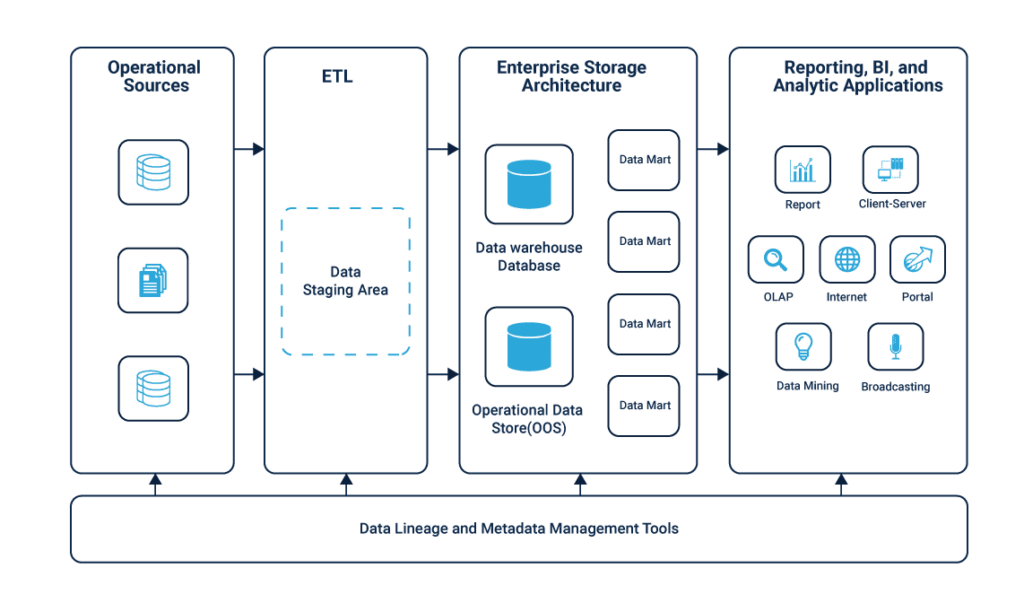
Metadata plays a pivotal role in the realm of Big Data management, serving as a crucial component in the successful organization, utilization, and analysis of vast amounts of data. In the context of Big Data, metadata functions as the foundational framework that provides essential context and structure to the immense volume of information being processed. By capturing details such as data sources, formats, classifications, timestamps, and relationships, metadata enables data scientists and analysts to navigate and understand complex datasets efficiently. Its role in facilitating data discovery, governance, integration, and lineage tracking underscores its significance in optimizing Big Data operations and enhancing decision-making processes. In essence, metadata acts as the informational glue that binds together disparate data points, enabling organizations to harness the full potential of their Big Data assets.
Understanding Metadata
Metadata refers to the data that provides information about other data. It helps describe the content, format, structure, and context of data, making it crucial for effective big data management. In the realm of big data, where the volume, velocity, and variety of data are immense, metadata plays a significant role in organizing, classifying, and retrieving data efficiently.
Types of Metadata
There are three primary types of metadata, each serving a unique purpose in big data management:
- Descriptive Metadata: This type helps in identifying and discovering data. It includes information such as titles, authors, keywords, and data summaries.
- Structural Metadata: This provides information about the organization of data, detailing how different data sets are related through hierarchies and classifications.
- Administrative Metadata: This governs the use and management of data. It includes information related to data ownership, access rights, and data lifecycle management.
The Importance of Metadata in Big Data Management
In the world of big data, the sheer volume of information can be overwhelming. Without appropriate metadata, data can become chaotic. Here are several reasons why metadata is vital for big data management:
Easier Data Discovery
Metadata facilitates easier data discovery by indexing and categorizing information. Data scientists and analysts can quickly locate pertinent datasets by searching through metadata fields, reducing the time spent on searching for data and increasing the efficiency of their workflows.
Data Quality and Consistency
The presence of well-defined metadata improves data quality and ensures consistency across various data sources. Metadata defines the allowable values, formats, and structures for data, which helps maintain accuracy and reduces discrepancies in data management.
Enhanced Data Governance
Effective data governance requires a clear understanding of data lineage, access rights, and compliance measures. Metadata provides comprehensive information, enabling organizations to trace data origins, understand its transformations, and ensure that appropriate security measures are in place for sensitive information.
Facilitating Data Integration
As organizations increasingly rely on multiple data sources, the ability to integrate diverse datasets becomes imperative. Metadata enables better data integration by providing critical context regarding data relationships, formats, and quality, allowing for seamless amalgamation of disparate data sets.
Improved Data Analytics
In the era of big data, analytics drive decision-making. With appropriate metadata, analysts can better understand the structure and content of datasets, leading to more informed analyses. This improves the quality of insights derived from data, ultimately enhancing organizational strategies.
Facilitating Machine Learning and AI
In the context of machine learning and artificial intelligence (AI), metadata enhances the effectiveness of algorithms. By providing necessary context and categorization, metadata helps machine learning models learn more effectively, improving predictions and outcomes.
Challenges Associated with Metadata in Big Data
Despite its importance, managing metadata in big data environments presents several challenges:
Volume and Complexity
The vast amount of data and its complexity can make metadata management cumbersome. Organizations must implement robust systems to capture, store, and maintain metadata effectively without overwhelming their resources.
Standardization Issues
Lack of standardization in metadata formats can lead to inconsistencies and confusion when integrating or interpreting data. Organizations should strive to adopt common standards to improve interoperability across various systems and tools.
Data Governance and Compliance
Ensuring compliance with regulatory requirements while managing metadata can be an arduous task. Organizations should establish clear governance policies that outline how metadata is to be handled, especially concerning sensitive information.
Best Practices for Metadata Management in Big Data
To overcome challenges and leverage the benefits of metadata in big data management, organizations should adopt the following best practices:
Invest in Metadata Management Tools
Utilizing metadata management tools helps automate the cataloging, classification, and maintenance of metadata. This efficiency allows data teams to focus on more strategic tasks rather than manual management processes.
Define Clear Metadata Standards
Creating and implementing metadata standards is crucial for maintaining consistency and quality across datasets. Organizations should establish a framework that specifies the metadata fields, formats, and guidelines for all data owners and stakeholders.
Regularly Review and Update Metadata
Metadata can become outdated as data evolves. Organizations should establish a routine for reviewing and updating metadata to ensure it reflects the current state of their datasets accurately.
Enhance Collaboration Among Teams
Encouraging communication and collaboration among different teams can help in the effective management of metadata. Data engineers, analysts, and business stakeholders should work together to ensure that metadata meets everyone’s needs and remains relevant.
Secure Metadata Storage
Securing metadata is as important as securing the data itself. Organizations should implement robust security measures to protect metadata repositories from unauthorized access and potential breaches.
The Future of Metadata in Big Data Management
The future of metadata in big data management looks promising. As technology evolves, there will be a greater emphasis on automation and the incorporation of advanced technologies such as AI and machine learning in metadata management processes. Such innovations will enhance the ability to manage vast datasets more efficiently while providing better insights.
Emergence of Metadata as a Service (MaaS)
The concept of Metadata as a Service (MaaS) is gaining traction, allowing organizations to leverage cloud-based solutions for efficient metadata management. These services will help simplify metadata creation, maintenance, and retrieval while offering scalability and flexibility.
Increased Focus on Semantic Metadata
As the reliance on data-driven decision-making grows, there will be an increased focus on semantic metadata, which provides additional context by describing relationships and meanings of data elements. This enhanced understanding will lead to improved data utilization and richer analytics.
AI-Driven Metadata Generation
With advancements in artificial intelligence, the generation and management of metadata can become largely automated. AI technologies will assist in analyzing large datasets to create meaningful metadata, enhancing overall data management efficiency.
Conclusion
Metadata is integral to effective big data management. By improving data discovery, quality, governance, integration, analytics, and enabling advancements in AI, metadata helps organizations capitalize on their data assets. As technology continues to evolve, embracing innovative approaches to metadata management will be crucial for organizations looking to stay ahead in the big data landscape.
Metadata plays a critical role in the effective management of Big Data by providing crucial context, organization, and accessibility to vast amounts of data. Its ability to enhance data analytics, governance, and overall decision-making processes makes it an indispensable component in navigating the complexities of Big Data management. Emphasizing the importance of metadata integration and utilization can significantly optimize data management practices and drive organizations towards successful harnessing of the power of Big Data.
Related posts:
 The Five Vs of Big Data: Volume, Velocity, Variety, Veracity, and Value
 What is a Data Lake? Definition, Uses, and Benefits
 Introduction to Distributed Computing in Big Data
 Understanding Data Pipelines in Big Data
 Data Ingestion Techniques for Big Data Processing
 What is Apache Hadoop? A Complete Guide
 Understanding Apache Spark: Features and Use Cases
 Introduction to NoSQL Databases for Big Data
 The Role of MongoDB in Big Data Analytics
 Understanding HBase: How it Works in the Hadoop Ecosystem
 How Elasticsearch is Used in Big Data Applications
 The Intersection of Big Data and Artificial Intelligence
 How Big Data Powers Machine Learning Models
 Natural Language Processing (NLP) with Big Data