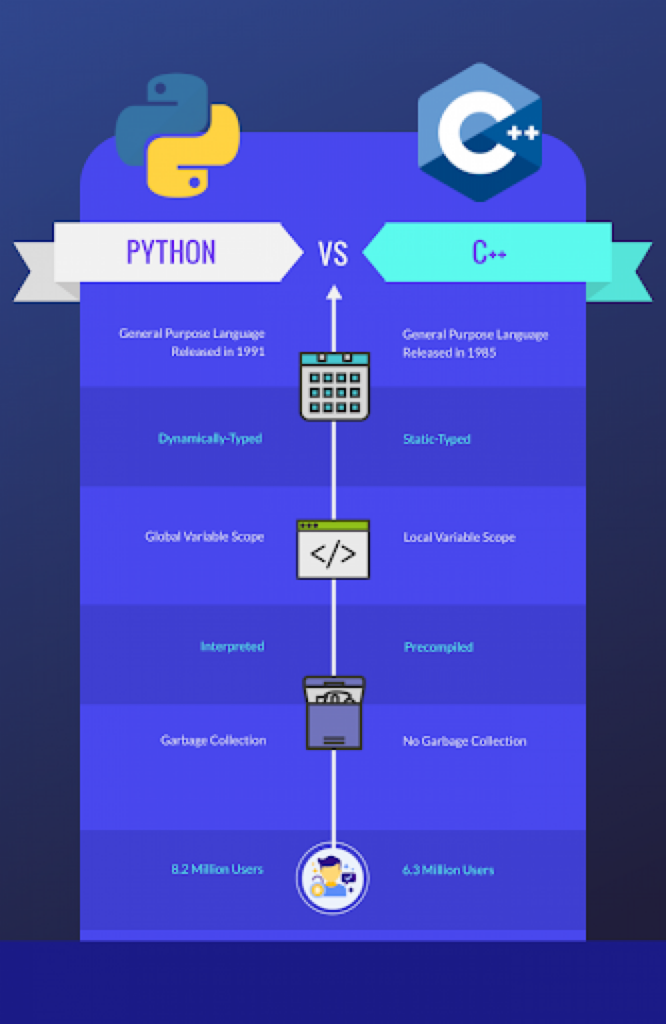
Determining which programming language is harder – C++, Java, or Python – largely depends on individual preferences and prior programming experience. C++ is often considered more complex due to its low-level features, such as memory management and pointers. Mastering C++ requires a strong understanding of these concepts, making it challenging for beginners.
On the other hand, Java is known for its readability and strict syntax, which can make it easier for beginners to grasp. However, Java requires a deep understanding of object-oriented programming principles, which can be challenging for those new to the concept. Python, known for its simplicity and readability, is often considered the easiest of the three languages to learn due to its clean syntax and extensive library support.
In the world of programming, beginners often find themselves debating which programming language is harder to learn: C++, Java, or Python. Each language has its own unique features and purposes, making it challenging to determine exactly which one is the most difficult. In this article, we will compare the difficulty level of C++, Java, and Python based on various factors.
1. Syntax Complexity
One important aspect to consider when determining the difficulty of a programming language is its syntax complexity. C++ has a more complex syntax compared to Java and Python. It includes concepts like pointers, memory management, and manual memory deallocation which can be confusing for beginners.
Java, on the other hand, has a relatively simpler syntax compared to C++. It uses automatic garbage collection for memory management, which eliminates the need for explicit memory deallocation. Java’s syntax focuses on readability and abstraction, making it easier to understand and maintain.
Python, known for its simplicity and readability, has the simplest syntax among the three languages. It uses indentation for block structure, reducing the need for explicit brackets or semicolons. This makes Python more beginner-friendly and less prone to syntax errors.
2. Learning Curve
When it comes to the learning curve, C++ often has a steeper one compared to Java and Python. Its complexity and lower-level nature require a deep understanding of computer hardware and memory management concepts. Beginners may struggle initially, especially if they lack fundamental programming knowledge.
Java, being an intermediate-level language, has a slightly smoother learning curve. Its syntax resembles C++, but it provides features like automatic memory management and simplified exception handling. While Java requires understanding concepts like object-oriented programming (OOP), it provides a wealth of resources and a supportive community to aid the learning process.
Python, designed with simplicity in mind, has the gentlest learning curve among the three languages. Its beginner-friendly syntax and extensive libraries for various tasks make it an excellent choice for newcomers. Python’s focus on readability and simplicity allows beginners to quickly grasp its concepts and start building applications.
3. Application and Use Cases
3.1 C++
C++ is a powerful language often used for system programming, game development, and performance-critical applications. Its low-level nature and strong hardware control make it suitable for tasks that require high performance and efficiency. However, working with C++ may require dealing with memory management, complex code structures, and debugging intricate issues, making it challenging for beginners.
3.2 Java
Java, known for its “write once, run anywhere” philosophy, is widely used for creating desktop applications, server-side development, and Android app development. Its platform independence, extensive libraries, and strong support from the developer community make it popular among developers. While Java has a simpler syntax compared to C++, beginners may need to learn concepts like OOP and understand how Java’s virtual machine works.
3.3 Python
Python’s versatility and ease of use make it suitable for web development, data analysis, artificial intelligence, and scientific computing. Its simplicity, combined with a large number of libraries, allows developers to write clean and concise code. Unlike C++ or Java, Python abstracts away many complexities and focuses on readability. This makes Python an ideal choice for beginners and those interested in data-driven fields.
4. Job Market and Career Opportunities
The difficulty of learning a programming language also depends on the job market demand and career opportunities associated with it. C++ developers are highly sought after in industries like game development, embedded systems, and high-frequency trading. Mastering C++ can open up lucrative career prospects and challenging projects. However, due to its complexity, it may take longer to become proficient in C++.
Java, being one of the most widely adopted languages, offers abundant job opportunities in various industries. Its usage in enterprise-level applications and Android development ensures a high demand for skilled Java developers. Learning Java can pave the way for a stable career with opportunities for growth and specialization.
Python’s popularity has skyrocketed in recent years, especially in fields like data science and machine learning. The demand for Python developers is rapidly increasing as businesses rely on data-driven insights. Python’s simplicity and vast ecosystem of libraries make it an attractive language for both beginners and professionals seeking career growth in emerging technologies.
In conclusion, determining which programming language is harder among C++, Java, and Python largely depends on individual preferences, prior experience, and learning goals. While C++ may have a steeper learning curve and more complex syntax, it offers immense power and flexibility. Java strikes a balance between complexity and readability, making it suitable for various applications. Python’s simplicity, readability, and broad range of applications make it an excellent choice for beginners and those interested in data-driven fields.
Ultimately, the difficulty level becomes subjective based on the context in which the language is used and the individual’s learning approach. As with any programming language, practice, dedication, and continuous learning are key to becoming proficient in C++, Java, or Python.
All three programming languages – C++, Java, and Python – have their own unique challenges and complexities. The difficulty of learning and mastering each language ultimately depends on individual preferences, prior experience, and the specific context in which the language is being used. It is important to consider your own goals and the requirements of the project when choosing which language to focus on mastering.
Related posts:
 What language is faster than JavaScript?
 Can I use Java instead of JavaScript in HTML?
 What is JavaScript basics?
 Why JavaScript is popular than Java?
 Is Python easier than Java and C++?
 Is Python replacing Java?
 Should I learn Java or Python?
 Should I learn JavaScript or Python?
 Which is easier to learn Python or Java or C++?
 Who gets paid more Python or JavaScript?
 Is Python a future or Java?
 Is JavaScript a software?
 Can I download JavaScript?
 How to load JavaScript in HTML?