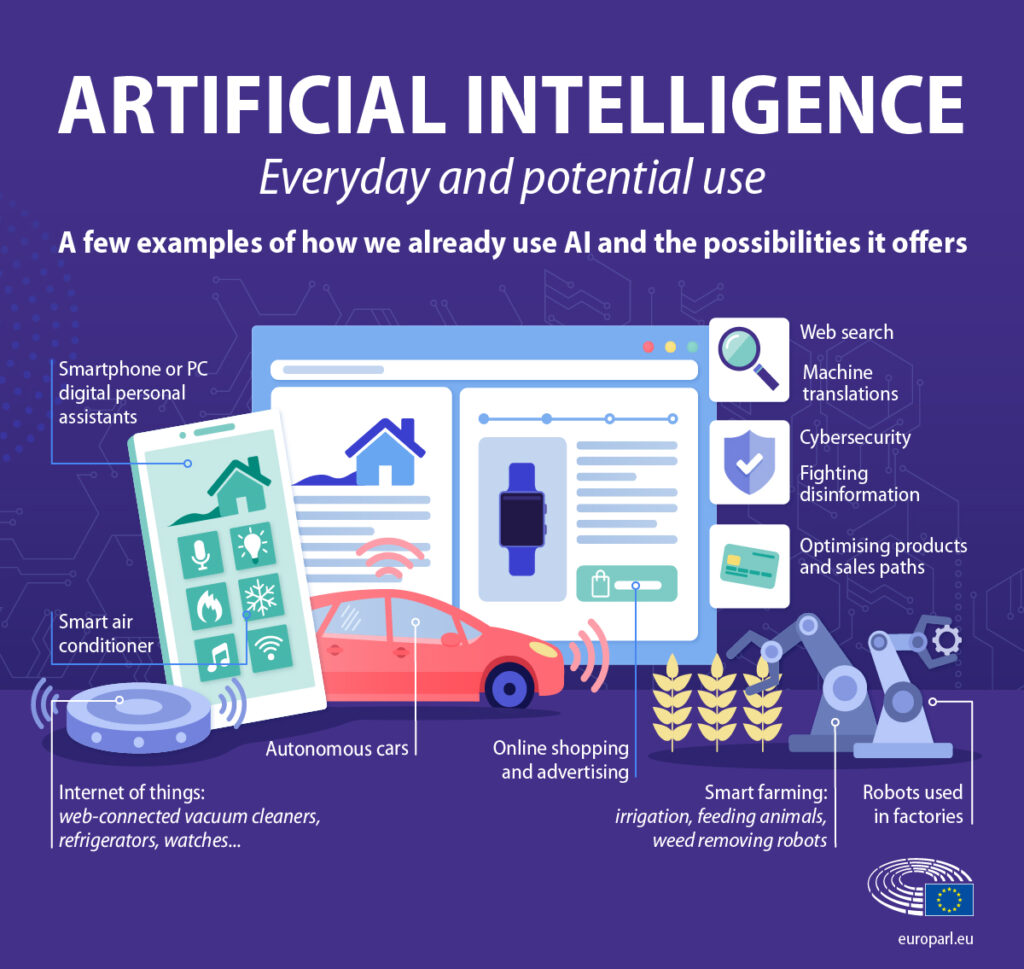
Artificial Intelligence (AI) is a rapidly evolving technology that is being utilized in various industries today. From virtual assistants like Siri and Alexa to self-driving cars, AI is playing a crucial role in transforming our daily lives. In healthcare, AI is being used to improve diagnostics and treatment plans. In finance, AI algorithms are used for fraud detection and personalized financial advice. AI is also being implemented in agriculture, education, and many other fields to streamline processes and enhance efficiency. The possibilities of AI seem endless, and its impact on society continues to grow as technology advances and new applications are discovered.
Artificial Intelligence (AI) has become an integral part of our daily lives, influencing various industries and sectors. From healthcare to finance, AI is revolutionizing the way organizations operate and making processes more efficient. In this article, we will explore some of the key areas where AI is currently being used and the impact it has on our lives.
1. Healthcare
AI is transforming the healthcare industry in numerous ways. It is being used to analyze vast amounts of medical data, identify patterns, and assist in diagnosis. Machine learning algorithms are helping doctors in decision-making, providing accurate predictions on disease progression and recommending treatment plans. Additionally, AI-powered robots are being used in surgical procedures, making surgeries less invasive and reducing the risk of human error.
2. Finance
The financial sector has embraced AI to enhance fraud detection, automate customer service, and improve trading strategies. AI algorithms can quickly analyze large volumes of financial data, identify anomalies, and detect fraudulent activities in real-time. Chatbots powered by AI are also extensively used in customer service, providing personalized assistance and resolving queries efficiently. Furthermore, AI is utilized in algorithmic trading, where it can analyze market trends and make data-driven investment decisions.
3. Transportation
The transportation industry is leveraging AI to optimize processes and improve safety. AI-enabled systems are used in self-driving cars to enhance navigation and decision-making abilities. These systems can analyze real-time data from various sensors, including radar and cameras, to detect objects, traffic patterns, and potential risks. Additionally, AI is used in logistics and supply chain management to optimize routes, reduce fuel consumption, and streamline operations.
4. Retail
Retailers have embraced AI to enhance customer experiences and optimize operations. AI-powered chatbots and virtual assistants can provide personalized recommendations to customers based on their preferences and purchase history. This helps in improving customer satisfaction and increasing sales. AI is also used in inventory management, demand forecasting, and price optimization, contributing to more efficient supply chains and better profitability.
5. Entertainment
The entertainment industry has witnessed a significant impact from AI. Streaming platforms use AI algorithms to analyze user preferences and behavior, recommending personalized content to users. Moreover, AI is used in the production process, enabling automated video and audio editing, as well as visual effects generation. This improves efficiency and reduces production costs.
6. Cybersecurity
AI plays a crucial role in bolstering cybersecurity defenses. It can analyze large amounts of data and detect potential threats, including malware and suspicious activities, in real-time. AI algorithms can continuously learn and adapt to new patterns, ensuring proactive detection and prevention of cyber attacks. Additionally, AI is used to develop powerful authentication systems, such as facial recognition and voice recognition, enhancing security measures.
7. Education
AI has the potential to revolutionize education by personalizing learning experiences and providing individualized support to students. Intelligent tutoring systems can adapt to students’ learning styles and pace, offering tailored educational materials and feedback. AI can also automate administrative tasks, allowing educators to focus more on teaching and mentoring students.
8. Manufacturing
AI is transforming manufacturing processes by enabling predictive maintenance, improving quality control, and optimizing production lines. Machine learning algorithms can analyze sensor data to predict equipment failures, allowing proactive maintenance to minimize downtime. AI-powered systems can also identify defects and anomalies in real-time, reducing waste and improving product quality. Furthermore, AI-driven automation enhances production efficiency and flexibility.
AI is being utilized across various industries to improve efficiency, enhance decision-making, and optimize processes. From healthcare to entertainment, AI-driven systems are shaping the future of how we live and work. As technology continues to advance, the scope of AI applications is likely to expand, creating new opportunities and challenges for businesses and individuals alike.
Related posts:
 What is Artificial Intelligence with Examples?
 What are 4 Types of Artificial Intelligence?
 What is AI used in today?
 Is ChatGPT an AI?
 Is Siri an AI?
 Who created AI?
 Why Do We Need AI?
 Is Google Maps an AI?
 Is Zoom an AI?
 Who owns ChatGPT?
 Can I do my own AI?
 How to Use Google AI: A Comprehensive Guide
 Is ChatGPT better than Siri?
 Who Made ChatGPT?