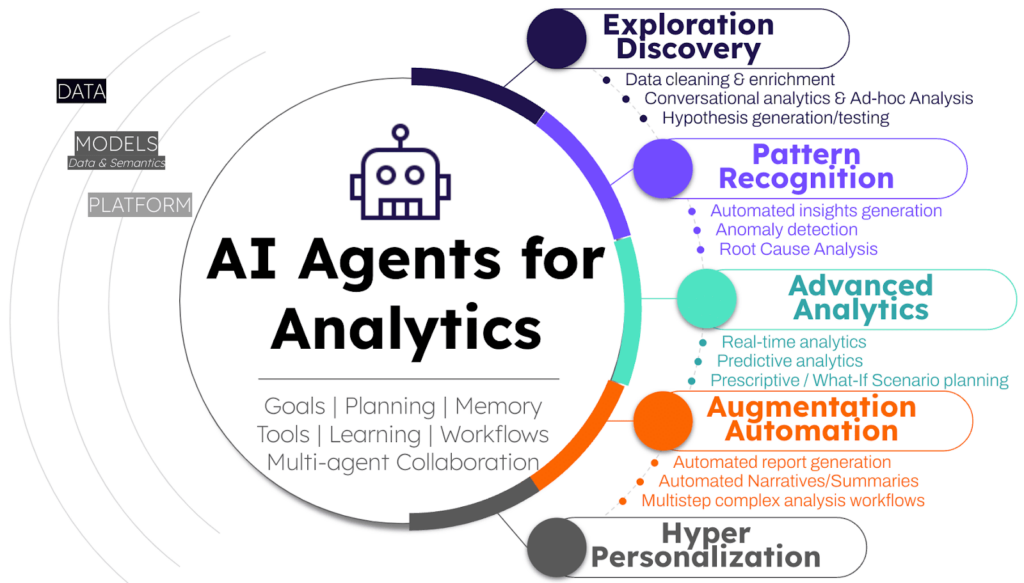
In the ever-expanding landscape of Big Data, the role of interactive AI agents is becoming increasingly vital for efficient data exploration and analysis. These intelligent systems have the potential to revolutionize how we interact with and extract insights from massive datasets. As we delve deeper into the realm of Big Data, the future of interactive AI agents holds the promise of enhanced efficiency, improved decision-making, and a more intuitive approach to navigating and making sense of complex data sets. This article explores the evolving landscape of interactive AI agents in the context of Big Data exploration, and the potential impact these technologies may have on the way we harness and leverage data for strategic decision-making and innovation.
The quantification and analysis of big data have transformed significantly over the last decade. Businesses and organizations are increasingly leveraging interactive AI agents to streamline the exploration and interpretation of vast datasets. As technology continues to evolve, the future of these AI agents looks promising, opening up new avenues for data discovery, insight generation, and decision making.
1. The Evolution of Big Data and AI Interdependence
Traditionally, big data analysis required extensive human intervention, substantial technical expertise, and time-consuming processes. However, the integration of AI technologies has facilitated a crucial evolution in the way data is explored. AI agents, equipped with natural language processing (NLP) and machine learning (ML) algorithms, can interactively engage with users to deliver insights that were previously slow or complex to uncover.
This interdependence has led not only to faster data processing but also to a profound shift in how businesses approach data-driven decisions. Instead of relying solely on manual analytics, organizations are now utilizing AI-powered tools that can synthesize information from varied data sources and tailor insights based on user queries and preferences.
2. Advancements in Interactive AI Technologies
The advancements in AI technologies have been pivotal for the development of interactive AI agents. Enhanced capabilities in machine learning, deep learning, and semantic understanding have significantly improved the interaction quality between users and AI systems.
- Natural Language Processing (NLP): NLP allows AI agents to understand and respond to user queries in a conversational manner, making it easier for users to interact with complex datasets without needing deep technical knowledge.
- Contextual Understanding: AI agents are becoming increasingly adept at understanding context, which enhances their ability to provide relevant insights based on previous interactions. This leads to a more personalized experience for users.
- Real-time Data Processing: With advancements in processing power and algorithms, AI agents can perform real-time analytics, allowing organizations to make quicker decisions based on the latest data.
3. Use Cases of Interactive AI Agents in Big Data Exploration
The application of interactive AI agents in big data exploration is manifold. Here are some prominent use cases demonstrating the potential of these systems:
3.1 Retail Analytics
In the retail sector, businesses are utilizing interactive AI agents to analyze customer behavior, sales trends, and inventory management. By asking questions about sales patterns, store performance, or promotional effectiveness, retailers can gain critical insights that inform marketing strategies and enhance customer experience.
3.2 Healthcare Insights
Healthcare organizations are leveraging AI agents to analyze patient data, medical records, and treatment outcomes. This allows them to identify trends, forecast patient needs, and improve operational efficiencies. Interactive AI can help clinicians make informed decisions by providing answers to complex queries related to patient care.
3.3 Financial Services
The finance industry is also experiencing a transformation with AI agents that can process vast amounts of transactional data and market information. By enabling financial analysts to interact with data using natural language queries, these agents can provide insights on investment opportunities, risk assessments, and market forecasts.
4. The Role of Big Data Analytics in AI Agent Development
The development of interactive AI agents heavily relies on robust big data analytics. Here are key aspects of how big data analytics contributes to the evolution of these agents:
4.1 Data Management and Integration
AI agents require access to a variety of data sources to provide meaningful insights. Big data analytics facilitates the collection, storage, and integration of disparate data types, ensuring AI agents can pull relevant information when needed. Implementing data lakes and data warehouses allows for seamless integration and easier access to big data.
4.2 Predictive Analytics
With big data analytics, AI agents can leverage predictive models that utilize historical data to forecast future trends. This capability is essential for making proactive decisions in business, healthcare, and other industries, giving organizations a competitive edge.
4.3 Data Visualization
In addition to providing insights, AI agents can use big data analytics to create interactive visualizations that make complex data more comprehensible. These visualizations help users grasp data insights quickly and effectively, allowing for better understanding and retention of information.
5. Challenges and Solutions in Implementing Interactive AI Agents
Despite the promising future of interactive AI agents, several challenges must be addressed to maximize their potential in big data exploration:
5.1 Data Privacy and Security
As AI agents access vast amounts of personal and sensitive data, ensuring data privacy and compliance with regulations (such as GDPR) is critical. Organizations must implement robust data security measures and transparency practices to build user trust.
5.2 Data Quality and Reliability
The effectiveness of AI agents hinges on the quality of the data they analyze. Poor data quality can lead to misleading insights. Organizations must prioritize data cleaning and validation practices to ensure the reliability of the information fed into AI models.
5.3 User Training and Adoption
For organizations to fully harness the benefits of interactive AI agents, employees need to be adequately trained on how to use these tools effectively. Change management strategies are essential to encourage adoption and ensure users are comfortable and proficient in interacting with AI systems.
6. Future Trends in Interactive AI for Big Data Exploration
The landscape of interactive AI agents and their application in big data exploration is continuously evolving. Here are some trends to watch in the coming years:
6.1 Enhanced Personalization
Future AI agents will leverage user data to provide highly personalized insights and recommendations, adapting to the unique needs and preferences of individual users. This will result in a more tailored data exploration experience.
6.2 Integration with IoT Data
As the Internet of Things (IoT) continues to grow, AI agents will increasingly integrate and analyze data from IoT devices, providing near real-time insights into various applications such as smart homes, cities, and industrial systems.
6.3 Cross-Platform Collaboration
Interactive AI agents will enable seamless collaboration across platforms and applications, allowing users to extract and analyze data from various sources without needing to switch between different tools or interfaces.
6.4 Autonomous Decision-Making
Future AI agents will possess the capabilities to not only recommend actions but also execute decisions autonomously based on predefined criteria and analysis outcomes. This could significantly enhance operational efficiencies across industries.
7. Conclusion
In a world increasingly driven by big data, interactive AI agents offer transformative potential for exploration, insight generation, and decision-making. As we forge ahead, the symbiotic relationship between big data and AI will pave the way for innovative solutions that empower organizations to leverage their data fully.
The future of interactive AI agents for Big Data exploration holds great promise in revolutionizing how we analyze, interpret, and derive insights from vast and complex data sets. By enhancing user experience through natural language processing and advanced visualization techniques, these agents have the potential to greatly accelerate decision-making processes and uncover valuable patterns and trends within Big Data. As technology continues to evolve, interactive AI agents will play a crucial role in making Big Data more accessible and actionable for businesses and individuals alike.
Related posts:
 The Five Vs of Big Data: Volume, Velocity, Variety, Veracity, and Value
 What is a Data Lake? Definition, Uses, and Benefits
 Introduction to Distributed Computing in Big Data
 Understanding Data Pipelines in Big Data
 Data Ingestion Techniques for Big Data Processing
 What is Apache Hadoop? A Complete Guide
 Understanding Apache Spark: Features and Use Cases
 Introduction to NoSQL Databases for Big Data
 The Role of MongoDB in Big Data Analytics
 Understanding HBase: How it Works in the Hadoop Ecosystem
 How Elasticsearch is Used in Big Data Applications
 The Intersection of Big Data and Artificial Intelligence
 How Big Data Powers Machine Learning Models
 Natural Language Processing (NLP) with Big Data