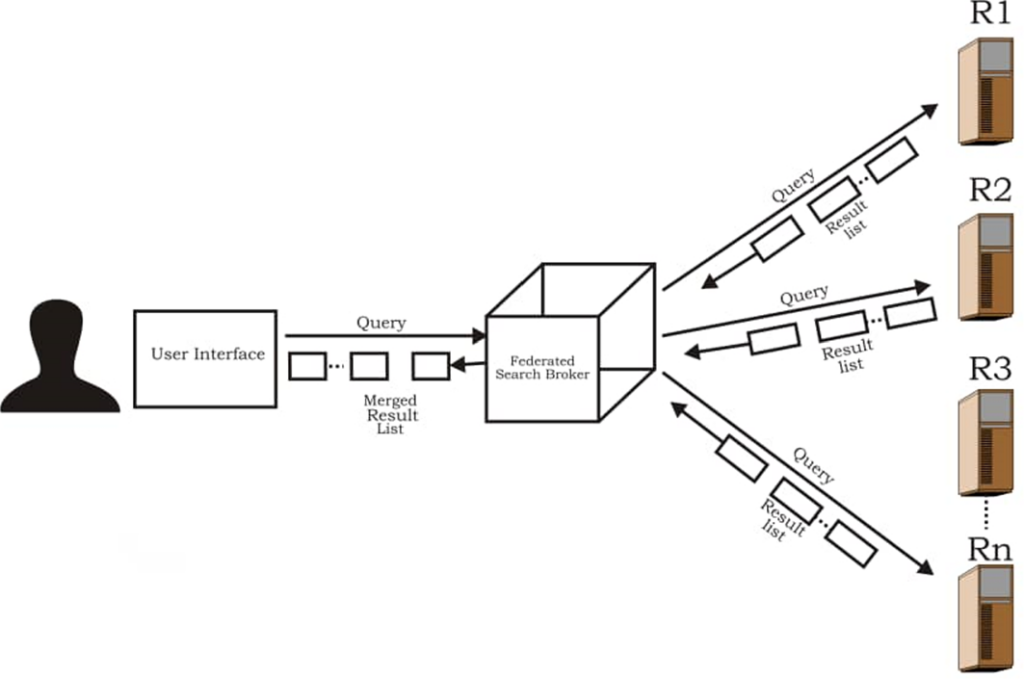
In the era of Big Data, the ability to efficiently and effectively search and discover information across multiple disparate data sources is crucial for organizations seeking valuable insights. Federated search technology has emerged as a powerful solution for large-scale data discovery, enabling users to access and retrieve information from diverse data repositories in a seamless and unified manner. This technology not only accelerates the discovery process but also enhances data integration, collaboration, and decision-making capabilities. In this article, we will explore the impact of federated search on large-scale data discovery within the realm of Big Data, highlighting its benefits, challenges, and potential for transforming how organizations extract value from their data assets.
The emergence of big data has transformed how organizations collect, store, and analyze information. However, as datasets grow larger and more complex, traditional search methodologies often struggle to efficiently extract relevant insights. This is where federated search plays a crucial role in optimizing data discovery across massive datasets.
What is Federated Search?
Federated search refers to a search architecture that enables users to execute a single query across multiple data sources or databases. By leveraging APIs or connectors, federated search systems allow for real-time data retrieval from disparate sources, including databases, content management systems, and cloud storage solutions. This approach ensures that users can access a comprehensive range of data without needing to sift through each source individually.
The Role of Federated Search in Big Data Environments
As organizations accumulate vast volumes of data, managing and accessing that information effectively becomes increasingly critical. Federated search enhances large-scale data discovery by:
- Streamlining Access: Users can search various databases simultaneously, significantly reducing the time required to find relevant information.
- Enhancing Search Accuracy: By querying multiple sources, federated search helps improve the accuracy of search results, decreasing the chances of missing critical data.
- Reducing Data Silos: Data often resides in isolated repositories. Federated search enables the integration of these silos, promoting a more holistic view of the available information.
Key Benefits of Federated Search in Large-Scale Data Discovery
The implementation of federated search in the context of big data brings numerous benefits to organizations:
1. Improved Efficiency and Productivity
Organizations can save considerable time by eliminating the need to navigate multiple data sources independently. Users can quickly retrieve answers and insights from a single search query, enhancing productivity and allowing teams to focus on strategic tasks rather than manual data retrieval.
2. Cost Savings
By utilizing federated search, organizations can maximize their existing data infrastructures, reducing the need for redundant data storage and the associated costs. Furthermore, increased efficiency translates into cost savings related to time and resource management.
3. Enhanced Data Governance
Federated search enables organizations to maintain improved data governance practices by tracking and auditing search queries across different sources. This capability ensures compliance with internal policies and regulatory requirements, ultimately leading to better data management and security practices.
4. Advanced Analytics Capabilities
With the ability to access a broader set of data, organizations can implement more robust analytics programs. Federated search empowers data scientists and analysts to derive insights from diverse datasets, leading to richer analyses and informed decision-making across the organization.
Challenges Associated with Federated Search in Big Data
While federated search provides significant advantages, it also presents some challenges that organizations must navigate:
1. Data Compatibility Issues
One of the primary challenges of federated search is ensuring data compatibility across different sources. Data formats, schema differences, and varying query languages can complicate the integration process. Organizations may need to invest in middleware solutions or data transformation tools to address these compatibility issues.
2. Performance Issues
As data volumes grow, query performance can suffer. Searching across numerous large datasets may lead to slower response times. Organizations should prioritize optimizing backend systems and employing strategies such as caching frequently accessed data or using distributed search architectures to enhance performance.
3. Security Concerns
Federated search architectures must be designed with security in mind. Multiple data sources may have different security protocols, leading to vulnerabilities during data access. Organizations must establish strict access controls, utilizing authentication and authorization protocols to safeguard sensitive information.
Implementing Federated Search in Big Data Environments
Successful implementation of federated search requires a clear strategy to integrate it effectively into existing infrastructures. The following steps can serve as a guide:
1. Assess Your Data Landscape
Before deploying a federated search solution, organizations should conduct a comprehensive assessment of their data landscape. Understanding the types of data sources, data formats, and existing search capabilities is crucial for making informed decisions regarding federated search architecture.
2. Choose the Right Federated Search Solution
The market offers a variety of federated search solutions, each with distinct features and capabilities. Organizations should evaluate these options based on their specific needs, focusing on factors such as ease of integration, scalability, and support for various data types.
3. Ensure Data Governance Compliance
Establishing a solid framework for data governance is essential during implementation. Organizations should define guidelines for data access, usage, and auditing to maintain compliance with regulatory requirements and internal policies.
4. Train Users and Foster Adoption
To leverage the benefits of federated search fully, organizations must invest in user training and education. Empowering users with the necessary skills and knowledge will encourage adoption and maximize the solution’s effectiveness.
Future Trends in Federated Search and Big Data Discovery
As technology evolves, federated search will continue to play a pivotal role in big data discovery. Here are some trends to watch:
1. Integration with Artificial Intelligence
The incorporation of artificial intelligence (AI) into federated search solutions is poised to enhance search accuracy and relevance. AI algorithms can learn from user behaviors and refine search results over time, leading to a more tailored search experience.
2. Enhanced Machine Learning Capabilities
Machine learning will also contribute to the evolution of federated search by enabling it to recognize patterns and relationships within distributed datasets. This capability will improve the predictive capabilities of organizations and enhance their analytical models.
3. Greater Focus on User Experience
As more organizations adopt federated search, providing users with an intuitive and seamless experience will become increasingly important. Future solutions are likely to emphasize user interface design and usability, ensuring that users can effectively interact with large datasets with ease.
4. Increased Emphasis on Privacy and Security
With growing concerns over data privacy and security, federated search solutions will need to prioritize robust security measures. Organizations will likely see more tools designed to protect sensitive data while ensuring compliance with data protection regulations.
Conclusion
In a world where data is becoming increasingly abundant, federated search stands out as a critical component for improving large-scale data discovery in big data ecosystems. Its ability to streamline access, enhance accuracy, and promote data governance makes it an invaluable tool for organizations seeking to harness the full potential of their data assets.
Federated Search plays a crucial role in enhancing large-scale data discovery within the realm of Big Data by enabling the simultaneous search and retrieval of information stored across multiple distributed sources. This approach not only enhances the efficiency of data discovery processes but also ensures comprehensive access to diverse datasets, thereby empowering organizations to harness the full potential of their data assets for informed decision-making and strategic insights.
Related posts:
 The Five Vs of Big Data: Volume, Velocity, Variety, Veracity, and Value
 Introduction to Distributed Computing in Big Data
 Understanding Data Pipelines in Big Data
 What is Apache Hadoop? A Complete Guide
 Understanding Apache Spark: Features and Use Cases
 Introduction to NoSQL Databases for Big Data
 Understanding HBase: How it Works in the Hadoop Ecosystem
 The Intersection of Big Data and Artificial Intelligence
 Natural Language Processing (NLP) with Big Data
 How Big Data is Used in Deep Learning Applications
 Sentiment Analysis with Big Data and AI
 Real-Time AI and Big Data: How It Works
 The Impact of Big Data on Financial Services and Banking
 Big Data in E-commerce: Personalization and Customer Insights