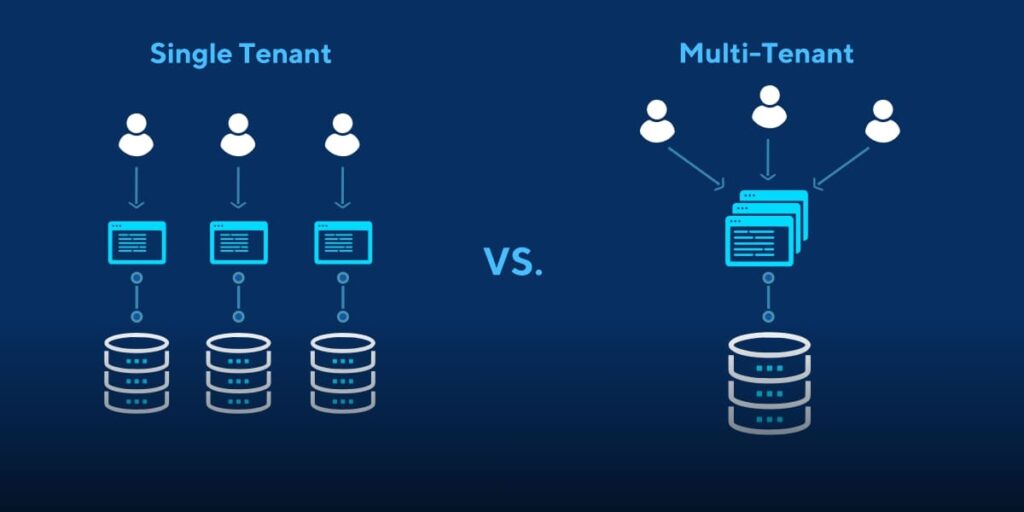
Multi-tenancy in Big Data infrastructure has emerged as a pivotal concept that significantly impacts the efficiency, scalability, and cost-effectiveness of Big Data systems. This approach allows multiple users or applications to share a common pool of computing resources and data storage, enabling organizations to maximize utilization and streamline operations. However, the implementation of multi-tenancy comes with its unique set of challenges and considerations, ranging from data security and isolation to performance optimization. Understanding the implications of multi-tenancy in Big Data infrastructure is crucial for organizations looking to harness the full potential of their data assets and drive innovation in the digital age.
Multi-tenancy is a crucial design principle in the architecture of Big Data infrastructures. It allows multiple clients or tenants to share the same application while maintaining data separation and security. This article dives deep into the impact of multi-tenancy on Big Data systems, defining its relevance, advantages, challenges, and practical applications.
Understanding Multi-Tenancy in Big Data
At its core, multi-tenancy refers to the capability of a single instance of a software application serving multiple tenants. This architecture is prevalent in cloud computing and enables organizations to efficiently manage costs while ensuring that each tenant’s data remains isolated. In the context of Big Data, multi-tenancy facilitates scalability and resource sharing, which are essential in processing vast volumes of data.
Benefits of Multi-Tenancy in Big Data Infrastructure
1. Cost Efficiency
One of the primary benefits of multi-tenancy in Big Data infrastructures is cost efficiency. Organizations can deploy a single instance of a software solution that can accommodate multiple businesses. This results in shared resources, which minimizes operational costs. For example, cloud providers like AWS and Azure leverage multi-tenancy to host numerous clients on the same physical hardware.
2. Resource Optimization
Multi-tenancy allows better utilization of computational resources. By sharing resources such as CPU, memory, and storage across several tenants, organizations can reduce waste. This optimization leads to improved overall performance while significantly lowering costs related to infrastructure setup.
3. Simplified Management
Managing a single instance that serves multiple tenants significantly reduces administrative overhead. Updates, maintenance, and data backups are performed centrally, making it easier to ensure that all tenants benefit from the latest features and security enhancements.
4. Scalable Solutions
Multi-tenancy inherently fosters scalability. Organizations can increase their data processing capabilities by adding additional tenants without the need for significant additional infrastructure investments. This scalability is essential for businesses expecting rapid growth or fluctuating data loads.
5. Enhanced Collaboration and Innovation
When multiple tenants operate within the same platform, shared insights and data patterns can drive collaboration and innovation. Businesses can learn from each other’s data usage, improving their strategies through data analytics and machine learning practices.
Challenges of Multi-Tenancy in Big Data Infrastructure
1. Data Security
While multi-tenancy offers significant benefits, it also introduces complex data security issues. Ensuring that tenant data remains isolated and protected from unauthorized access requires robust security protocols. Using advanced encryption methods, access controls, and regular security audits is essential to mitigate risks associated with data breaches.
2. Performance Management
The shared nature of multi-tenancy can lead to performance bottlenecks, particularly if one tenant consumes an inordinate amount of resources. This phenomenon, often referred to as the “noisy neighbor” effect, can degrade the performance for other tenants. To combat this, organizations must employ resource allocation policies and monitoring tools.
3. Compliance and Regulatory Issues
Organizations must navigate compliance and data protection regulations, such as GDPR and HIPAA, when operating in a multi-tenant environment. Ensuring that all tenant data complies with relevant regulations while maintaining shared resources poses a complex challenge for administrators.
4. Customization Limitations
Multi-tenancy often limits the degree of customization for tenants because updates and configurations are typically managed at the system level. This limitation may hinder specific business requirements or requests from individual tenants.
Best Practices for Implementing Multi-Tenancy in Big Data Systems
1. Implement Strong Security Measures
Organizations should prioritize security in their multi-tenant architecture. This includes deploying encryption technologies to protect data at rest and in transit, along with strong authentication mechanisms to ensure that only authorized users can access data.
2. Monitor Resource Usage
Using monitoring tools to track and analyze resource consumption is essential for maintaining system performance. Implementing performance baselines allows organizations to identify abnormal resource utilization and take proactive measures.
3. Foster Compliance Awareness
It’s critical for organizations to understand and adhere to regulatory requirements. Regular compliance audits, staff training, and utilizing compliance management tools can help ensure that all client data remains secure and compliant.
4. Design for Customization
While multi-tenancy comes with inherent limitations, designing systems with flexibility in mind can help. Consider implementing modular features that allow tenants to customize aspects of their experience without compromising system integrity.
5. Continuous Learning and Adaptation
Big Data technologies and best practices are continually evolving. Organizations must stay informed about industry trends and emerging technologies, engaging in continuous learning and adaptation to ensure their multi-tenant systems remain efficient, secure, and relevant.
Case Studies of Multi-Tenancy in Big Data
1. Cloud-Based Data Warehousing Solutions
Cloud-based data warehousing solutions like Snowflake and Google BigQuery exemplify effective multi-tenancy in the Big Data realm. They provide scalable, affordable data storage and processing services for multiple clients while ensuring data isolation and compliance with various regulations.
2. SaaS Analytics Platforms
Organizations that utilize SaaS analytics platforms such as Tableau or Power BI benefit from multi-tenancy by accessing powerful data analysis tools without investing significantly in on-premises hardware. These platforms allow businesses of all sizes to leverage data insights and foster data-driven decision-making.
The Future of Multi-Tenancy in Big Data Infrastructure
As the demand for Big Data solutions continues to grow, the significance of multi-tenancy in Big Data infrastructures will likely increase. Emerging trends, such as the rise of edge computing and the development of more sophisticated AI-driven analytics, will shape future multi-tenant architectures.
Overall, organizations must prioritize adaptability, security, and resource management as they navigate the complexities of multi-tenancy. This approach will lead to sustainable, innovative solutions capable of meeting the evolving demands of the Big Data landscape.
The implementation of multi-tenancy in Big Data infrastructure significantly enhances resource utilization efficiency, scalability, and cost-effectiveness while maintaining data isolation and security. This approach allows organizations to capitalize on the full potential of their Big Data systems, making it a crucial consideration for maximizing performance and optimizing operations in the realm of Big Data.
Related posts:
 The Five Vs of Big Data: Volume, Velocity, Variety, Veracity, and Value
 Understanding Data Pipelines in Big Data
 What is Apache Hadoop? A Complete Guide
 Introduction to NoSQL Databases for Big Data
 Understanding HBase: How it Works in the Hadoop Ecosystem
 Natural Language Processing (NLP) with Big Data
 How Big Data is Used in Deep Learning Applications
 Sentiment Analysis with Big Data and AI
 Real-Time AI and Big Data: How It Works
 The Impact of Big Data on Financial Services and Banking
 Big Data in Smart Cities: Applications and Challenges
 Big Data and Retail: How It’s Changing the Shopping Experience
 Big Data in Agriculture: Precision Farming and Analytics
 What is Predictive Analytics in Big Data?