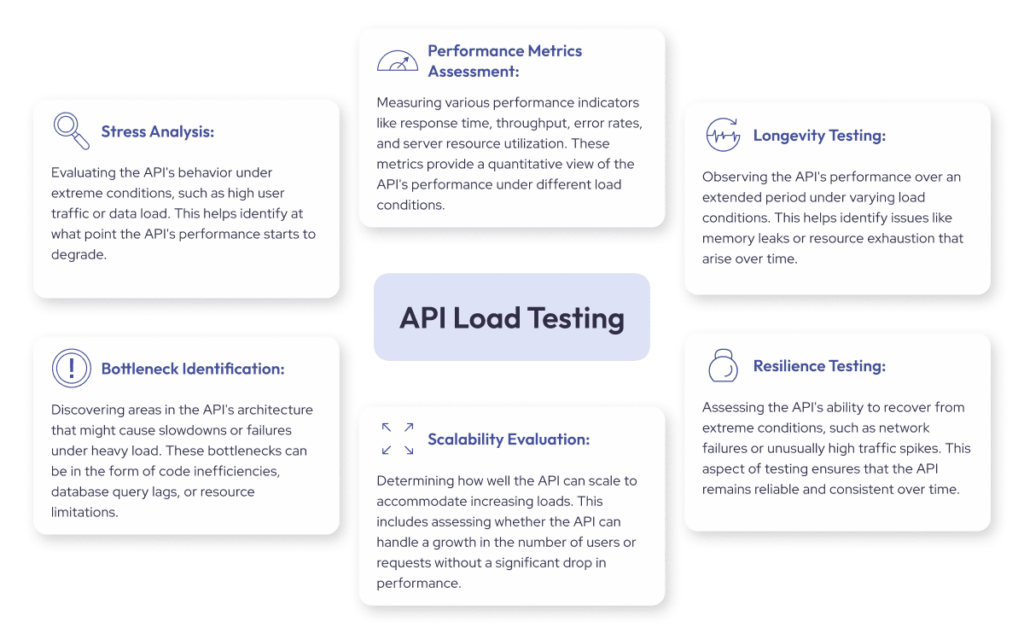
API load testing plays a crucial role in ensuring high availability and optimal performance of APIs and web services. By simulating high traffic volumes and user loads, load testing can uncover potential bottlenecks, weaknesses, and vulnerabilities in the API infrastructure. This proactive approach helps in identifying and resolving issues before they impact the end-users, ensuring a seamless and reliable experience. High availability is essential for businesses relying on APIs and web services to deliver critical functionalities, as downtime or slowdowns can result in revenue loss, reputation damage, and customer dissatisfaction. Therefore, conducting thorough API load testing is key to maintaining a robust and resilient API ecosystem that meets the demands of users and business operations.
Understanding API Load Testing
API Load Testing is a crucial process that evaluates how an API behaves under various levels of demand. This testing methodology simulates multiple requests to an API to determine its performance and stability. It serves as a benchmark for understanding the limits of the API and can help identify potential bottlenecks that could affect the overall user experience.
The Importance of High Availability
In the context of web services, high availability refers to the systems’ ability to remain operational for an extended period. APIs play an integral part in modern web architectures, serving as the backbone for numerous applications and services. Consequently, if an API experiences downtime or performance degradation, it can severely impact the services that rely on it.
How API Load Testing Works
The process involves generating a controlled volume of traffic to the API and monitoring its performance metrics. Typically, the following aspects are observed:
- Response Time: The time it takes for the API to respond to a request.
- Throughput: The number of requests the API can handle in a given time frame.
- Error Rate: The frequency of failed requests during the testing period.
- Resource Utilization: The CPU and memory usage during the load test.
Benefits of API Load Testing for High Availability
1. Identifying Bottlenecks
One of the primary benefits of API load testing is its ability to identify potential bottlenecks within the API. By exposing the API to high traffic scenarios, developers can pinpoint the sections of the code that cause delays or failures. This proactive approach facilitates timely fixes and optimizations.
2. Enhancing Performance
Regular load testing enables organizations to enhance the performance of their APIs. By understanding how the API responds to varying loads, developers can implement modifications that improve response times and increase throughput, ultimately leading to a better user experience.
3. Ensuring Robustness
API load testing helps in validating the robustness of the web service infrastructure. It simulates real-world scenarios, ensuring that the API can handle unexpected spikes in user requests without degrading its performance or failing altogether.
4. Understanding Scaling Requirements
Through load testing, businesses can better understand their scaling requirements. An API that handles small amounts of traffic might need a different architectural setup compared to one that needs to accommodate thousands of simultaneous users. Testing allows teams to gauge whether horizontal (adding more servers) or vertical scaling (upgrading existing servers) will be necessary.
5. Improving User Experience
Ultimately, the goal of any service is to provide an excellent user experience. High availability achieved through effective API load testing minimizes downtime and maximizes responsiveness, thereby keeping end-users satisfied with the application’s performance.
Best Practices for API Load Testing
1. Set Clear Goals
Before initiating load testing, it’s crucial to set clear objectives. What performance metrics are you aiming to measure? Do you want to identify the maximum number of users the API can support simultaneously? Setting specific goals can help guide the testing process effectively.
2. Use Realistic Scenarios
Design load tests that mimic real-world usage patterns. Consider the geographical distribution of users, time zones, and the overall load your API is likely to experience. Realistic scenarios can reveal crucial insights into how the API will behave in production.
3. Monitor Hardware Metrics
While API load testing focuses on the API itself, it’s equally important to monitor the underlying hardware resources. Metrics such as CPU load, memory usage, and disk I/O can provide insights into how well the server is handling the traffic and if it requires optimization.
4. Automate Testing Processes
Automating the load testing process can save time and increase efficiency. Using dedicated tools such as JMeter, LoadRunner, or Gatling can facilitate the simulation of multiple user requests concurrently, allowing for a more efficient testing process.
5. Analyze Results Thoroughly
After conducting load tests, it is necessary to analyze the results thoroughly. Look for patterns, errors, and areas that require improvement. Effective analysis can provide actionable insights that enhance both API performance and overall user experience.
Tools for API Load Testing
Several tools can assist developers in conducting effective API load testing. Here are a few widely recognized options:
- Apache JMeter: An open-source tool that is popular for performance testing of APIs and other services.
- Gatling: A powerful tool with a Scala-based DSL designed for continuous performance testing.
- LoadRunner: A comprehensive tool from Micro Focus that offers detailed performance testing capabilities.
- Postman: While primarily known for API testing, Postman has built-in features that allow for lightweight load testing.
The Future of API Load Testing
As the demand for APIs continues to grow, so will the need for effective load testing methodologies. Organizations are likely to move towards more automated and intelligent testing solutions that can simulate complex user interactions without manual intervention. Additionally, as microservices architecture becomes the norm, load testing practices will evolve to address highly decentralized and dynamic environments.
Conclusion
API load testing plays an indispensable role in achieving high availability for APIs and web services. By understanding how your APIs perform under stress, you can ensure that they are robust, performant, and capable of delivering a seamless user experience. Consistent testing, coupled with the right methodologies and tools, can lead to significant enhancements in service reliability, user satisfaction, and the overall success of digital applications.
API load testing plays a critical role in ensuring high availability of APIs and web services by simulating real-world conditions and identifying performance bottlenecks before they impact users. By properly testing the system under varying loads, organizations can proactively address scalability issues, optimize performance, and ultimately deliver a reliable and responsive service to their users. It is essential for companies to prioritize API load testing as a proactive measure to maintain high availability and mitigate potential risks in a dynamic digital landscape.
Related posts:
 What Are APIs and How Do They Work?
 How to Secure Your API with JWT
 Building a Microservices Architecture with APIs
What Are API Keys and How to Use Them Securely?
Building a Microservices Architecture with APIs
What Are API Keys and How to Use Them Securely?
 A Beginner’s Guide to API Monetization
 Using Google Maps API for Location-Based Applications
 How to Handle API Authentication in Mobile Apps
The Importance of API Caching and How to Implement It
How to Handle API Authentication in Mobile Apps
The Importance of API Caching and How to Implement It
 Building a Weather App Using OpenWeather API
 How to Use AI-Powered APIs for Your Applications
 API Gateway vs Load Balancer: Understanding the Differences
How to Set Up API Rate Limiting in Nginx
API Gateway vs Load Balancer: Understanding the Differences
How to Set Up API Rate Limiting in Nginx
 How to Optimize API Response Time for Better Performance
Best API Security Practices to Prevent Attacks
How to Optimize API Response Time for Better Performance
Best API Security Practices to Prevent Attacks