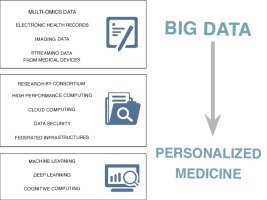
In the field of personalized medicine, the utilization of Big Data has revolutionized how healthcare is delivered, assessed, and tailored to individual patients. Big Data analytics play a crucial role in collecting, organizing, and analyzing vast amounts of patient information, from genomic data to lifestyle behaviors, to offer personalized treatment plans and preventive strategies. By harnessing the power of Big Data, healthcare providers can make more informed decisions, predict disease outcomes, and ultimately improve patient care outcomes. This intersection of Big Data and personalized medicine represents a significant step towards more effective, precise, and patient-centric healthcare delivery.
Understanding Personalized Medicine
Personalized medicine is an innovative approach to healthcare that tailors medical treatment to the individual characteristics of each patient. This approach considers genetic, environmental, and lifestyle factors to provide more effective therapies. Traditional medicine often takes a one-size-fits-all approach, which can lead to suboptimal outcomes for many patients. In contrast, personalized medicine aims to deliver precise treatments based on a patient’s unique profile.
The Emergence of Big Data in Healthcare
With the advent of technology and the digitalization of health records, the volume of healthcare data has skyrocketed. Big Data refers to the vast amounts of data generated every second from various sources, including electronic health records (EHRs), genomic sequencing, wearable health devices, and patient-reported outcomes. This deluge of information is reshaping the landscape of healthcare and is instrumental in the evolution of personalized medicine.
Data Sources Fueling Personalized Medicine
Big Data in personalized medicine stems from diverse sources, which collectively enhance understanding of individual health profiles. These data sources include:
- EHRs: Electronic health records contain comprehensive patient information, including medical history, medications, allergies, and laboratory results.
- Genomic Data: Whole genome sequencing and gene expression profiling provide insights into a patient’s genetic makeup, which can inform treatment decisions.
- Wearable Devices: Smartwatches and fitness trackers collect real-time health metrics like heart rate, activity levels, and sleep patterns.
- Social Determinants of Health: Data regarding socio-economic factors such as income, education, and environment influence patient health and treatment responses.
- Clinical Trials: Meta-data from clinical trials can identify successful treatment protocols and patient responses.
Data Analytics in Personalized Medicine
The analysis of Big Data through advanced analytics techniques such as machine learning and artificial intelligence (AI) enables healthcare professionals to uncover patterns and correlations hidden within vast datasets. For example, machine learning algorithms can analyze health records and identify groups of patients who respond similarly to specific treatments, allowing healthcare practitioners to predict outcomes more accurately.
Predictive Analytics is one of the foremost applications of Big Data in personalized medicine. It forecasts patients’ health risks based on their genetic predispositions and lifestyle choices. For instance, predictive analytics can identify high-risk patients for chronic diseases like diabetes by evaluating their genetic markers, dietary habits, and exercise levels.
Improving Patient Outcomes with Tailored Treatments
Personalized medicine leverages Big Data analytics to improve patient outcomes through tailored treatments. Pharmacogenomics, a field that studies the interaction between drugs and an individual’s genetic profile, exemplifies this transformation. By analyzing how different individuals metabolize drugs, healthcare providers can customize medication types and dosages, minimizing adverse effects and maximizing therapeutic efficacy.
Another example is the use of Big Data in oncology. By analyzing genomic and EHR data, oncologists can identify specific mutations in tumors and tailor treatments accordingly. Patients with particular genetic markers may respond better to targeted therapies, such as monoclonal antibodies or tyrosine kinase inhibitors. This precision approach to cancer treatment significantly enhances survival rates and reduces unnecessary exposure to ineffective drugs.
The Challenges of Big Data in Personalized Medicine
Despite its potential, the integration of Big Data in personalized medicine is not without challenges. One major issue is data privacy and security. Protecting patients’ sensitive information while enabling data sharing for research purposes is crucial. Strict regulations, such as the Health Insurance Portability and Accountability Act (HIPAA) in the United States, impose stringent requirements for data management and privacy.
Additionally, the standardization of data formats is essential for effective data sharing among healthcare providers and researchers. The lack of uniformity in health records and genomic data can hamper the integration and analysis of information, potentially leading to inaccurate conclusions.
The Future of Big Data in Personalized Medicine
The future of personalized medicine is undoubtedly tied to the evolution of Big Data technologies. As computational power increases and data storage becomes more economical, the ability to process larger datasets will enhance the understanding of complex health conditions. Innovations in AI and machine learning will drive predictive modeling and data analysis, empowering healthcare providers to adopt personalized medicine more broadly.
Furthermore, advancements in genomics, such as CRISPR technology, may enable precision edits in DNA, paving the way for gene therapy to treat genetic disorders. Integrating genomic data with traditional healthcare will lead to comprehensive profiles that guide treatment options more effectively.
Case Studies Demonstrating Success
Several real-world applications illustrate the successful integration of Big Data into personalized medicine:
1. The 23andMe Approach
23andMe uses genetic data from millions of individuals to provide health insights and risks tailored to each customer. By leveraging this data, they can identify genetic variants associated with diseases and offer personalized advice on lifestyle changes. This business model exemplifies how direct-to-consumer genetic testing can influence health decisions on a personal level.
2. IBM Watson Health
IBM Watson Health has made significant strides in oncology by analyzing massive datasets from clinical trials, research papers, and patient records. It assists oncologists in finding the most effective treatment options for their patients based on genomic data and past case outcomes. This level of analysis transforms traditional cancer treatment models into more personalized strategies that improve patient survival.
3. The All of Us Research Program
The All of Us Research Program, initiated by the National Institutes of Health (NIH), aims to build one of the most diverse health datasets in history. By collecting data from diverse populations across the United States, this initiative seeks to better understand how individual differences affect health and healthcare delivery. The ultimate goal is to inform and enhance personalized treatment and prevention strategies for diverse populations.
Final Thoughts on the Integration of Big Data and Personalized Medicine
The integration of Big Data into personalized medicine heralds a new era in healthcare. With its ability to analyze vast amounts of information effectively, Big Data provides insights that promote better patient outcomes through customized treatment approaches. Despite the challenges that lie ahead, the potential to improve quality of care through personalized strategies continues to drive innovation in the field.
The integration of Big Data in personalized medicine has the potential to revolutionize healthcare by enabling tailored treatments and improved patient outcomes. By leveraging vast amounts of data, healthcare providers can make more informed decisions, leading to more effective and targeted therapies. As technology continues to advance, the role of Big Data in personalized medicine will only continue to grow, ultimately shaping the future of healthcare delivery.
Related posts:
 The Five Vs of Big Data: Volume, Velocity, Variety, Veracity, and Value
 Understanding Data Pipelines in Big Data
 What is Apache Hadoop? A Complete Guide
 Introduction to NoSQL Databases for Big Data
 Understanding HBase: How it Works in the Hadoop Ecosystem
 Natural Language Processing (NLP) with Big Data
 How Big Data is Used in Deep Learning Applications
 Sentiment Analysis with Big Data and AI
 Real-Time AI and Big Data: How It Works
 The Impact of Big Data on Financial Services and Banking
 Big Data in Smart Cities: Applications and Challenges
 Big Data and Retail: How It’s Changing the Shopping Experience
 Big Data in Agriculture: Precision Farming and Analytics
 What is Predictive Analytics in Big Data?