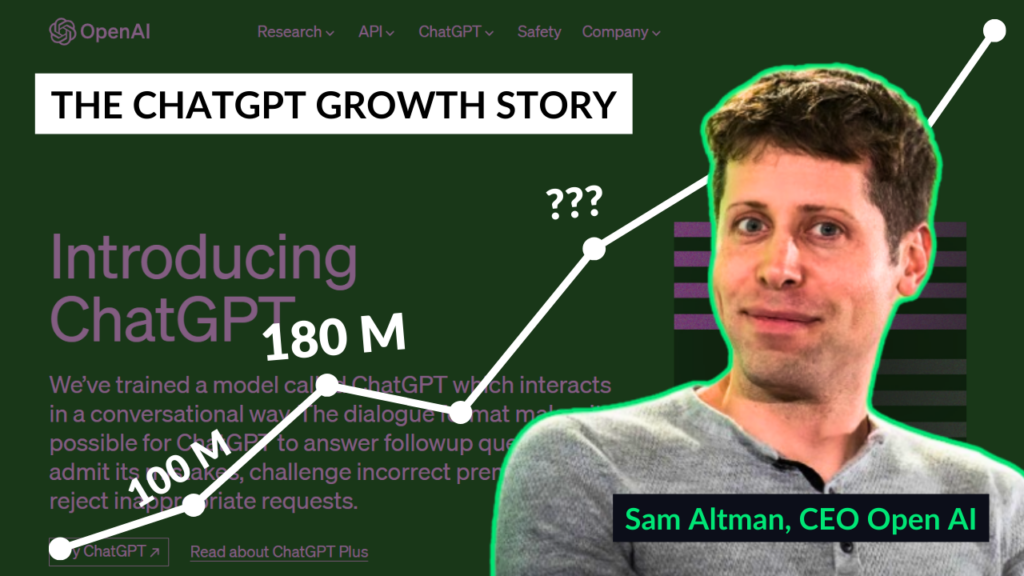
ChatGPT was trained by OpenAI, a research organization focused on artificial intelligence. The training involved large-scale datasets and advanced machine learning techniques to develop ChatGPT’s natural language processing capabilities. The goal of this training was to create an AI model that can generate human-like text responses and engage in meaningful conversations with users.
ChatGPT, developed by OpenAI, is a powerful language model that has captured the attention and curiosity of many. But have you ever wondered who trained ChatGPT and how it became such an impressive conversational AI? In this article, we’ll explore the training process and the team behind it.
Training ChatGPT: A Collaborative Effort
Training ChatGPT involved a combination of techniques, human feedback, and iterative improvement to create a language model that exhibits coherent and meaningful responses. The initial model was trained using Reinforcement Learning from Human Feedback (RLHF). In this approach, human AI trainers provided conversations where they played both the user and an AI assistant.
When a new dialogue was simulated, the AI trainers had access to model-generated suggestions to help compose their responses. This process created a large dataset that was then mixed with the InstructGPT dataset, which was transformed into a dialogue format. This combined dataset was used to pretrain ChatGPT using maximum likelihood estimation.
However, the raw output generated by the pretrained model often lacked coherence and had errors. So, an additional step called “fine-tuning” was introduced. The model was fine-tuned using a method known as Proximal Policy Optimization, which involved a reward model. The reward model let AI trainers score and rank different model-generated responses, which helped in further refining the model’s behavior.
The Role of AI Trainers
Now, let’s take a closer look at the human trainers who played a crucial role in training ChatGPT. These AI trainers were skilled in various techniques to improve model performance and received guidance from OpenAI throughout the process.
The trainers worked with OpenAI in ongoing relationships, receiving feedback and clarifications. OpenAI provided guidelines to trainers, consisting of do’s and don’ts for generating responses. It was important to avoid politically biased positions and controversial topics. They also made sure that the model did not provide certain types of output, such as hate speech or illegal content.
AI trainers not only played the role of users but also AI assistants. They had to ensure they provided helpful, informative, and contextually appropriate responses. This process was crucial to shaping the behavior of the model.
Continuous Improvement
OpenAI recognized that the initial release of ChatGPT had limitations and biases. By making it available to the public, they aimed to gather valuable user feedback and insights. Users were encouraged to report problematic outputs, false positives/negatives, and any issues they encountered while using ChatGPT.
OpenAI is committed to making regular updates to ChatGPT by addressing its limitations and improving its default behavior. They are actively working towards allowing users to customize the AI’s behavior within certain bounds, so it better aligns with their values and needs.
The Team behind ChatGPT
Behind the scenes, an exceptional team of engineers, researchers, and experts in machine learning and natural language processing (NLP) contributed to the development and training of ChatGPT. OpenAI constantly leveraged their expertise to refine the model and ensure it provides the best possible user experience.
Training ChatGPT was a collaborative effort that involved human trainers, reinforcement learning, and fine-tuning techniques. OpenAI’s commitment to improving the model’s behavior, along with valuable user feedback and ongoing iterations, will shape the future of ChatGPT. The team behind ChatGPT continues to work hard to refine and enhance its capabilities, making it an even more powerful and useful conversational AI.
Related posts:
 Why Elon Musk Opposes AI
 What’s the best AI app to use?
 Which job will AI not replace?
 Why does ChatGPT get math wrong?
 How to Ask Math Questions to ChatGPT
 Does ChatGPT Cost Money?
 How do I get ChatGPT?
 What should I use ChatGPT for?
 Is OpenAI Owned by Microsoft?
 What is the difference between ChatGPT and AI?
 Is ChatGPT good or bad?
 Who is the father of ChatGPT?
 Which is No 1 AI app?
 Can I Use AI in My Phone?