In the realm of Big Data analytics, the accurate detection of anomalies plays a critical role in safeguarding the integrity and reliability of data-driven insights. Implementing online density estimation techniques is a powerful approach for efficiently identifying anomalies in large and dynamic datasets. By dynamically updating probability distributions as new data points are received, online density estimation allows for real-time anomaly detection, making it well-suited for Big Data environments where traditional batch processing methods may be insufficient. This article will explore the principles and implementation of online density estimation for detecting anomalies in Big Data, providing valuable insights into leveraging this sophisticated technique for improved anomaly detection in large-scale datasets.
Understanding Online Density Estimation
Online density estimation refers to the technique of estimating the probability density function of a dataset in real-time as new data arrives. This method is particularly useful for big data applications where data streams continuously. By leveraging online density estimation, organizations can efficiently identify potential anomalies in their data, enabling quick decision-making and proactive measures.
Importance of Online Density Estimation in Big Data
In the context of big data, traditional methods for anomaly detection may falter due to the sheer volume and velocity of incoming data. Online density estimation allows for:
- Real-time analysis: Detect anomalies as they occur.
- Scalability: Handle large datasets and dynamically adapt to new data.
- Reduced latency: Minimize the delay in detecting anomalies.
Framework for Implementing Online Density Estimation
Implementing online density estimation involves several key components:
- Data Acquisition
- Model Selection
- Estimation Technique
- Anomaly Detection
1. Data Acquisition
The first step is to establish a mechanism for acquiring data. In a big data environment, data could come from various sources such as:
- Web servers
- IoT devices
- Social media platforms
- Databases and data lakes
Utilize stream processing frameworks like Apache Kafka or Apache Flink to capture and ingest data in real-time.
2. Model Selection
Choosing an appropriate model for density estimation is vital. Common models include:
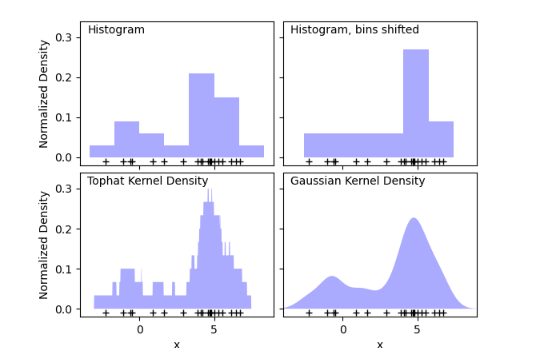
- Kernel Density Estimation (KDE): This non-parametric way enhances the ability to estimate density functions based on a finite data sample.
- Gaussian Mixture Models (GMM): These models assume that all the data points are generated from a mixture of several Gaussian distributions.
- Histograms: Using histograms can be effective for initial estimations but might not be suitable for continuous streaming data.
Considerations for model selection should include the expected data distribution, computational efficiency, and adaptability.
3. Estimation Technique
Once a model is chosen, the next step is to apply an estimation technique. Here are some popular approaches:
- Sliding Window Technique: This involves maintaining a certain number of recent observations. By limiting the number of data points, the model becomes more efficient and manageable.
- Incremental Learning: With this method, the model continuously updates itself as new data points are received, ensuring that learning is dynamic.
- Exponential Weighting: This approach assigns exponentially decreasing weights to older observations, which can help in adapting quickly to changes in the data distribution.
4. Anomaly Detection
Anomalies can be detected through various statistical techniques, including:
- Thresholding: Set a threshold for the estimated density. If new observations fall below this threshold, they can be flagged as anomalies.
- Distance Metrics: Calculate the distance of new data points from the estimated density center. Points falling outside a certain distance can be classified as anomalies.
- Isolation Forest Algorithm: This machine learning algorithm focuses on decision trees to isolate anomalies, which works effectively in large datasets.
Challenges in Online Density Estimation
While implementing online density estimation can be rewarding, several challenges need to be addressed:
- Dynamic Data: Data can change over time; thus, the model needs to adapt without losing past knowledge.
- Scalability Issues: As data grows, maintaining the performance and accuracy of the model can become critical.
- Noise and Outliers: Distinguishing between genuine anomalies and noise becomes essential.
Technological Stack for Implementation
To efficiently implement online density estimation for big data, the following technological stack is recommended:
- Apache Kafka: For real-time data streaming and ingestion.
- Apache Flink: For processing data streams and implementing algorithms.
- Python or R: For developing machine learning models and analytical frameworks.
- TensorFlow or PyTorch: For building more complex models if required.
Case Studies of Online Density Estimation
Practical applications of online density estimation include:
- Financial Fraud Detection: Banks can monitor transactions in real-time, identifying suspicious activities effectively.
- Network Security: Monitoring network traffic for unusual patterns that may indicate security breaches.
- IoT Device Management: Analyzing sensor data to detect failure patterns before they become critical.
Future Trends in Online Density Estimation
As technology evolves, several trends can enhance online density estimation for big data:
- Adoption of AI: Utilizing AI in combination with online density estimation to improve accuracy and speed.
- Edge Computing: Processing data closer to its source to reduce latency.
- Integration with Blockchain: Ensuring data integrity during streaming and analysis possibly enhances trustworthiness in anomaly detection.
Conclusion
By effectively implementing online density estimation, organizations can enhance their ability to detect anomalies in big data environments. While the challenges are significant, the advances in technology and techniques can help overcome them, leading to more robust and timely decision-making.
Implementing online density estimation for detecting anomalies in Big Data offers a powerful solution for identifying unusual patterns and outliers in real-time streams of data. By leveraging advanced algorithms and scalable computational frameworks, organizations can gain valuable insights into potential anomalies and take proactive measures to ensure data integrity and security. This approach holds promise for enhancing anomaly detection capabilities in the era of Big Data analytics, enabling businesses to stay ahead of emerging threats and challenges.
Related posts:
 The Five Vs of Big Data: Volume, Velocity, Variety, Veracity, and Value
 Introduction to Distributed Computing in Big Data
 Understanding Data Pipelines in Big Data
 What is Apache Hadoop? A Complete Guide
 Understanding Apache Spark: Features and Use Cases
 Introduction to NoSQL Databases for Big Data
 Understanding HBase: How it Works in the Hadoop Ecosystem
 The Intersection of Big Data and Artificial Intelligence
 Natural Language Processing (NLP) with Big Data
 How Big Data is Used in Deep Learning Applications
 Sentiment Analysis with Big Data and AI
 Real-Time AI and Big Data: How It Works
 The Impact of Big Data on Financial Services and Banking
 Big Data in E-commerce: Personalization and Customer Insights