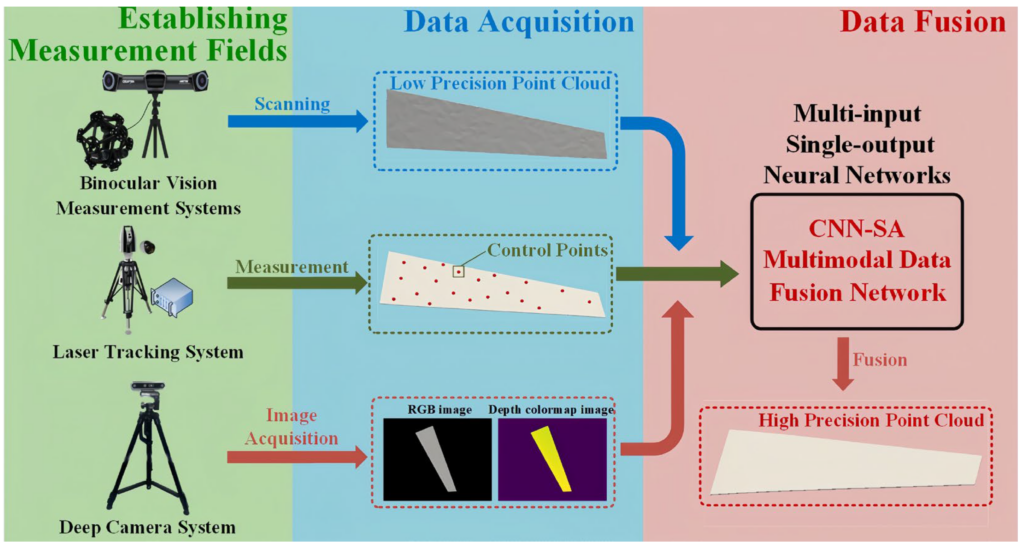
In the realm of Big Data analytics, the accuracy and reliability of the data being processed are of paramount importance in deriving meaningful insights and making informed decisions. Data fusion techniques play a crucial role in improving the accuracy of Big Data by integrating diverse and often disparate data sources to create a more comprehensive and cohesive dataset. By merging information from various sources such as structured and unstructured data, sensor data, social media feeds, and more, data fusion techniques enable organizations to capture a more complete picture of their operations, customers, and market dynamics. This enhanced accuracy not only leads to more precise data analysis but also helps in uncovering hidden patterns and correlations that might have been overlooked otherwise. Ultimately, the impact of data fusion techniques on Big Data accuracy is instrumental in enabling organizations to unlock the full potential of their data assets and drive better decision-making.
In the realm of Big Data, accuracy is paramount. Organizations rely on precise data to make informed decisions, drive innovation, and maintain a competitive edge. One of the critical methodologies enhancing data accuracy is data fusion techniques. This article delves deep into how various data fusion methods influence the accuracy of Big Data.
Understanding Data Fusion
Data fusion involves integrating multiple data sources to produce more consistent, accurate, and useful information than that obtained from any individual source. This is particularly relevant in Big Data environments, where data may come from various heterogeneous sources, including sensors, databases, and user-generated content.
There are several layers of data fusion, categorized primarily into three types:
- Low-Level Fusion: This involves combining raw data from different sources to create a refined data set.
- Feature-Level Fusion: At this level, features extracted from different data sets are combined to improve the representation of the dataset.
- Decision-Level Fusion: Here, independent decisions made from various data sources are merged for a conclusive outcome.
The Role of Data Quality in Big Data
Before discussing the impact of data fusion techniques, it’s essential to understand data quality. High-quality data is characterized by accuracy, completeness, consistency, timeliness, and relevance. Poor data quality can lead to faulty conclusions and strategies detrimental to organizations.
Data fusion directly addresses issues of data quality by:
- Eliminating noisy data from multiple sources
- Identifying and mitigating biases arising from single-source data
- Increasing the overall volume and diversity of data available for analysis
How Data Fusion Techniques Enhance Big Data Accuracy
1. Improved Data Consistency
Data often originates from several systems, leading to inconsistencies. For instance, customer data stored in multiple databases can vary in format, spelling, and structure. Data fusion techniques normalize these differences, ensuring that it becomes easier and more reliable to analyze.
By applying methods such as data cleansing and integration, organizations can effectively eliminate inconsistencies, which significantly enhances the accuracy of the data used in analytics.
2. Enhanced Data Completeness
Data fusion techniques combine information from various sources, filling in the gaps that may exist in individual datasets. For example, in healthcare, patient data may come from multiple sources, such as clinical reports, lab results, and wearable devices.
By employing data fusion, stakeholders can create a comprehensive view of a patient’s health, ensuring that no critical information is overlooked. This holistic approach not only increases personal treatment accuracy but also improves healthcare outcomes.
3. Reduction of Redundancy
Data redundancy can lead to skewed analytics and reporting. Data fusion helps in identifying duplicate records across datasets and systematically consolidates them into a single, reliable entry. This not only reduces storage costs but also simplifies the analysis process, leading to more precise insights.
4. Minimized Noise and Outlier Impact
In large datasets, noise and outliers can significantly distort results. Data fusion techniques, particularly statistical methods like the Kalman filter and Bayesian inference, can help in effectively filtering out this noise.
Using data fusion methodologies to incorporate signal processing techniques enables organizations to focus on relevant data trends, enhancing the accuracy of predictive models and analyses.
5. Greater Contextualization
Data available in isolation may lack context, which can lead to misinterpretation. Data fusion integrates contextual information from diverse sources, resulting in richer, more meaningful datasets.
For instance, integrating geospatial data with demographic statistics provides a deeper understanding of consumer behavior, leading to more informed marketing strategies and business decisions. This comprehensive view results in significantly higher accuracy in predictive analytics.
Challenges in Data Fusion Techniques
While data fusion techniques significantly enhance data accuracy, they are not without challenges. Some notable issues include:
- Complexity: The integration of various data sources requires advanced algorithms and infrastructure, increasing system complexity.
- Data Security: Combining different datasets raises concerns about data privacy and security, necessitating robust security measures.
- Scalability: As the volume of data increases, ensuring that data fusion techniques scale efficiently becomes a significant challenge.
- Computational Overhead: Data fusion can require substantial computational resources, which may not always be available.
Best Practices for Implementing Data Fusion Techniques
To maximize the benefits of data fusion in enhancing Big Data accuracy, organizations should adopt the following best practices:
1. Define Clear Objectives
Before implementing data fusion techniques, it is essential to define the goals clearly. Understanding what you want to achieve will guide the selection of appropriate methods and technologies.
2. Invest in Robust Infrastructure
Data fusion requires significant computational resources, so investing in robust infrastructure capable of handling large-scale data processing is crucial. Cloud-based solutions can provide scalability and efficiency.
3. Ensure Data Quality at Source
Address data quality issues at the source before fusion. Implement rigorous data collection standards, and conduct regular data audits to maintain quality.
4. Utilize Advanced Algorithms
Employ cutting-edge algorithms and machine learning techniques that enhance the effectiveness of data fusion. Algorithms should be capable of learning from data patterns and making adjustments as more data becomes available.
5. Monitor and Evaluate Outcomes
Continuously monitor the accuracy of fused data and evaluate the outcomes against your objectives. Make iterative adjustments as necessary to improve results.
Case Studies Highlighting Data Fusion Success
Numerous organizations have successfully leveraged data fusion techniques to enhance data accuracy in their operations:
1. Healthcare Sector
In healthcare, institutions like Johns Hopkins have used data fusion to integrate electronic health records (EHR) from various sources, improving patient care accuracy. With comprehensive patient histories available at their fingertips, healthcare professionals can make better diagnostic decisions.
2. Retail Industry
In retail, companies like Amazon utilize data fusion to blend transactional data with customer behavior insights. This approach enhances product recommendations by providing an accurate, contextual view of buyer preferences, leading to increased sales.
3. Transportation and Logistics
Logistics firms utilize data fusion to combine GPS data with traffic patterns. This fusion allows for optimized delivery routes, thereby improving the punctuality and accuracy of deliveries, resulting in higher customer satisfaction.
Conclusion
As organizations continue to navigate the complexities of Big Data, data fusion techniques stand out as a powerful solution for enhancing data accuracy. By integrating diverse data sources, improving quality, and minimizing noise, businesses can gain actionable insights that drive strategic decisions. The journey towards accurate Big Data analytics is paved with the effective adoption of data fusion methodologies, making it imperative for organizations to invest in this area.
Data fusion techniques play a critical role in enhancing the accuracy of Big Data analytics by combining heterogeneous data sources to uncover valuable insights. By effectively integrating and reconciling various data sets, organizations can make better-informed decisions, improve problem-solving capabilities, and drive innovation. As the volume and variety of data continue to grow, the strategic application of data fusion becomes a key factor in unlocking the full potential of Big Data analytics.
Related posts:
 The Five Vs of Big Data: Volume, Velocity, Variety, Veracity, and Value
 Introduction to Distributed Computing in Big Data
 Understanding Data Pipelines in Big Data
 What is Apache Hadoop? A Complete Guide
 Understanding Apache Spark: Features and Use Cases
 Introduction to NoSQL Databases for Big Data
 Understanding HBase: How it Works in the Hadoop Ecosystem
 The Intersection of Big Data and Artificial Intelligence
 Natural Language Processing (NLP) with Big Data
 How Big Data is Used in Deep Learning Applications
 Sentiment Analysis with Big Data and AI
 Real-Time AI and Big Data: How It Works
 The Impact of Big Data on Financial Services and Banking
 Big Data in E-commerce: Personalization and Customer Insights