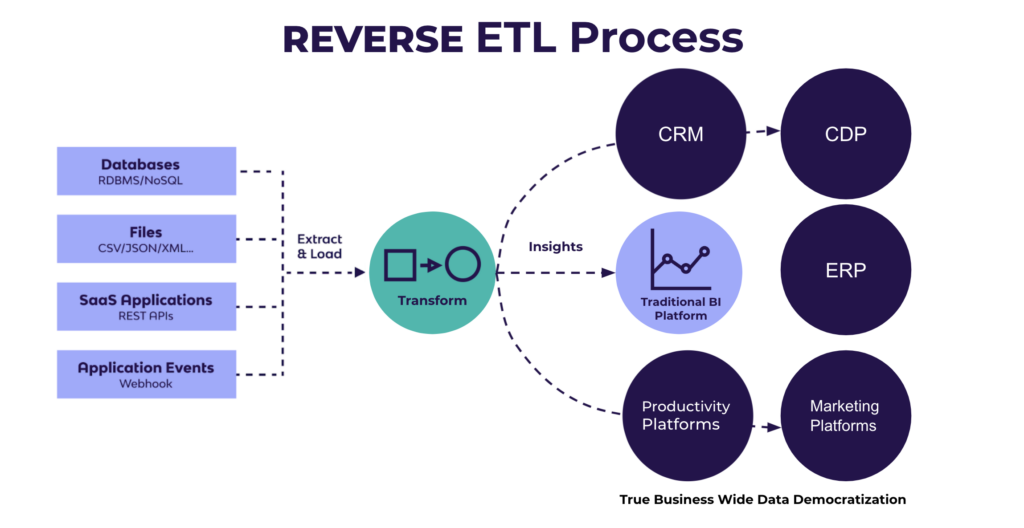
In the complex realm of Big Data, one of the emerging strategies for seamless integration and data flow management is leveraging Reverse ETL. This innovative approach flips the traditional Extract, Transform, Load (ETL) process on its head, enabling organizations to efficiently move processed data from their data warehouses back to operational systems for real-time decision-making and analytics. By harnessing the power of Reverse ETL, businesses can unlock the full potential of their Big Data ecosystems, ensuring timely access to valuable insights and enhancing overall data agility. Let’s delve deeper into how Reverse ETL can revolutionize Big Data integration and drive unparalleled business intelligence.
Reverse ETL is transforming the way businesses approach Big Data integration. As organizations accumulate data from various sources, extracting actionable insights becomes essential. This article will delve into the mechanisms, benefits, and strategies for leveraging Reverse ETL to enhance your Big Data workflows.
Understanding Reverse ETL
Reverse ETL, or Extract, Load, Transform, is a data integration process that takes data from a data warehouse and delivers it to operational systems, such as Customer Relationship Management (CRM) tools, marketing platforms, or transactional systems. Unlike traditional ETL, where data is pulled from various sources and moved to a data warehouse, Reverse ETL focuses on pushing refined data back into tools where it can directly impact business operations.
Benefits of Reverse ETL for Big Data Integration
Utilizing Reverse ETL in your Big Data integration strategy offers numerous benefits, including:
- Improved Data Accessibility: Employees can access the most relevant and updated data directly within their operational tools.
- Enhanced Decision-Making: By delivering insights derived from data analytics directly to end-users, businesses empower teams to make data-driven decisions.
- Greater Operational Efficiency: Automating data workflows reduces manual effort, minimizing errors and increasing productivity.
- Streamlined Customer Experiences: Marketing teams can utilize refined data profiles to create personalized campaigns, enhancing customer engagement.
Key Features of Effective Reverse ETL Tools
When considering Reverse ETL tools for your Big Data integration, look out for the following features:
- Data Transformation Capabilities: Ensure the tool can perform necessary transformations to suit downstream systems.
- Integration Options: Choose tools that offer integration with various operational systems such as Salesforce, Marketo, and Zendesk.
- Scalability: Opt for solutions that can scale for large volumes of data typical in Big Data environments.
- Real-Time Data Synchronization: Look for real-time capabilities to ensure that data is always up-to-date.
- User-Friendly Interfaces: A straightforward user interface reduces the learning curve and enhances user adoption.
Steps to Begin with Reverse ETL in Big Data Environments
Implementing Reverse ETL for Big Data integration involves several strategic steps:
1. Identify Your Data Sources
Begin by cataloging all your data sources, which can include databases, data lakes, and third-party applications. Understanding the source of your data is crucial in defining how to extract and transform it.
2. Choose the Right Reverse ETL Tool
Your selection of a Reverse ETL tool should cater to your business’s specific integration needs. Consider tools such as Hightouch, RudderStack, or Fivetran for their robust features in handling big datasets.
3. Define Target Systems
Identify which operational tools will receive the processed data. This could range from CRMs, email platforms, and analytical tools. Defining this upfront will guide the integration and transformation requirements.
4. Design Data Transformation Processes
Establish how data should be transformed for each target system. This may involve data cleaning, normalization, or reshaping. Document these processes thoroughly to maintain consistency across data deployments.
5. Automate Data Pipelines
Automate your Reverse ETL data pipelines to ensure continual data flow from your data warehouse to operational systems. Automation improves reliability and minimizes human errors.
6. Monitor and Optimize
Build monitoring solutions that allow you to track the performance of your Reverse ETL processes. Regularly check data quality, latency, and issues arising from transformations or integrations.
Common Use Cases for Reverse ETL in Big Data
Organizations typically implement Reverse ETL for various use cases:
1. Customer Segmentation
By pushing analytical insights into marketing platforms, businesses can refine customer segmentation, allowing for targeted marketing strategies that resonate with specific audiences.
2. Lead Scoring
Sales teams can benefit from accurate lead scoring to prioritize leads based on data-driven insights which increase conversion rates.
3. Personalization
In e-commerce, utilizing Reverse ETL to sync product recommendations and user activity data back to customer-facing systems enhances the shopping experience, improving sales and customer satisfaction.
4. Product Analytics
Product teams can push insights back into product management tools to inform feature development and enhancement priorities tailored to user feedback and behavior analytics.
5. Reporting Dashboards
Revamping dashboards with real-time data improves visibility into business metrics, aiding executives in making informed decisions swiftly.
Challenges of Implementing Reverse ETL
While Reverse ETL can significantly enhance data integration, it is essential to be aware of potential challenges:
- Data Quality: Maintaining high-quality data as it moves to different systems can be challenging. Establishing data quality checks is vital.
- Integration Complexity: Integrating multiple tools can often lead to complexity, requiring skilled IT personnel knowledgeable in both ETL and Reverse ETL processes.
- Latency Issues: Real-time data synchronization is crucial for many businesses. Ensure your Reverse ETL tool can handle real-time shifts to avoid data staleness.
- Tool Proficiency: Employees may require training to effectively utilize new tools and processes, impacting initial deployment timelines.
The Future of Reverse ETL in Big Data
The ongoing evolution of data technologies is likely to enhance the role of Reverse ETL in Big Data integration. Companies that invest in these technologies will benefit from improved customer insights, refined operational efficiencies, and ultimately, a stronger competitive advantage.
Best Practices for Reverse ETL Implementation
To maximize the benefits of Reverse ETL, consider the following best practices:
- Start Small: Begin with a pilot project to validate your Reverse ETL strategies before scaling to more extensive data integration processes.
- Ensure Cross-Department Collaboration: Engage stakeholders from all relevant departments. This collaboration can streamline the integration process and identify needs across the organization.
- Invest in Training: Provide adequate training and resources for employees using Reverse ETL tools to minimize resistance and enhance productivity.
- Be Adaptive: Stay open to evolving your processes as data landscapes change. Regular revisions to your Reverse ETL strategy based on business needs are essential.
By embracing Reverse ETL for Big Data integration, organizations can seamlessly bridge the gap between their vast data stores and operational systems, enabling more precise decision-making and improved business outcomes.
Leveraging Reverse ETL for Big Data integration offers a powerful solution to quickly and efficiently synchronize operational data back to various sources. By enabling organizations to seamlessly move aggregated and processed data from their data warehouses to operational systems, Reverse ETL facilitates real-time decision-making and enhances overall data utilization, ultimately leading to improved business insights and operational efficiency in the realm of Big Data.
Related posts:
 What is Big Data? A Beginner’s Guide
 The Five Vs of Big Data: Volume, Velocity, Variety, Veracity, and Value
 Structured vs. Unstructured Data: Key Differences and Examples
 What is a Data Lake? Definition, Uses, and Benefits
 Introduction to Distributed Computing in Big Data
 Understanding Data Pipelines in Big Data
 The Evolution of Big Data Technologies: Past, Present, and Future
 Data Ingestion Techniques for Big Data Processing
 What is Apache Hadoop? A Complete Guide
 Understanding Apache Spark: Features and Use Cases
 What is Kafka? How it Powers Real-Time Big Data Applications
 Apache Flink vs. Apache Spark: Which One is Better?
 Introduction to NoSQL Databases for Big Data
 The Role of MongoDB in Big Data Analytics