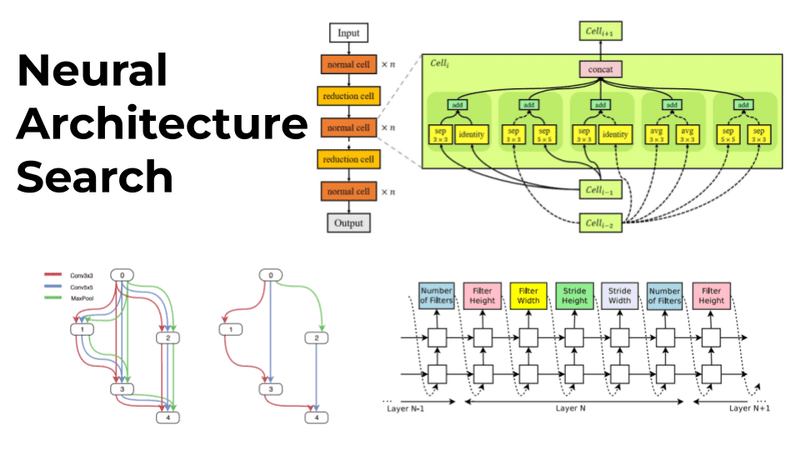
Optimizing Neural Architecture Search (NAS) for Big Data AI Models is a critical aspect of improving model performance and efficiency when dealing with massive datasets. In the realm of Big Data, where the volume, variety, and velocity of data present unique challenges, NAS plays a crucial role in automating the design of neural network architectures tailored to handle large-scale datasets effectively. By leveraging advanced optimization techniques and parallel computing, researchers and data scientists can navigate the complexity of Big Data environments to discover optimal neural network structures that deliver superior performance and scalability. In this article, we will delve into the key strategies and best practices for optimizing NAS for Big Data AI models, ultimately enabling organizations to unlock the full potential of their data and achieve groundbreaking results in artificial intelligence.
Understanding Neural Architecture Search (NAS)
Neural Architecture Search (NAS) is an innovative technique that automates the discovery of optimal neural network architectures. This process is crucial in the era of Big Data where the complexity and volume of data necessitate advanced methodologies. By leveraging NAS, data scientists can build models that effectively handle vast datasets while optimizing for performance metrics like accuracy, speed, and resource consumption.
The Need for Optimization in NAS
As organizations increasingly adopt AI solutions, the challenge lies in optimizing these technologies to efficiently process big data. Standard NAS is often computationally expensive and time-consuming, particularly when applied to large-scale datasets. Therefore, optimizing the NAS process is paramount to its success.
Key Strategies for NAS Optimization
1. Utilize Domain Knowledge
Incorporating domain knowledge into the design space of NAS can significantly enhance its effectiveness. By understanding the specific requirements of the application domain, you can refine the search space, focusing on architectures that are more likely to yield beneficial results.
2. Efficient Search Algorithms
Implementing advanced search algorithms such as reinforcement learning or evolutionary strategies can accelerate NAS. Algorithms like Bayesian optimization can also be applied to effectively explore and exploit the architecture space, reducing the computational burden associated with traditional methods.
3. Transfer Learning Techniques
Utilizing transfer learning can dramatically reduce the time required for training new architectures. By beginning with pre-trained models and fine-tuning them for specific tasks related to big data, the total computational effort is minimized while still achieving impressive results.
4. Use Proxy Tasks
Instead of training models on the entire dataset, employing proxy tasks allows for faster evaluations. By selecting smaller, representative subsets of your data, you can iterate faster without compromising the quality of findings, thus expediting the NAS process.
5. Multi-Objective Optimization
Considering a multi-objective optimization approach helps balance various performance metrics. Implement methods that allow you to optimize not just for accuracy, but also for computational efficiency—this is critical when dealing with large-scale datasets typical of big data scenarios.
Leveraging Hardware Acceleration
1. Specialized Hardware
Using specialized hardware, such as TPUs or GPUs, can significantly speed up the data processing and model training phases of NAS. These hardware accelerators are specifically designed to handle the large tensor computations required by deep learning models, making them ideal for big data AI applications.
2. Distributed Computing Frameworks
Incorporating distributed computing frameworks such as Apache Spark or TensorFlow Distributed can enhance processing efficiency. By distributing workloads across multiple machines, you can take advantage of parallel processing to tackle the complexities of big data more effectively.
3. Optimize Data Pipelines
A well-optimized data pipeline can also make a significant difference. Implement data preprocessing techniques to clean, transform, and filter data before it enters the NAS process. This can ensure that only relevant data contributes to modeling efforts, which is crucial when working with large datasets.
Scalability Considerations
1. Hyperparameter Tuning
Optimizing hyperparameters is essential in NAS for big data. Implement systematic approaches such as grid search, random search, or advanced techniques like Hyperband to efficiently find the best hyperparameter settings.
2. Batch Size and Learning Rate Adjustments
Dynamic adjustment of batch sizes and learning rates during training can also help optimize training times while still producing robust AI models. Experimentation with these parameters using techniques like learning rate scheduling can lead to improved performance in big data contexts.
3. Early Stopping Techniques
Implementing early stopping criteria during model training can help avoid unnecessary computations. If the model’s performance does not improve on a validation set over a specified number of epochs, training can be halted, thus conserving resources and time in the NAS process.
Performance Evaluation Metrics
1. Accuracy and Loss Metrics
While accuracy is crucial, it’s also essential to monitor loss metrics during NAS. Evaluating both can provide insight into how well the model is learning from the big data and whether adjustments are required mid-training.
2. Resource Utilization
Keep track of resource utilization including RAM, CPU, and GPU usage. Efficient use of resources can mean the difference between successful implementation and impractical computation times when persevering through large data volumes.
3. End-to-End Performance
Evaluate the model not only on accuracy but also on end-to-end performance. This includes assessing latency, throughput, and how the model performs in real-time scenarios, especially for applications in big data that often require timely responses.
Integrating Automated Tools
1. AutoML Frameworks
Consider using AutoML frameworks like Google AutoML, H2O.ai, or Microsoft Azure AutoML. These platforms provide automated tools that streamline the NAS process, allowing data scientists to focus on higher-level tasks while maintaining efficiency and performance.
2. Monitoring and Feedback Loops
Implementing a monitoring system that incorporates feedback loops can enhance model performance and NAS efficiency. Continuous learning and adaptation through feedback mechanisms will contribute to more reliable models in the long run.
Case Studies and Practical Applications
1. Image Classification Tasks
In big data scenarios, tasks such as image classification using NAS can yield significant performance improvements. Through optimized architectures, models such as EfficientNet can be tailored for massive image datasets, achieving state-of-the-art results efficiently.
2. Natural Language Processing
For applications in Natural Language Processing (NLP), optimally designed architectures using NAS can enhance sentiment analysis and text classification tasks. By focusing on architectures built specifically for NLP tasks, significant accuracy improvements can be realized in large corpus datasets.
3. Time-Series Forecasting
In finance and IoT, time-series forecasting models can be optimized through NAS. By crafting architectures that excel in sequential data analysis, businesses can improve predictive accuracy and better manage operational processes.
Optimizing Neural Architecture Search (NAS) for Big Data AI models involves leveraging efficient search algorithms, parallel computing techniques, and distributed training to handle the complexities of large-scale datasets. By designing NAS frameworks that can effectively explore diverse architectural designs and adapt to the dynamic nature of Big Data, researchers and practitioners can enhance the efficiency and performance of AI models tailored for the demands of complex data environments. This optimization process is crucial for unlocking the full potential of Big Data in advancing artificial intelligence applications.
Related posts:
 The Five Vs of Big Data: Volume, Velocity, Variety, Veracity, and Value
 Understanding Data Pipelines in Big Data
 What is Apache Hadoop? A Complete Guide
 Understanding Apache Spark: Features and Use Cases
 Introduction to NoSQL Databases for Big Data
 Understanding HBase: How it Works in the Hadoop Ecosystem
 Natural Language Processing (NLP) with Big Data
 How Big Data is Used in Deep Learning Applications
 Sentiment Analysis with Big Data and AI
 Real-Time AI and Big Data: How It Works
 The Impact of Big Data on Financial Services and Banking
 Big Data in Smart Cities: Applications and Challenges
 Big Data and Retail: How It’s Changing the Shopping Experience
 Big Data in Agriculture: Precision Farming and Analytics