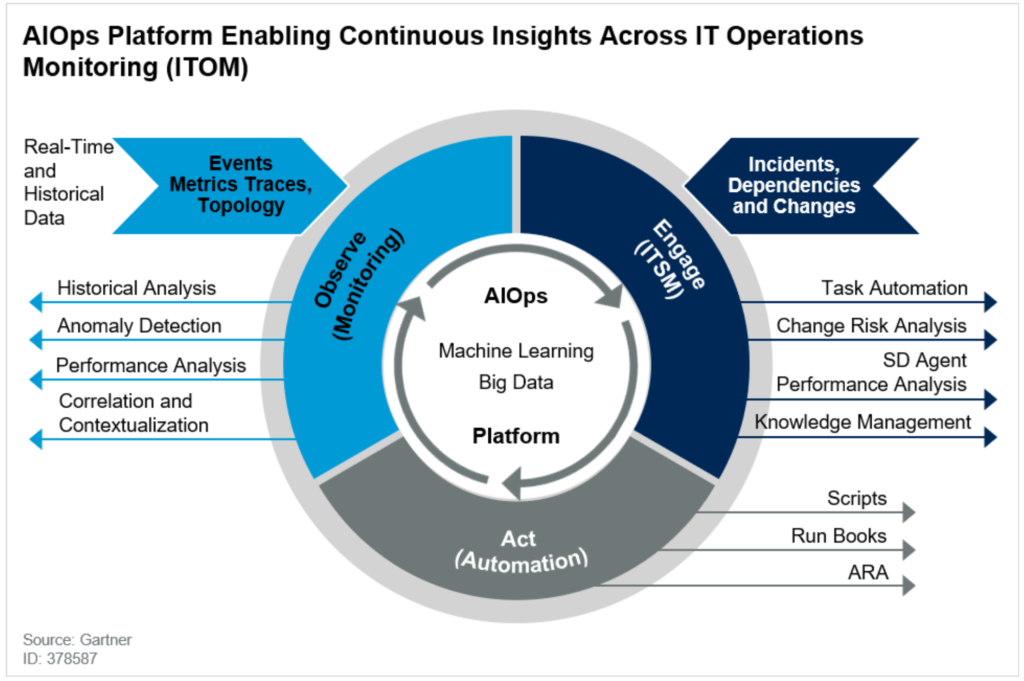
The convergence of Artificial Intelligence (AI) and Operation (Ops) technologies has given rise to a powerful concept known as AIOps, revolutionizing the way organizations manage their Big Data assets. The Future of AIOps and Automated Big Data Management holds immense promise in enhancing data processing, analysis, and decision-making capabilities across various industries. By leveraging advanced algorithms and machine learning models, AIOps automates mundane tasks, streamlines operations, and identifies patterns and anomalies in vast volumes of data, enabling organizations to extract valuable insights and drive strategic business outcomes. As Big Data continues to expand exponentially, the integration of AIOps is poised to redefine the landscape of data management, offering unparalleled efficiency, scalability, and agility in navigating the complexities of modern data environments.
Understanding AIOps
AIOps, or Artificial Intelligence for IT Operations, refers to the application of machine learning and data science to IT operations problems. Leveraging vast streams of real-time data, AIOps allows organizations to better monitor, analyze, and manage their IT environments. By automating many of the tasks traditionally performed by IT teams, AIOps reduces human error and frees up valuable resources for more strategic initiatives.
The Role of Big Data in AIOps
Big data is integral to the effectiveness of AIOps solutions. The combination of large volumes of diverse data sources—from logs, events, metrics, and traces—provides a comprehensive view of organizational IT operations. With automated big data management, AIOps can filter through this data, identify patterns, and produce actionable insights that aid in decision-making processes.
Trending Technologies in AIOps
As we venture into the future, several key technologies will shape the landscape of AIOps:
- Machine Learning and Artificial Intelligence: These technologies enhance the predictive capabilities of AIOps, enabling systems to learn from historical data and inform future operational strategies.
- Natural Language Processing (NLP): NLP allows AIOps tools to interpret human language used within logs and alerts, improving communication between machines and IT personnel.
- Cloud Computing: With organizations increasingly adopting cloud architectures, AIOps will leverage cloud-based infrastructure to ensure scalability and flexibility in managing big data.
- Real-time Data Processing: The ability to process data in real time will facilitate immediate decision-making, significantly enhancing operational efficiency.
Automating Big Data Management
The complexity of managing big data necessitates a shift toward automation. Automated big data management involves a suite of tools and processes designed to manage data ingestion, storage, processing, and analysis automatically. This shift promises several advantages:
- Improved Efficiency: Automating routine tasks allows data engineers to focus on higher-value activities such as data analysis and modeling.
- Enhanced Accuracy: Automation minimizes human intervention, significantly reducing the risk of errors associated with manual data management.
- Scalability: Automated processes can easily scale to handle increasing amounts of data as organizations grow.
Future Trends in AIOps
As the technological landscape evolves, several trends are forecasted to influence the future of AIOps:
Increased Integration with DevOps
AIOps will increasingly integrate with DevOps practices, creating a cohesive environment where development and operations teams collaborate. This integration will help in achieving continuous software delivery by monitoring application performance and making real-time adjustments.
Enhanced Predictive and Prescriptive Analytics
Future AIOps tools will offer advanced predictive and prescriptive analytics capabilities. By analyzing historical patterns, these tools can not only forecast potential issues but also recommend corrective actions before problems arise. This proactive approach will foster a culture of prevention rather than reaction.
Focus on User Experience
As organizations recognize the importance of user experience, AIOps will incorporate user behavior data into performance monitoring. This strategy aids in ensuring that systems align with user expectations and can preemptively address performance issues before they affect end-users.
Use of Chatbots and Virtual Assistants
The integration of chatbots and virtual assistants in AIOps will streamline communication between IT teams and technology. These AI-driven tools can provide quick answers to common queries, troubleshoot minor issues, and facilitate data requests, thus enhancing operational efficiency.
Challenges Facing AIOps and Big Data Management
Despite the promising future of AIOps and automated big data management, several challenges must be addressed:
- Data Silos: Many organizations struggle with data silos, where information is isolated across departments, inhibiting comprehensive analytics and insights.
- Skill Gaps: There remains a significant skills gap in AI and data science. Organizations must invest in training programs to equip employees with necessary skills.
- Security and Compliance: As data grows, so does the risk of security breaches. Companies must establish robust security measures to protect sensitive data while complying with regulations.
The Business Impact of AIOps and Automated Big Data Management
The integration of AIOps and automated big data management holds transformative potential for businesses. Organizations are likely to experience several key benefits:
Cost Reduction
By automating monitoring and management, businesses can significantly reduce operational costs. Automation eliminates repetitive manual tasks, allowing IT teams to focus on strategic activities that drive business value.
Improved Decision-Making
AIOps empowers organizations to make informed decisions by providing actionable insights derived from real-time data. With enhanced visibility into IT operations, leaders can respond quickly to emerging challenges and capitalize on new opportunities.
Operational Resilience
The future landscape of AIOps will enhance operational resilience. By accurately predicting system failures and automating recovery processes, organizations can ensure business continuity even in adverse situations.
Conclusion: The Path Forward
The evolution of AIOps and automated big data management will empower organizations to harness their data effectively, reduce operational costs, and improve overall performance. To remain competitive, businesses must embrace these innovations and adapt to the shifting technological landscape.
The future of AIOps and automated Big Data management holds great promise for organizations seeking to harness the full potential of their data. By leveraging AI and automation technologies, businesses can streamline operations, improve efficiency, and uncover valuable insights to drive innovation and growth in the ever-evolving landscape of Big Data. Embracing these advancements will be key to staying competitive and unlocking new opportunities in the digital era.
Related posts:
 The Five Vs of Big Data: Volume, Velocity, Variety, Veracity, and Value
 Understanding Data Pipelines in Big Data
 What is Apache Hadoop? A Complete Guide
 Understanding Apache Spark: Features and Use Cases
 Introduction to NoSQL Databases for Big Data
 Understanding HBase: How it Works in the Hadoop Ecosystem
 Natural Language Processing (NLP) with Big Data
 How Big Data is Used in Deep Learning Applications
 Sentiment Analysis with Big Data and AI
 Real-Time AI and Big Data: How It Works
 The Impact of Big Data on Financial Services and Banking
 Big Data in Smart Cities: Applications and Challenges
 Big Data and Retail: How It’s Changing the Shopping Experience
 Big Data in Agriculture: Precision Farming and Analytics