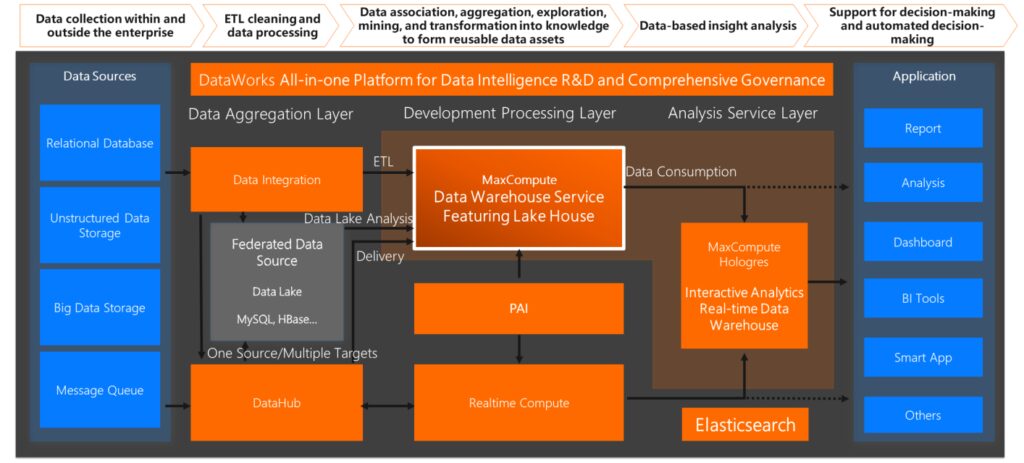
Processing semi-structured data at scale has become increasingly crucial in the realm of Big Data. With the exponential growth of data, organizations are faced with the challenge of efficiently managing and analyzing diverse data types such as JSON, XML, and log files. In this context, leveraging advanced technologies and strategies for semi-structured data processing is essential for deriving valuable insights and making informed decisions. This article explores the key considerations and best practices for performing semi-structured data processing at scale in the Big Data landscape.
Understanding Semi-Structured Data
Semi-structured data is a hybrid form of data that contains both structured and unstructured elements. Unlike structured data, which resides in fixed fields, such as relational databases, and unstructured data, which does not follow a pre-defined schema (like text documents), semi-structured data often includes tags and elements to separate data attributes. Common examples include JSON, XML, and YAML. The ability to efficiently process this type of data is crucial in various domains, especially when dealing with Big Data.
Challenges in Processing Semi-Structured Data
Handling semi-structured data at scale comes with its unique set of challenges:
- Data Variability: The structure of data can change frequently, making it difficult to create rigid schemas for processing.
- Scalability: Scaling processing resources while maintaining efficient data retrieval and transformations can be complex.
- Data Quality: Ensuring consistent data quality can be challenging, as semi-structured data often lacks the strict constraints found in structured data.
Technological Stack for Semi-Structured Data Processing
To effectively process semi-structured data at scale, businesses need a suitable technological stack. Here are some essential components:
- Distributed File Systems: Technologies like Hadoop Distributed File System (HDFS) or Apache Parquet are excellent for managing large volumes of semi-structured data.
- Data Processing Frameworks: Apache Spark and Apache Flink are popular for their powerful in-memory processing capabilities.
- NoSQL Databases: Databases like MongoDB and Cassandra are well-suited for storing and retrieving semi-structured data efficiently.
- Data Integration Tools: Tools like Apache NiFi and Apache Kafka are vital for data ingestion and real-time streaming.
Steps for Semi-Structured Data Processing
Below is a comprehensive approach to processing semi-structured data at scale:
1. Data Ingestion
The first step in semi-structured data processing is data ingestion. Depending on the source, you can use various methods:
- Batch Processing: Ideal for processing large volumes of data at scheduled intervals. Use Apache NiFi or Sqoop for scheduled batch ingestion.
- Stream Processing: Real-time ingestion is crucial for applications needing immediate insights. Use Apache Kafka or Apache Pulsar for event streaming.
2. Data Storage
Once the data is ingested, strong data storage solutions must be in place:
- Object Storage: Services like Amazon S3 or Google Cloud Storage are excellent for storing large amounts of unstructured and semi-structured data.
- NoSQL Databases: They provide flexible schema management, which can adapt to changes in data structure. MongoDB is particularly effective for JSON-like documents.
- Data Lakes: Create a centralized repository to store all your data in its raw format, enabling easier retrieval and processing later. Apache Hive can be used as a data warehouse layer over data lakes.
3. Data Transformation
Data transformation is critical to cleaning and preparing data for analysis. Consider the following approaches:
- ETL (Extract, Transform, Load): Traditional ETL can still be effective, but with semi-structured data, you may often need to implement a flexible schema via Apache Spark or Apache Beam.
- ELT (Extract, Load, Transform): This approach loads data as-is into a data warehouse before transforming it, allowing faster data processing at scale.
- Data Wrangling: Tools like Trifacta can assist in cleaning semi-structured data, using machine learning to automate processes.
4. Data Analysis and Visualization
After transforming the data, the next step is analysis:
- Big Data Analytics Tools: Utilize tools like Apache Spark SQL or Presto for running complex queries against semi-structured data.
- Machine Learning: Implement predictive analytics using frameworks like TensorFlow or PyTorch to derive insights from semi-structured data.
- Visualization: Utilize platforms such as Tableau or Power BI for visual representation, enabling effective communication of your analysis results.
5. Monitoring and Optimization
Once data processing pipelines are in place, continuous monitoring and optimization are essential:
- Performance Monitoring: Use tools like Apache Ambari or Grafana to monitor the health of your data processing pipeline.
- Cost Management: Regularly review the resource allocation and costs associated with data processing to avoid overspending.
- Scalability Strategies: Implement auto-scaling for cloud resources based on processing needs, utilizing services like AWS Lambda.
Best Practices for Scaling Semi-Structured Data Processing
To ensure effective scaling of semi-structured data processing, consider these best practices:
- Schema Evolution: Implement schema evolution techniques to accommodate changing data structures without breaking existing processes.
- Partitioning Strategies: Use partitioning to improve data read/write performance. This can be done using date-based or range-based partitioning.
- Data Governance: Establish policies for data stewardship, quality control, and compliance to ensure data accuracy and security.
- Regular Backups: Implement regular backup strategies to protect against data loss, especially when dealing with large datasets.
Conclusion
By understanding the core components of semi-structured data processing, along with the challenges and best practices, organizations can harness this data type effectively. Employing the right technological stack along with scalable, robust processing techniques allows for valuable insights and decisions driven by data analytics. Continuous monitoring and optimization ensure that these processes remain efficient and responsive to evolving data needs.
Performing semi-structured data processing at scale in the realm of Big Data is crucial for extracting valuable insights and patterns from diverse data sources. Leveraging advanced technologies and scalable tools enables organizations to efficiently manage, analyze, and derive actionable intelligence from semi-structured data, driving informed decision-making and business success in today’s data-driven landscape.
Related posts:
 The Future of Digital Twins in Large-Scale Big Data Simulations
 The Impact of Federated Analytics on Big Data Privacy
 The Role of Causal AI in Understanding Big Data Relationships
 How to Perform Large-Scale Time Series Forecasting with Big Data
 The Role of AutoML in Scaling Big Data Model Deployment
 How to Perform Real-Time Outlier Detection in Big Data Pipelines
 The Future of AI-Powered Data Wrangling for Big Data Scientists
 The Role of Synthetic Tabular Data Generation in Big Data Training Sets
 The Future of Hypergraph-Based Machine Learning in Big Data Applications
 The Impact of Transfer Learning on Large-Scale AI Models
 How to Use Apache SeaTunnel for ETL in Big Data Pipelines
 The Role of AI in Automated Feature Selection for Big Data Models
 The Future of Scalable AI-Driven Big Data Pipelines
 How to Perform Online Data Augmentation for Real-Time AI Applications