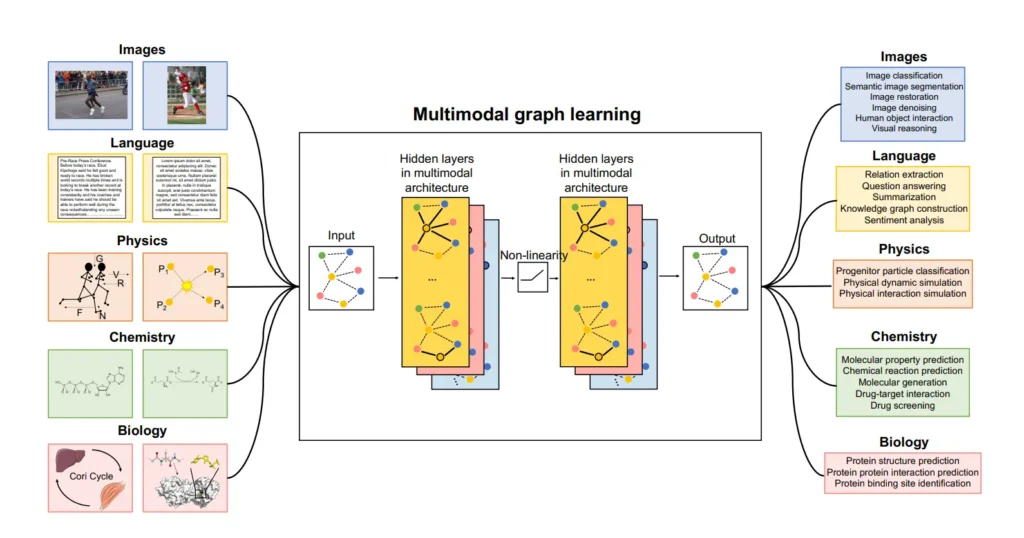
Big Data presents both opportunities and challenges for AI model training. One powerful technique for leveraging the vast amounts of varied data is through multi-modal fusion. Multi-modal fusion involves integrating information from different sources or modalities, such as text, images, and sensor data, to enhance the performance and accuracy of AI models. In this article, we will explore how to effectively use multi-modal fusion techniques in Big Data AI model training to unlock deeper insights and drive innovation.
Understanding Multi-Modal Fusion
Multi-modal fusion refers to the integration of data from multiple sources and formats—such as text, audio, and video—into a unified representation. This approach enhances the capabilities of AI and machine learning models by leveraging the strengths of diverse data modalities. In the context of Big Data, multi-modal fusion allows the development of more robust and accurate predictive models, making it particularly beneficial for organizations looking to derive meaningful insights from complex datasets.
The Importance of Multi-Modal Fusion in Big Data AI
In the Big Data landscape, relying on a single type of data can lead to a skewed understanding of complex phenomena. Here’s why multi-modal fusion is essential:
- Comprehensive Context: By combining various data types, models can capture different aspects of the same phenomenon, leading to a more nuanced understanding.
- Improved Accuracy: Using diverse data sources often increases the predictive accuracy of AI models, as they can learn from more examples and patterns.
- Robustness: Multi-modal approaches help in building models that are less susceptible to noise and biases present in single data modalities.
- Enhanced Feature Representation: Fusion techniques can create richer feature representations that encapsulate more detailed information.
Types of Data in Multi-Modal Fusion
Common data modalities involved in multi-modal fusion include:
- Images: Visual data can provide valuable insights, especially in fields such as healthcare, retail, and autonomous vehicles.
- Text: Textual data from articles, reports, and social media can reveal sentiments, behaviors, and trends.
- Audio: Sound data, including speech and ambient sounds, can be essential in applications like voice recognition and environmental monitoring.
- Structured Data: Traditional data formats like CSV files contain vital numerical and categorical information useful for modeling.
Steps to Implement Multi-Modal Fusion in AI Model Training
Implementing multi-modal fusion for Big Data AI model training involves several steps:
1. Data Collection
Gathering data from multiple sources is the first step. Ensure that you collect:
- High-quality data from reliable sources.
- Diverse data types relevant to your objectives, such as images, text, and audio.
- Data that is well-labeled and pre-processed to minimize noise.
2. Data Preprocessing
After gathering data, it’s crucial to preprocess it before analysis:
- Cleaning: Remove inaccuracies and incomplete data entries.
- Normalization: Ensure that data from different sources is in a consistent format.
- Feature Extraction: Identify and extract important features from each modality for model training.
3. Feature Alignment
Feature alignment is essential for successfully fusing data from different modalities. This involves:
- Identifying common features across modalities.
- Using techniques such as transformation or embedding to align features dimensionally.
- Ensuring that all features capture similar underlying patterns, facilitating co-learning across modalities.
4. Fusion Techniques
There are several techniques for multi-modal fusion, including:
- Early Fusion: Combining raw data from different modalities before feature extraction. This allows the model to learn from rich information available from the start.
- Late Fusion: Training individual models on each modality separately and then combining their outputs for final predictions. This can often help in obtaining a more rounded perspective on the input data.
- Hybrid Fusion: A combination of early and late fusion, allowing for the strengths of both approaches to be maximized.
5. Model Training
Once the data is properly fused, you can train your model. Consider these points:
- Model Selection: Choose appropriate algorithms that can handle multi-modal input, such as deep learning architectures like Convolutional Neural Networks (CNNs) and Recurrent Neural Networks (RNNs).
- Hyperparameter Tuning: Optimize your model’s hyperparameters using techniques like cross-validation to enhance performance.
- Evaluation Metrics: Use suitable metrics to evaluate model performance, such as accuracy, recall, and F1 score. Custom metrics may be necessary for specific applications.
Tools for Multi-Modal Fusion
Several tools and frameworks can facilitate multi-modal fusion:
- TensorFlow: An open-source platform that provides robust functionalities for building deep learning models.
- Keras: A high-level API for building and training neural networks with multi-modal input data.
- Pytorch: Known for its flexibility and dynamic computation graph, PyTorch is particularly useful for dealing with multi-modal datasets.
- Apache Spark: Ideal for processing large-scale data, Spark can efficiently handle the diverse data types required for multi-modal fusion.
Challenges and Best Practices
Implementing multi-modal fusion comes with challenges:
- Data Imbalance: Ensure balanced training sets, as imbalanced data across modalities can lead to biased models.
- Integration Complexity: Developing a systematic approach for integrating various data streams is essential to avoid losing valuable information.
- Scalability: Be mindful of the computing power required as the dataset grows, and consider cloud-based solutions for efficient processing.
Best Practices:
- Continuously monitor and evaluate the performance of your models.
- Incorporate feedback loops to improve and refine training processes.
- Experiment with various fusion techniques to determine which works best for your specific use case.
Real-World Applications of Multi-Modal Fusion
Here are some industries where multi-modal fusion is making an impact:
- Healthcare: Combining medical imaging, electronic health records, and genomic data to improve diagnostics and personalized treatments.
- Retail: Integrating customer purchase data, social media sentiment, and demographic information to enhance marketing strategies.
- Autonomous Vehicles: Merging data from cameras, LIDAR, and radar to enhance navigation systems and improve safety.
- Media and Entertainment: Leveraging user interactions from various platforms to recommend personalized content effectively.
Future of Multi-Modal Fusion in Big Data
The future of multi-modal fusion in AI training is promising, driven by advances in computational techniques and the growing variety of available data. As organizations continue to adopt Big Data technologies, the need for sophisticated model training processes will increase, emphasizing the necessity of multi-modal strategies. With ongoing research into improving AI’s ability to integrate different data types, businesses can expect more powerful and versatile tools in the coming years.
Leveraging multi-modal fusion for Big Data AI model training presents a powerful approach to enhance data understanding and decision-making capabilities. By combining diverse data sources and modalities, organizations can unlock deeper insights and achieve more accurate predictions, ultimately leading to improved performance and competitive advantage in the realm of Big Data analytics.
Related posts:
 How to Leverage Swarm Intelligence for Big Data Optimization
 The Future of Digital Twins in Large-Scale Big Data Simulations
 The Impact of Federated Analytics on Big Data Privacy
 The Role of Causal AI in Understanding Big Data Relationships
 How to Perform Large-Scale Time Series Forecasting with Big Data
 The Role of AutoML in Scaling Big Data Model Deployment
 How to Perform Real-Time Outlier Detection in Big Data Pipelines
 The Future of AI-Powered Data Wrangling for Big Data Scientists
 The Role of Synthetic Tabular Data Generation in Big Data Training Sets
 The Future of Hypergraph-Based Machine Learning in Big Data Applications
 The Impact of Transfer Learning on Large-Scale AI Models
 How to Use Apache SeaTunnel for ETL in Big Data Pipelines
 The Role of AI in Automated Feature Selection for Big Data Models
 The Future of Scalable AI-Driven Big Data Pipelines