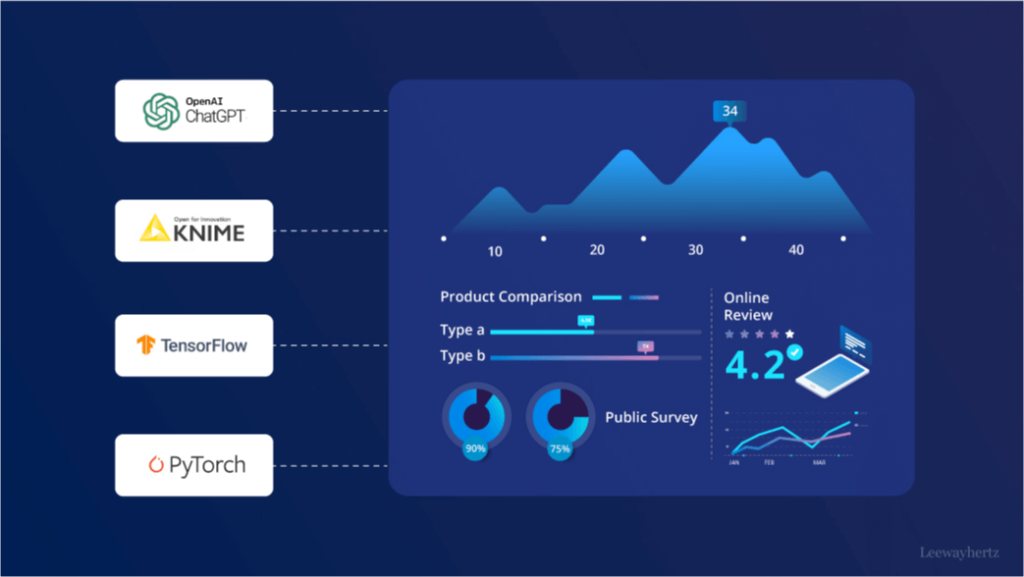
As the field of Big Data continues to evolve and expand, the demand for high-quality labeled data for large-scale analytics has never been higher. AI-enhanced data labeling plays a crucial role in this process, automating and augmenting human annotation efforts to handle the massive volumes of data generated daily. This fusion of artificial intelligence and manual intervention not only accelerates the data labeling process but also ensures greater accuracy and consistency in the labeled datasets. In this article, we will explore the advancements and potential applications of AI-enhanced data labeling in the context of big data analytics, shedding light on the future of this essential component of data science.
Understanding Data Labeling
Data labeling is the crucial process of tagging data with relevant attributes to enable machine learning algorithms to learn and make informed decisions. In the realm of Big Data, the volume and complexity of data require sophisticated approaches to data preparation. Traditional methods of data labeling often involve manual effort, which is not only time-consuming but also prone to human errors.
The Rise of AI-Enhanced Data Labeling
As organizations increasingly rely on large-scale analytics to derive insights from massive datasets, the demand for efficient and accurate data labeling is skyrocketing. AI-enhanced data labeling leverages artificial intelligence, particularly machine learning techniques, to automate the data labeling process. This transformation is crucial for organizations that require rapid turnaround times and high accuracy in data processing.
Benefits of AI-Enhanced Data Labeling
AI-enhanced data labeling offers several benefits that improve the efficiency and effectiveness of data preparation:
- Speed: Automation accelerates the labeling process, allowing organizations to handle larger datasets in less time.
- Cost-Effectiveness: By reducing the need for extensive manual labor, businesses can decrease operational costs associated with data preparation.
- Consistency and Accuracy: AI algorithms minimize human error, ensuring that data is labeled consistently across large volumes.
- Scalability: With AI systems, organizations can easily scale their data labeling efforts to accommodate growing data needs.
- Enhanced Quality: Machine learning models can continually improve as they are exposed to more data, resulting in higher quality outputs over time.
Key Technologies Driving AI-Enhanced Data Labeling
The effectiveness of AI-enhanced data labeling is supported by several key technologies:
1. Machine Learning Algorithms
Machine learning algorithms play a foundational role in driving the automation of data labeling. These algorithms can learn from existing labeled data and apply this knowledge to new, unlabeled datasets. Supervised learning techniques, such as regression and classification, are commonly used, enabling models to understand relationships within the data and accurately predict labels.
2. Natural Language Processing (NLP)
NLP is particularly important in data labeling for text data, such as social media posts, reviews, and customer feedback. Using NLP, AI systems can understand context, sentiment, and categorical relationships within textual content, optimizing the labeling process significantly.
3. Computer Vision
In the field of image and video analytics, computer vision techniques enable AI systems to analyze visual data. With advancements in pattern recognition and feature extraction, AI can label images and identify objects accurately, which is essential for applications ranging from facial recognition to autonomous vehicles.
The Role of Human Oversight
While AI-enhanced data labeling is transformative, human oversight remains a vital component of the process. Hybrid models that combine human intelligence and AI capabilities can yield the best results. This approach ensures that complex or ambiguous data is reviewed by experts, providing a safety net against potential AI shortcomings. The collaboration between human annotators and AI allows for continuous feedback, refining the models and improving future labeling accuracy.
Use Cases in Large-Scale Analytics
AI-enhanced data labeling is revolutionizing various industries by facilitating large-scale analytics:
1. Healthcare
In healthcare, accurately labeled data is essential for developing predictive analytics tools. AI-enhanced data labeling can expedite the analysis of medical images, patient records, and clinical trial data, leading to better decision-making and improved patient outcomes.
2. Finance
The finance industry benefits from AI-enhanced labeling by gaining valuable insights from financial transactions and customer data. Automated labeling can help in detecting fraudulent activities more efficiently, ensuring tighter security measures and compliance with regulations.
3. Retail
Retailers use AI-enhanced data labeling to better understand consumer behavior. This understanding can optimize inventory management, improve customer segmentation, and enhance personalized marketing strategies, thereby increasing sales and customer satisfaction.
4. Autonomous Vehicles
In the development of autonomous vehicles, high-quality labeled data is critical for training machine learning models that ensure safety and accuracy. AI-enhanced data labeling allows for the rapid processing of petabytes of sensor data, essential for the training of neural networks in self-driving cars.
The Future Trends of AI-Enhanced Data Labeling
As the landscape of AI technology evolves, several trends are expected to shape the future of AI-enhanced data labeling:
1. Integration of Deep Learning
The rise of deep learning models will likely enhance the capabilities of AI in understanding more complex and nuanced data. Neural networks, particularly convolutional networks for image data and recurrent networks for sequential data, are anticipated to take data labeling accuracy to new heights.
2. Real-Time Labeling
With advancements in processing technologies, real-time data labeling will become feasible. This will allow organizations to gain insights almost instantaneously, a necessity in fast-paced environments like finance and e-commerce.
3. Improved User Interfaces for Human-AI Interaction
As AI systems become more sophisticated, user interfaces will also evolve. Improved interfaces will facilitate seamless collaboration between human operators and AI systems, making it easier for annotators to contribute their expertise where it matters most.
4. Focus on Ethical and Fair AI
As AI systems are increasingly adopted, concerns about bias and ethical considerations in AI will take center stage. The future of AI-enhanced data labeling will likely incorporate frameworks and tools aimed at ensuring fairness in data representation, providing transparency during the labeling process.
5. Customized Solutions for Industries
Industries will demand customized AI-enhanced data labeling solutions that cater to their unique data types and analytics needs. This sector-specific approach will lead to more specialized applications and better outcomes across various fields.
Conclusion
As we look to the future, the landscape of AI-enhanced data labeling is set to transform how organizations manage and analyze Big Data. With improved speed, accuracy, and reliability, AI will undoubtedly remain an indispensable tool for businesses seeking to leverage large-scale analytics for competitive advantage. The combination of human intelligence and artificial intelligence will pave the way for innovative approaches to data labeling, driving growth and enabling insights that were previously unattainable. Embracing these advancements will be critical for organizations to stay ahead in the rapidly evolving digital landscape.
The integration of AI-enhanced data labeling holds immense potential for revolutionizing large-scale analytics in the era of Big Data. By leveraging advanced machine learning algorithms and automation, organizations can streamline data labeling processes, enhance data quality, and drive actionable insights at scale. As we look towards the future, the combination of AI and human expertise in data labeling will continue to play a pivotal role in unlocking the full potential of Big Data for decision-making and innovation across industries.
Related posts:
 Natural Language Processing (NLP) with Big Data
 How to Implement AutoML for Big Data Analytics
 The Importance of Explainable AI (XAI) in Big Data Models
 How to Use Prefect for Workflow Automation in Big Data
 How to Use IBM Cloud for Big Data Solutions
 The Importance of Fairness and Bias Detection in Big Data Models
 The Future of Digital Twins in Large-Scale Big Data Simulations
 How to Perform Large-Scale Time Series Forecasting with Big Data
 The Future of AI-Powered Data Wrangling for Big Data Scientists
 The Future of Generalized Zero-Shot Learning for Big Data AI Models
 How to Use Vector Search for Scalable AI-Powered Recommendations
 The Future of Low-Code AI Tools in Big Data Model Development
 The Future of Automated Data Engineering with AI-Driven Pipelines
 How to Perform Large-Scale Variational Inference on Streaming Data