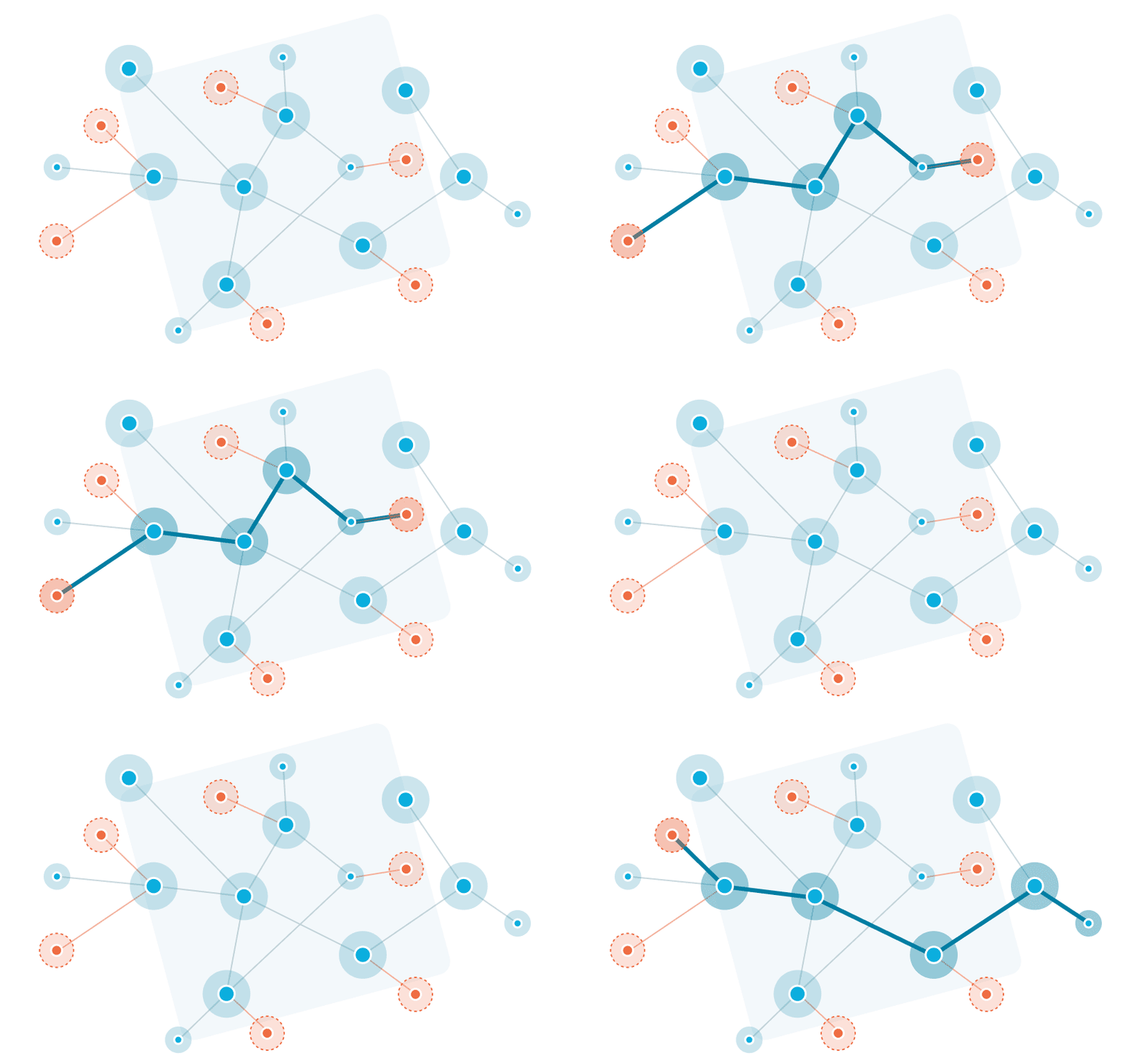
In the realm of Big Data, the future lies in AI-generated knowledge graphs that hold enormous potential for transforming how enterprises manage and utilize data. These dynamic and interconnected representations of information offer a comprehensive and organized view of data relationships, making it easier for organizations to extract valuable insights and drive informed decision-making. As AI continues to evolve, the application of knowledge graphs in enterprise data management is poised to revolutionize the way businesses handle and derive intelligence from vast and complex data sets.
In the ever-evolving landscape of Big Data, organizations are continuously seeking innovative ways to leverage their data for strategic advantage. One of the most promising developments is the emergence of AI-generated knowledge graphs which dramatically enhance the understanding and management of complex datasets.
Understanding Knowledge Graphs
A knowledge graph is a structured representation of information that captures relationships between entities. It allows businesses to visualize and draw insights from data that traditionally would remain siloed. In the context of enterprise data, knowledge graphs provide a framework for integrating diverse datasets, thus fostering a stronger analytical foundation.
Knowledge graphs employ nodes (representing entities) and edges (representing relationships) to create a semantic web of information, making it easier for organizations to query and analyze connected data. By leveraging AI, businesses can automate the generation and updating of these graphs, making them more efficient and expansive than manual approaches.
The Role of AI in Automating Knowledge Graph Creation
Artificial Intelligence plays a crucial role in automating the creation and maintenance of knowledge graphs. It utilizes techniques such as natural language processing (NLP), machine learning, and deep learning to extract relevant information from unstructured and structured data sources. Here are some key methods through which AI influences knowledge graph development:
- Entity Recognition: AI algorithms can identify and classify entities from large datasets, improving the accuracy with which knowledge graphs are built.
- Relationship Extraction: Through advanced processing capabilities, AI systems can deduce relationships between entities, facilitating richer graph structures.
- Data Integration: AI can seamlessly integrate varying data formats and sources, consolidating information into a unified knowledge graph.
Benefits of AI-Generated Knowledge Graphs for Enterprises
Implementing AI-generated knowledge graphs offers numerous advantages for enterprises concerned with Big Data. These benefits include:
1. Enhanced Data Accessibility
One of the most significant challenges enterprises face is data silos. AI-generated knowledge graphs break down these barriers by integrating data from multiple sources, making it easier for stakeholders to access and utilize information efficiently.
2. Improved Decision Making
With a more comprehensive view of data relationships, organizations can make better-informed decisions. For instance, knowledge graphs enable advanced analytics and predictive modeling that drive data-driven strategies.
3. Richer Insights through Contextualization
AI-enhanced knowledge graphs provide context to data, transforming raw information into valuable insights. By representing complex relationships and hierarchies visually, stakeholders can uncover hidden patterns and opportunities.
4. Streamlined Operations
Deploying AI-generated knowledge graphs helps automate various processes, reducing manual effort and improving operational efficiency. This leads to faster data retrieval times and quicker responses to changing business needs.
Key Use Cases of Knowledge Graphs in Enterprises
Several industries are increasingly recognizing the value of AI-generated knowledge graphs. Here are some notable use cases:
1. Retail and E-commerce
In the retail sector, knowledge graphs help businesses understand customer behavior by mapping interactions across various touchpoints. This results in enhanced personalization, targeted marketing campaigns, and improved customer satisfaction rates.
2. Healthcare
Healthcare organizations can use knowledge graphs to connect diverse data sources, such as patient records, clinical trials, and research articles. This interconnectedness aids in drug discovery and personalized treatment plans, ultimately leading to better patient outcomes.
3. Financial Services
In finance, knowledge graphs are instrumental in fraud detection and risk management. By analyzing relationships between transactions, accounts, and customer behaviors, financial institutions can identify anomalies and reduce vulnerabilities.
4. Telecommunications
Telecom companies leverage knowledge graphs to optimize network management. By analyzing connections among devices, usage patterns, and customer complaints, these organizations can make informed updates to improve performance and reduce downtimes.
Challenges in Implementing AI-Generated Knowledge Graphs
Despite their numerous advantages, enterprises face several challenges when adopting AI-generated knowledge graphs. Some of the key hurdles include:
1. Data Quality and Consistency
The effectiveness of a knowledge graph relies heavily on the quality and consistency of the underlying data. Ensuring that data is accurate, up-to-date, and free from duplications is crucial for efficient graph performance.
2. Integration Complexity
Integrating diverse data sources can be a complex task. Organizations must invest in robust data governance and management strategies to avoid clashes among various datasets and ensure seamless integration.
3. Skill Gap
Building and maintaining AI-generated knowledge graphs require specialized skills and expertise. Organizations may encounter difficulty in finding talent proficient in data science, machine learning, and semantic technologies.
The Future Outlook for AI-Generated Knowledge Graphs
As we look to the future, the role of AI-generated knowledge graphs in the realm of Big Data is set to expand. Here are key trends on the horizon:
1. Enhanced Interoperability
– Future knowledge graphs will be designed with interoperability in mind, allowing for easier integration across platforms, applications, and systems, creating a more cohesive data ecosystem.
2. Natural Language Querying
– With advancements in NLP, users will soon be able to query knowledge graphs using natural language, making data retrieval more intuitive and accessible.
3. Real-time Data Processing
– The ability to update knowledge graphs in real-time will allow organizations to respond quickly to emerging business challenges, providing competitive advantages in fast-paced markets.
4. Advanced Visualization Tools
– Improved visualization techniques will make knowledge graphs more interactive, providing users with enhanced analytical capabilities and decision-making tools.
Conclusion
The integration of AI into knowledge graph development represents a pivotal moment for enterprises navigating the complexities of Big Data. As organizations harness the power of AI-generated knowledge graphs, they enhance their data strategies, support better decision-making, and gain a competitive edge in their respective industries. Embracing these sophisticated tools will pave the way for a future where data-driven insights are not just a luxury but a fundamental aspect of organizational success.
The growing use of AI-generated knowledge graphs in enterprise data signifies a promising future for leveraging Big Data to enhance decision-making, data management, and overall business strategies. As technology continues to advance, organizations that embrace and adapt to these innovations will gain a competitive edge in harnessing the power of data to drive efficiency and drive innovation in the digital age.
Related posts:
 What is Big Data? A Beginner’s Guide
 The Five Vs of Big Data: Volume, Velocity, Variety, Veracity, and Value
 Structured vs. Unstructured Data: Key Differences and Examples
 What is a Data Lake? Definition, Uses, and Benefits
 Introduction to Distributed Computing in Big Data
 Understanding Data Pipelines in Big Data
 Data Ingestion Techniques for Big Data Processing
 What is Apache Hadoop? A Complete Guide
 Understanding Apache Spark: Features and Use Cases
 What is Kafka? How it Powers Real-Time Big Data Applications
 Apache Flink vs. Apache Spark: Which One is Better?
 Introduction to NoSQL Databases for Big Data
 The Role of MongoDB in Big Data Analytics
 Understanding HBase: How it Works in the Hadoop Ecosystem