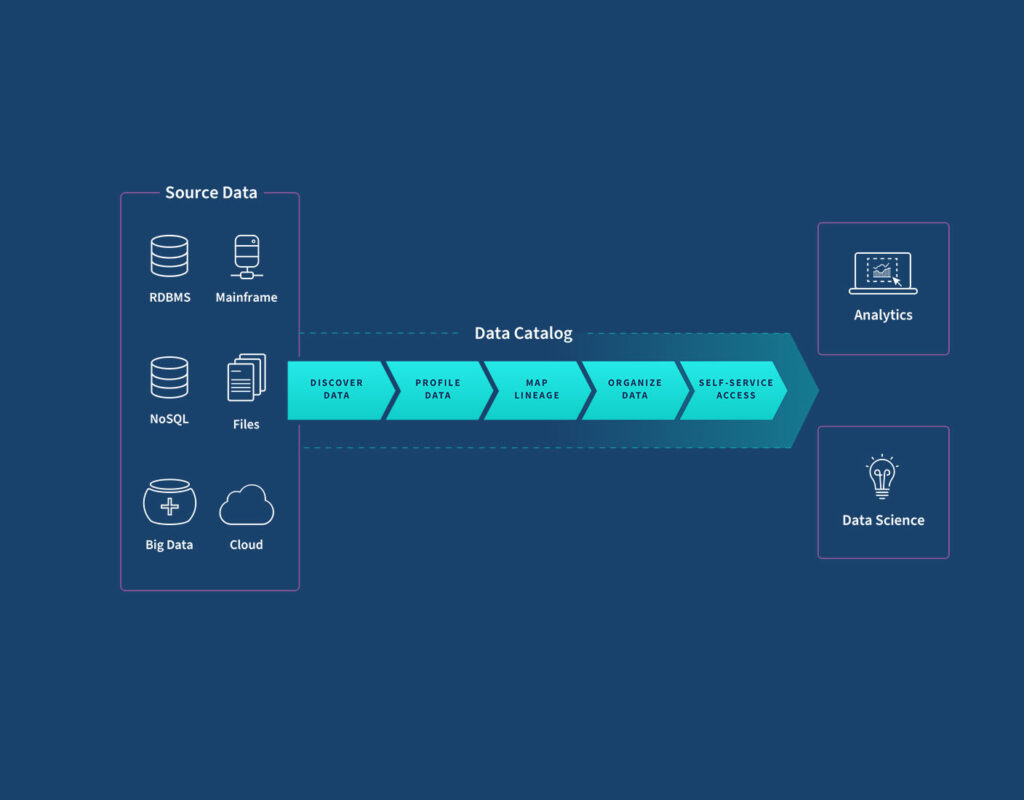
Data cataloging is a process of organizing, managing, and storing large volumes of data in a systematic manner that facilitates easy access and retrieval. In the realm of Big Data, where vast amounts of data are generated and collected from various sources, data cataloging plays a crucial role in streamlining data management processes. By creating a centralized repository that indexes and categorizes data assets, data cataloging helps organizations make sense of their data landscape, enabling better data discovery, governance, and utilization. Through effective data cataloging, organizations can optimize their Big Data management strategies, enhance data quality, minimize data silos, and ultimately derive valuable insights that drive better decision-making and innovation.
In the era of Big Data, organizations are inundated with vast amounts of information from various sources. To effectively harness this data, implementing a robust data cataloging strategy is essential.
Understanding Data Cataloging
Data cataloging refers to the process of organizing and managing data assets across a business. It entails creating a comprehensive inventory of the available datasets, their metadata, and their interrelationships. A data catalog serves as a centralized repository that provides context, accessibility, and governance over data assets.
Data catalogs empower organizations to track and manage their data assets in a structured manner. They are designed to improve data discovery, facilitate collaboration among teams, and enhance data governance protocols. A well-implemented data catalog greatly reduces the time spent searching for data and increases the quality of insights derived from Big Data analytics.
Key Features of Data Cataloging
- Metadata Management: Data catalogs store metadata, including data definitions, lineage, and contexts, enabling users to understand the source and usage of datasets.
- Data Discovery: They offer search capabilities that allow users to find relevant datasets quickly, enhancing the efficiency of data retrieval.
- Data Governance: Data catalogs help enforce data governance frameworks by maintaining records of data ownership, access controls, and compliance measures.
- Collaboration Tools: Many catalogs provide features that facilitate communication among users, such as tagging, comments, and ratings.
- Integration Capabilities: Data catalogs can connect with multiple data sources and platforms, allowing for seamless data aggregation and visibility.
Importance of Data Cataloging in Big Data Management
Big Data management involves various challenges, including data silos, compliance issues, and the overwhelming volume of information. Data cataloging addresses these concerns effectively:
Enhanced Visibility and Discovery
With countless data sources, it can be daunting for teams to locate the right data. Data cataloging provides enhanced visibility into data assets, enabling users to discover relevant datasets simply and efficiently. It minimizes the time spent on data wrangling, allowing analysts and data scientists to focus on generating insights rather than searching for data.
Improved Data Quality
Data quality is paramount when working with Big Data. Through proper data cataloging, organizations can implement measures to maintain high data quality. Catalogs often include validation rules, data profiling, and lineage tracking to ensure that data remains accurate and trustworthy. By leveraging these features, teams can minimize errors and enhance the reliability of their analyses.
Facilitating Compliance and Governance
Many industries face stringent regulatory requirements regarding data management. Data catalogs store detailed metadata and lineage information, facilitating compliance with regulations such as GDPR, HIPAA, and CCPA. By maintaining a clear overview of data assets and their usage, organizations can enforce governance policies more effectively.
Streamlined Collaboration Across Teams
Data cataloging fosters a culture of collaboration by providing tools that enhance communication among data users. Through shared metadata, annotations, and business glossaries, team members can align their understanding of terms and definitions. This unified approach encourages cross-departmental cooperation, allowing organizations to leverage data more effectively.
Optimized Data Analytics and Decision-Making
Effective data cataloging ensures that data is accessible and understandable. When users can easily find and comprehend data, it leads to more informed decision-making. By optimizing data analysis processes, organizations can extract greater value from their Big Data resources. This fosters a data-driven culture where insights translate into actionable strategies.
Best Practices for Implementing Data Catalogs
To realize the full potential of data cataloging in Big Data management, organizations should consider the following best practices:
Choose the Right Data Catalog Tool
Selecting the right data catalog tool is vital. Organizations should evaluate tools based on their scalability, integration capabilities, user interface, and compliance features. Solutions such as Apache Atlas, Alation, and Informatica are popular options in the market.
Involve Stakeholders in the Process
Data cataloging should be a collaborative effort. Involving key stakeholders, such as data engineers, analysts, and business users, ensures that the catalog meets various organizational needs. Collecting input from different teams will lead to a comprehensive catalog that serves all users effectively.
Regularly Update and Maintain the Catalog
A data catalog is not a one-time project; it requires ongoing updates to remain relevant. Organizations should establish regular review cycles to add new data assets, remove outdated entries, and update metadata. This ensures that the catalog remains current and practical for its users.
Educate Users on Data Governance
To maximize the effectiveness of data catalogs, organizations should educate users on data governance policies. Training sessions and workshops can help users understand the importance of data quality and governance practices, promoting responsible data usage across the organization.
Monitor Usage and Iterate based on Feedback
Data catalogs can greatly enhance productivity, but monitoring their usage is essential. Organizations should track how often teams interact with the catalog and gather feedback on its usability. This allows for continual improvement based on real user experiences, ensuring that the catalog evolves alongside organizational needs.
Emerging Trends in Data Cataloging
As the world of Big Data continues to evolve, several trends in data cataloging are emerging:
Artificial Intelligence and Machine Learning Integration
Many data cataloging solutions are incorporating AI and machine learning to automate metadata extraction, data profiling, and classification. These technologies enable catalogs to evolve dynamically, improving data discoverability and management as the data landscape changes.
Cloud-Based Cataloging Solutions
With the increasing adoption of cloud technologies, cloud-based data catalog solutions offer flexibility, scalability, and easier integration with various data sources. Organizations can benefit from the cost-effectiveness and enhanced collaboration that cloud solutions provide.
Data Marketplace Capabilities
Emerging data catalogs are now integrating data marketplace capabilities, which allow organizations to share and monetize their data assets securely. This trend opens new revenue streams while facilitating collaboration with partners and clients.
Focus on Self-Service Analytics
Self-service analytics is a crucial component of modern data strategies. Data catalogs enable business users to independently explore and utilize data without needing extensive IT support. This focus on empowering users encourages more agile decision-making and a speedy response to market changes.
Data cataloging plays an instrumental role in Big Data management. By enhancing visibility and discovery, improving data quality, facilitating compliance, and streamlining collaboration, organizations can maximize the value derived from their information assets. As technologies continue to evolve, embracing innovations in data cataloging will be vital for maintaining a competitive edge in an increasingly data-driven world.
Data cataloging plays a crucial role in big data management by providing a centralized inventory of data assets, facilitating data discovery, improving data quality, and ensuring compliance. By enabling users to easily find and understand relevant data, data cataloging enhances decision-making processes and drives innovation in organizations leveraging big data technologies.
Related posts:
 What is Big Data? A Beginner’s Guide
 The Five Vs of Big Data: Volume, Velocity, Variety, Veracity, and Value
 Structured vs. Unstructured Data: Key Differences and Examples
 What is a Data Lake? Definition, Uses, and Benefits
 Introduction to Distributed Computing in Big Data
 Understanding Data Pipelines in Big Data
 Data Ingestion Techniques for Big Data Processing
 What is Apache Hadoop? A Complete Guide
 Understanding Apache Spark: Features and Use Cases
 What is Kafka? How it Powers Real-Time Big Data Applications
 Apache Flink vs. Apache Spark: Which One is Better?
 Introduction to NoSQL Databases for Big Data
 The Role of MongoDB in Big Data Analytics
 Understanding HBase: How it Works in the Hadoop Ecosystem